
Reviewed · BUNKERS & COMMUNIST-ERA TIRANA
Best of Tirana Walking Tour – History, Bunkers & Local Life
Tirana turns history into street theater. This Best of Tirana walk with Zoella Tirana Tours threads Skanderbeg Square to the Ottoman-era mosques, then to Enver Hoxha’s Pyramid, ending at the New Bazaar.
I love how the tour is led by local guide Mirko, with clear, stop-by-stop explanations. I also like the way the route links heavy political history to normal daily life, with practical recommendations for where to eat nearby.
One consideration: it is about 2 hours on foot, so you need a moderate physical fitness level and comfy shoes. Since each stop is timed, you will do more “see and understand” than long, slow museum time.
In This Review
- Key highlights you will feel on the walk
- Why this Tirana walk feels like a city lesson, not a checklist
- Price and timing, and what 2 hours really buys you
- Skanderbeg Square: starting with identity and power
- Mosque of Namazgah: reading Ottoman scale in one stop
- Enver Hoxha Pyramid: from dictator symbol to tech-era reuse
- Rruga Murat Toptani: where the city connects centuries
- Tanners’ Bridge: Ottoman style with a history you can walk over
- Reja The Cloud: public art with international ties
- Xhamia Et’hem Bej: Ottoman-era church and mosque-style details
- Blloku: the forbidden communist zone turned into lived-in Tirana
- New Bazaar: end strong with 200 years of everyday life
- Group size, fitness, and who this tour suits best
- The guide style and why it matters on this route
- Should you book the Best of Tirana Walking Tour?
- FAQ
- How long is the Best of Tirana Walking Tour?
- What language is the tour offered in?
- Where does the tour start and end?
- Is there a mobile ticket?
- What is included in the tour price?
- Are meals included?
- Are admissions included for all stops?
- Is hotel pickup included?
- How big is the group?
- What is the cancellation policy?
Key highlights you will feel on the walk
- Small group size capped at 15, so questions stay easy.
- English-led storytelling that keeps moving without turning into a lecture.
- Communist-era stops with context, especially Blloku and Enver Hoxha’s Pyramid.
- Ottoman architecture mix, from Namazgah Mosque to Xhamia Et’hem Bej.
- Food guidance built in, even though meals are not included.
- A strong ending at the New Bazaar, so your last hour can be practical and tasty.
More Walking Tours in Tirana

Why this Tirana walk feels like a city lesson, not a checklist
Tirana can feel like a mix of eras stacked on top of each other. This tour is built to help you sort that out fast, without you needing a history degree or a full day.
The big win is the pacing. You bounce from landmark to landmark, but each stop comes with the story behind what you are seeing, plus how it connects to everyday Tirana life now.
And yes, you get the city’s “serious side” too. The communist chapters are not just names on a sign, they are part of the physical space you walk through.
Price and timing, and what 2 hours really buys you
The price is $15.73 per person for about 2 hours, offered in English. For that time, you get a guided route through the city center with multiple landmark stops, plus a couple of included admissions.
Think of it as buying time and clarity. Instead of wandering and hoping you guess correctly what each building used to mean, the guide gives you the quick context you need to connect the dots.
Logistically, you also get a mobile ticket, and the meeting point is right at Skanderbeg Square. The tour runs on a schedule that makes sense for a first or second day, when you are still figuring out your bearings.
Skanderbeg Square: starting with identity and power
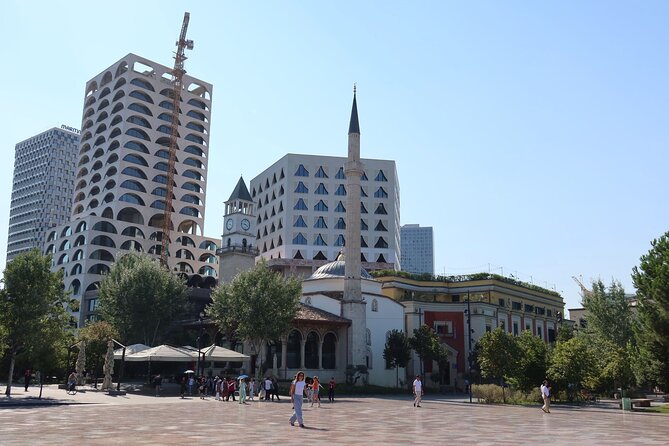
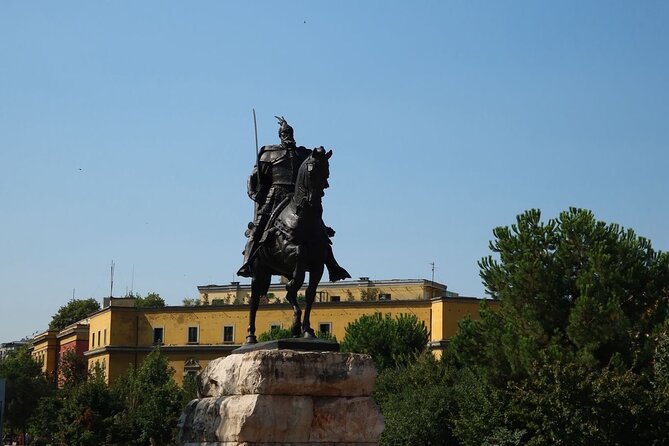
You kick off at Skanderbeg Square, the main square of Tirana. This is the kind of place where the city shows its center of gravity, literally and culturally.
Expect to spend around 20 minutes here. Even if you already know a little about Tirana, starting in the square helps you understand why the rest of the walk feels so connected.
It is also a smart way to begin if you are short on time. A “big square first” plan lets you orient yourself early, so the later streets feel less like random turns and more like a route you can repeat later.
Mosque of Namazgah: reading Ottoman scale in one stop
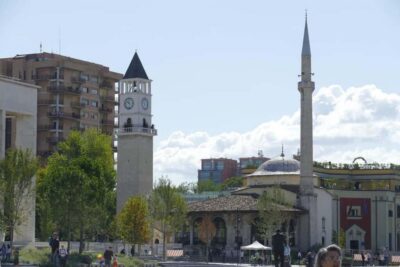
Next comes the Mosque of Namazgah, one of the biggest mosques in the Balkans. You spend about 10 minutes here, mostly focused on seeing the building and picking up the why behind its prominence.
This is a good pause in the itinerary. After the open feel of a main square, a large mosque gives you a different kind of space, one that reflects community life and regional architectural influence.
The admission is free for this stop, so you can keep your budget steady. The value here is the guidance, not ticket costs. You come away with a clearer sense of how Ottoman architecture shapes the city center.
A few more bunker and communist-era tours:
- Tirana’s Communist Past; Small Group Walking Tour
★ 4.9 · 59 reviews - A Communist Manifesto: Tirana before and after
★ 5.0 · 50 reviews - From Albania: Permet /Thermal Baths with Bunker Food Tasting
★ 5.0 · 19 reviews - The truest face of Communism
★ 5.0 · 18 reviews
Enver Hoxha Pyramid: from dictator symbol to tech-era reuse
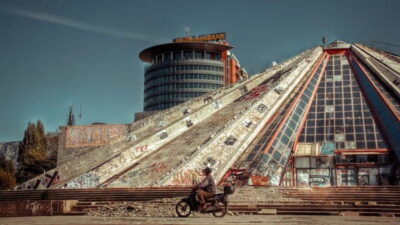
Then you hit one of the most talked-about structures in Tirana: the Enver Hoxha Pyramid. On this walk, it is framed as a museum of the dictator, and you will also hear how it has been renovated and is now connected to an Institute of Technology.
You get about 20 minutes at this stop. That time is useful because you are seeing a political icon reinterpreted over time, not just staring at a monument with no explanation.
A key thing I like about this stop is how it changes your question from What is this? to What did the city do with it? That shift makes the whole communist-era segment feel less abstract.
Admission is listed as free here as well, so you are spending time, not extra money. Just wear shoes that handle walking, because you will be moving through the area, not lounging inside.
Rruga Murat Toptani: where the city connects centuries
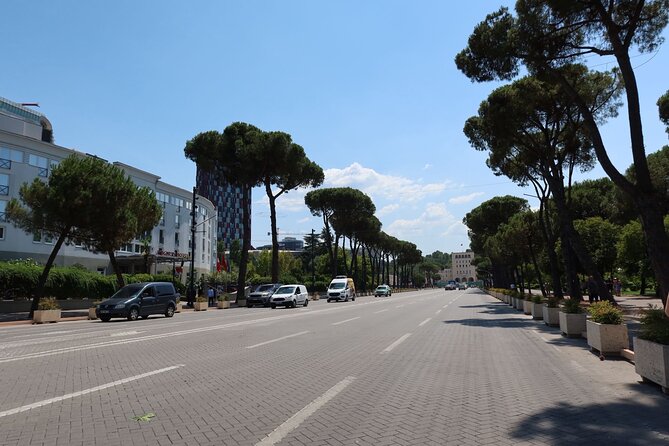
Rruga Murat Toptani is your next stop, including the area linked with the Castle of Tirana and a pedestrian road described as starting from Roman Empire roots. You will spend about 10 minutes here, which means this is mostly a guided orientation stop.
The value is in the framing. With the guide’s explanation, you can look at the street layout and the area’s role and understand why Tirana feels layered rather than frozen in one era.
This is also a nice “breather” segment. You are moving, you are seeing, but the stop is not as emotionally heavy as the communist landmarks. It helps you keep energy for Blloku later.
Tanners’ Bridge: Ottoman style with a history you can walk over
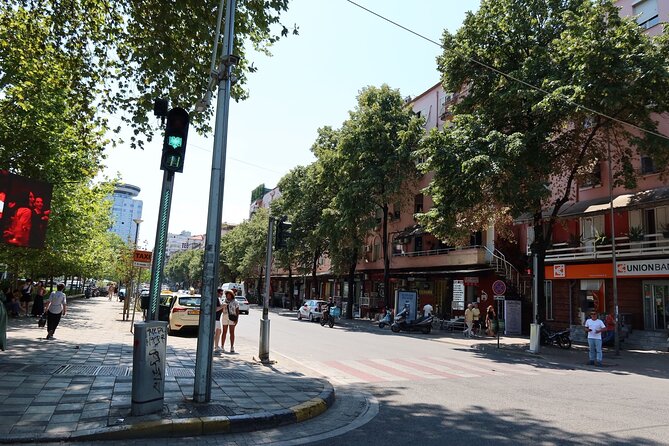
Now you get the kind of stop that makes photos make sense. Tanners’ Bridge is described as more than 200 years old and known for its Ottoman-style look.
You spend about 10 minutes here, and the admission is included. That means you are not juggling ticket decisions mid-walk, which keeps the experience smooth.
What I like about a bridge stop is that it is easy to grasp physically. You can imagine movement, trade, and daily life because you are literally in the flow of a crossing. With the guide’s context, it stops being a pretty photo and becomes a practical piece of city function.
Reja The Cloud: public art with international ties
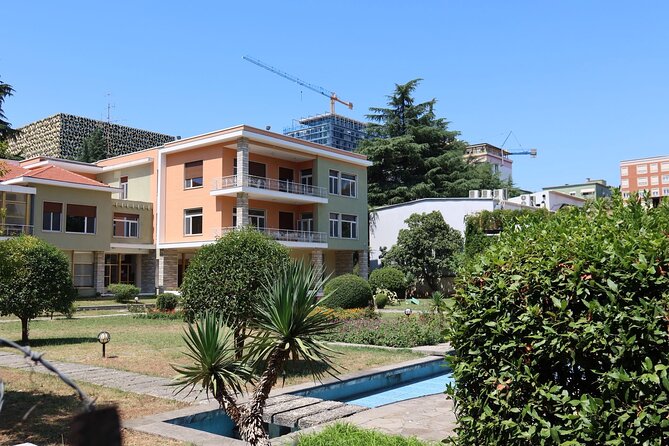
Next is Reja, The Cloud, an abstract art piece described as a gift by the Japan embassy. The stop lasts about 10 minutes, and the admission is included.
This is the tour’s “modern meaning” moment. After Ottoman and communist sites, a contemporary abstract work helps you see that Tirana is not just preserving the past, it is also receiving and reshaping international influences.
It is also a quick reminder that culture is not limited to old buildings. Public art works like this can become a landmark for locals too, especially because you can reach it on foot through the city center.
Xhamia Et’hem Bej: Ottoman-era church and mosque-style details
You then reach Xhamia Et’hem Bej, described as an old mosque in Ottoman Empire style. Like the Namazgah stop, it is about 10 minutes and has free admission.
This is a great contrast point. You just saw the Namazgah Mosque, which is noted for size, and now you are looking at another Ottoman-era structure with a different feel in the old center.
Even in a short visit, a good guide can help you notice what matters. You will likely come away with a better eye for how Ottoman architecture communicates identity through design choices.
Blloku: the forbidden communist zone turned into lived-in Tirana
Blloku is where the walk gets more intense. It was a forbidden zone during communist time, and it is described as a spy zone connected to Enver Hoxha’s former residence.
You spend about 10 minutes here, with admission included. That short window is enough to understand why people would fear this place and why the city would treat it with caution for decades.
What makes this stop valuable is the human scale of the story. You are not reading about a dictatorship in a textbook, you are standing in a neighborhood that has to live through its own past.
Also, Blloku is a natural transition to present-day Tirana. After this, the city feels less like a museum and more like a place where memory still sits in real streets.
New Bazaar: end strong with 200 years of everyday life
The walk ends at the New Bazaar, described as a bazaar for 200 years. This final stop is around where you can turn the information into action.
Because meals are not included, the guide’s recommendations for local food become extra useful here. You can use the last part of the tour to set yourself up for a snack, a coffee, or a proper meal based on what you learned about the area.
This ending also makes sense for timing. After two hours, you are ready to wander a bit longer, buy something small, or just watch the flow of people at a market that has stayed relevant for generations.
And since the tour route focuses on the city center, the bazaar acts like a practical anchor. You will know where you are, what direction to go next, and how to avoid just drifting.
Group size, fitness, and who this tour suits best
This is a walking tour with a moderate fitness level requirement. If you can comfortably walk around the center of a city for about two hours, you should be fine.
The group size max is 15, which keeps the experience personal enough to ask follow-up questions without waiting your turn too long.
This tour fits especially well if:
- it is your first time in Tirana and you want a structured orientation
- you like city history but do not want it to drag
- you want a guide who connects old politics and architecture to what you see today
- you prefer an English-led route so you can actually follow the details
The guide style and why it matters on this route
The tour is built around a professional local guide, and the experience is described as well structured and engaging. With Mirko, the approach keeps the story moving, rather than stopping for long tangents.
That matters because Tirana’s landmarks are not self-explanatory. Squares, mosques, and political buildings can look familiar, but their meaning depends on context you would not guess quickly on your own.
I also like that the tour includes recommendations for local food. It gives your day a next step, not just an educational loop back to your hotel.
Should you book the Best of Tirana Walking Tour?
Yes, if you want a smart introduction to Tirana’s big themes without spending all day walking around aimlessly. For $15.73, the mix of Ottoman architecture, communist-era landmarks like Blloku and the Enver Hoxha Pyramid, plus the final hit of the New Bazaar makes this feel like good value for time.
Skip it only if you want a long sit-down museum experience or you dislike walking between several short stops. This tour is designed to move, so it rewards the style of traveler who likes momentum and clear explanations.
If you are deciding between doing “a little of everything” or picking one museum, this is the option that helps you understand the city as a whole, then keep exploring afterward on your own.
FAQ
How long is the Best of Tirana Walking Tour?
It lasts about 2 hours.
What language is the tour offered in?
The tour is offered in English.
Where does the tour start and end?
It starts at Skanderbeg Square and ends at the New Bazaar.
Is there a mobile ticket?
Yes, it includes a mobile ticket.
What is included in the tour price?
It includes a guided walking tour in the city center with explanations at each stop, plus a professional local guide. It also includes recommendations for local food.
Are meals included?
No, meals are not included.
Are admissions included for all stops?
Not all stops are the same. Some stops list free admission, while the tour includes admission for Tanners’ Bridge and Reja The Cloud.
Is hotel pickup included?
No, private transportation and hotel pickup are not included.
How big is the group?
The tour has a maximum of 15 travelers.
What is the cancellation policy?
You can cancel for a full refund up to 24 hours in advance. If you cancel less than 24 hours before the start time, you do not get a refund.
A Few More History Tours in Tirana

Added to Tirana lately
- Semi-Private Hiking Tour; Theth,Valbona&Koman Lake in 3 Days★ 5.0 · 1 review
- Kosovo, Prizren Day Trip from Tirana★ 3.0 · 1 review
- Private 1 Day Berat Tour from Tirana★ 5.0 · 1 review
- Private 3 Days Adventure in Albania and Gjirokaster County★ 5.0 · 1 review
- From Tirana: Ksamil Islands, Saranda, & Blue Eye Day Trip★ 5.0 · 1 review
- Tirana Airport Private Transfer To City★ 5.0 · 1 review
- Architectural Walking Tour Discovering Tirana’s Modern Identity★ 5.0 · 1 review
- From Shkoder: 3-Day Valbona to Theth Hike Tour All Inclusive★ 5.0 · 1 review
Bunkers & Communist-Era Tirana, compared.

ATV Guided Tour in Kallm with Secret Bunker Visit
Read our review →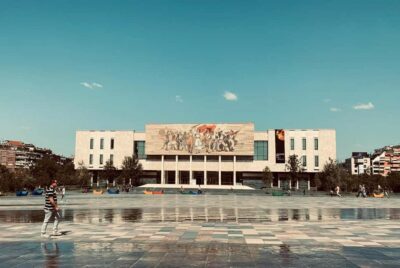
Tirana’s Communist Past; Small Group Walking Tour
Read our review →
From Albania: Permet /Thermal Baths with Bunker Food Tasting
Read our review →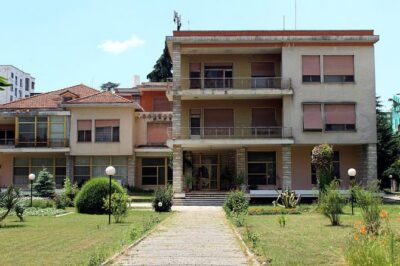
Full-Day Tour of Albania’s Bunkers and Beaches, from Tirana
Read our review →
Browse the lists this tour appears in