
Reviewed · WALKING TOURS
Tirana Walking Tour
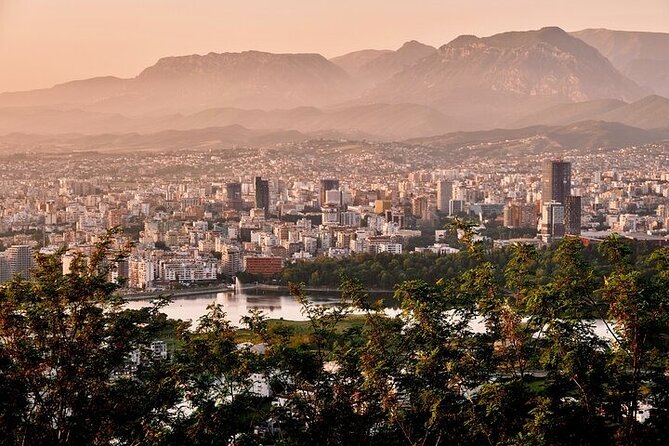
Tirana tells its story in walking distance. In just 3 hours with a guide, you see how Tirana grew from Ottoman and then communist layers into today’s fast-changing city center, with big architectural contrasts and real neighborhood talk in Blloku.
I especially like the way the tour stitches the city together as one timeline, from the Monumental Center’s heavy communist-era buildings to the Italian-era government structures by Armando Brasini. You also get a structured pause for a coffee or a cocktail, which helps you turn all that history into something you can actually remember.
One thing to consider: there’s a lot packed into the walking time. Even with a comfortable pace, some stops are quick photo-and-look moments, and a couple of guests noted that hearing the guide can be tough at the start, so position yourself where you can clearly follow.
In This Review
- Key highlights you will feel
- Where This Tirana Walk Really Starts (and Why It Works)
- Price and Value for 3 Hours of Tirana Storytelling
- The Monumental Center: Communist Weight Meets Italian Lines
- Et’hem Bey Mosque, Watch Tower, and the Ottoman Timeline You Can See
- Toptani Castle and Tanner’s Bridge: Quick Stops, Big Payoff
- The Repurposed Pyramid: A Fast Stop That Still Teaches the Era
- Blloku and Enver Hoxha’s Area: From Power to Cafes
- Bunk’Art 2 and the Twentieth Century Kept in Place
- Tirana Castle Break Time: Shop, Rest, and Look Around
- Namazgah Mosque, Saint Paul’s Cathedral, and Mother Teresa Square
- Postbllok Checkpoint, Blloku Again, and the City’s “Hard Edges”
- Resurrection of Christ Orthodox Cathedral and House of Leaves Museum
- How to Make the Most of Your Guide (Ask These Things)
- Who Should Book This Tirana Walking Tour
- Should You Book the Tirana Walking Tour?
- FAQ
- How long is the Tirana Walking Tour?
- Where does the tour meet?
- How much does it cost?
- What is included in the price?
- Are meals and drinks included?
- Do I need tickets for the stops?
- What languages is the guide available in?
- Is the tour wheelchair accessible?
- Is a private group available?
- What is the cancellation and payment flexibility?
- Is it allowed for children?
Key highlights you will feel
- Monumental Center contrasts you can see in minutes, not theory
- Skenderbeg Square area routing that gives you instant bearings
- Mosque, watch tower, and old-quarter stops that show Tirana’s Ottoman-era expansion
- Blloku district and Enver Hoxha villa area as a before-and-after story
- Bunk’Art 2, Tirana Castle, and House of Leaves Museum stops that keep the twentieth century present
More Walking Tours in Tirana

Where This Tirana Walk Really Starts (and Why It Works)
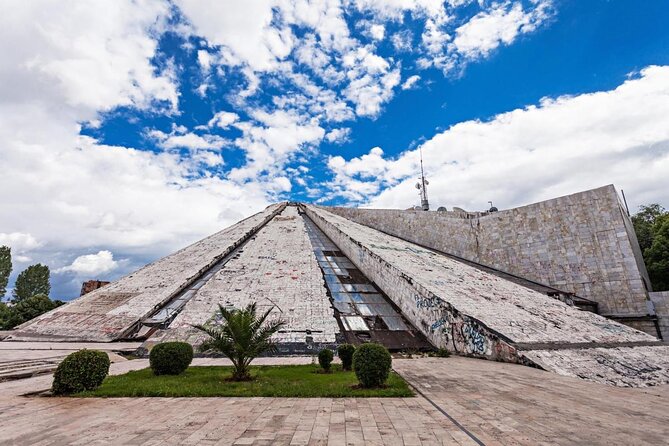
You meet at the Tirana International Hotel area, and the tour quickly gets you into the city’s most important overlap zone: the Monumental Center and Skanderbeg Square surroundings. That matters because Tirana can feel “new” at street level, with modern construction popping up around older bones. This route forces you to notice both at once.
The timing also helps. A 3-hour format means you are not stuck for a whole day watching buses move and museums close. Instead, you get a guided loop that covers the key districts without demanding museum tickets at every stop. The tour is also run in multiple languages, including English, Albanian, and Italian, so you can expect explanations to stay connected to what you are actually seeing.
Guides are a major part of the value here. In the reviews, I saw names like Ilir, Gloria, Thomas, Iris, Aron, and Bledi. People repeatedly praised guides for being warm, flexible, and able to answer questions, which is exactly what turns landmark watching into understanding.
Price and Value for 3 Hours of Tirana Storytelling
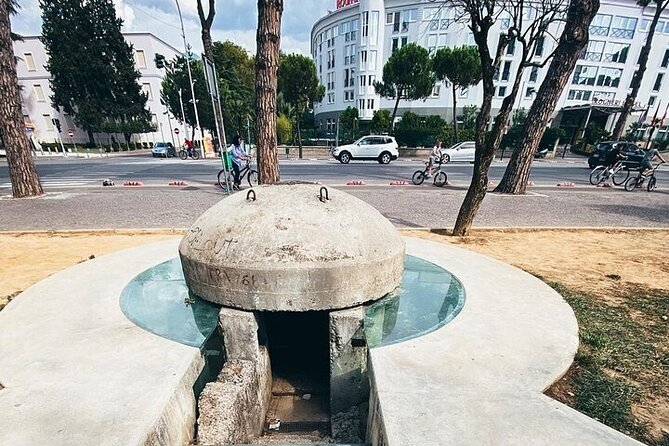
At $17 per person for a 3-hour guided walk, the price is low enough that you can treat it as a “first-day compass.” You are not just paying for motion and photos. You are paying for someone to connect the buildings, the political shifts, and the current city vibe into one clear narrative.
What you get included is straightforward: a qualified guide and the city tour. What is not included is meals and drinks, which is important because the highlights mention a coffee or a cocktail during the tour. Practically, that usually means the tour includes a planned stop, but you should expect to pay for what you order. Bring some cash so you do not feel rushed.
Also, the tour is set up to save time. It includes a skip-the-ticket-line feature, which can help at stops where tickets or entry lines exist. Even if you are not buying anything extra, that kind of small time win can turn “we barely made it” into “we actually looked.”
The Monumental Center: Communist Weight Meets Italian Lines
The tour starts by focusing your eyes on one of the strongest visual lessons in Tirana: how different political eras shaped what people built. You begin around the Monumental Center, where you can compare the Palace of Culture area and the National History Museum zone, with their heavy communist-era presence, against Italian governmental buildings from the 1920s designed by Armando Brasini.
This contrast is not just aesthetic. It changes how the whole city feels. The communist-era structures can look overpowering and serious, while the Italian buildings bring a different sense of order and proportion. Seeing them near each other makes the history obvious, even if your brain has to adjust to the “two Tiranas at once” feeling.
You also stop near the statue of Albania’s national hero Skenderbeg before moving into Ottoman and older-quarter territory. That route choice is smart because it gives you a recognizable anchor point early. Once you know where Skenderbeg fits, later stops make more sense, especially if you want to come back on your own afterward.
Et’hem Bey Mosque, Watch Tower, and the Ottoman Timeline You Can See
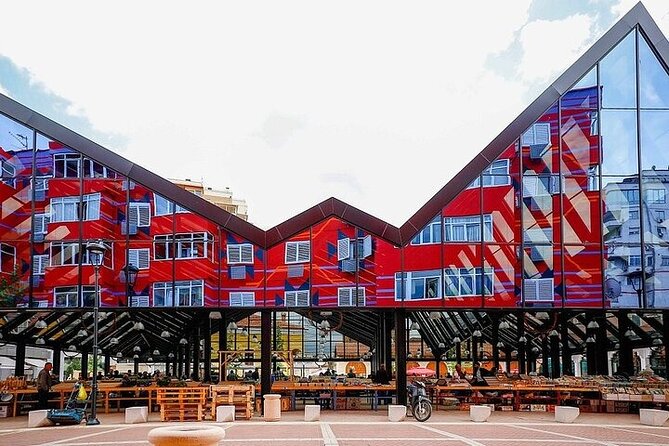
From the Monumental Center you walk toward Et’hem Bey Mosque and the watch tower, described as reminders of Tirana’s expansion across the 17th and 19th centuries. This is where Tirana stops feeling like only modern streets and becomes a layered capital again.
These stops are valuable because they are easy to miss if you are sightseeing solo. People often photograph the mosque and move on, but a guide can point out why it matters in the city’s growth story. A watch tower reference also helps you understand that Tirana’s old center was built with defense and visibility in mind, not just ceremonial beauty.
If you are visiting on a day with crowds, treat this part like your “slow down” section. Give yourself time to look up, around, and at street corners, since that is where the old-quarter scale shows. The tour keeps moving, but your best photos will come when you pause.
Not sold yet? More of Tirana to sift through:
- From Tirana: Bovilla Lake & Gamti Mountain Hiking Day Trip
★ 4.9 · 4,397 reviews - From Tirana: Bovilla Lake & Gamti Mountain Hiking Tour
★ 4.9 · 3,003 reviews - From Tirana: Bovilla Lake & Gamti Mountain Viewpoint Hike
★ 4.8 · 2,053 reviews - Tirana/Durres/Golem: Saranda, Ksamil, Blue Eye Day Trip
★ 4.8 · 1,584 reviews
Toptani Castle and Tanner’s Bridge: Quick Stops, Big Payoff
Next you pass the newly reopened Toptani castle and then the stone Tanner’s Bridge. These are short segments in the route, but they are the type of stops that teach you how to read a city.
Toptani castle gives you a sense of how Tirana reconnects with its older structures, even while building keeps expanding. Tanner’s Bridge, with its simple stone form, is a reminder that function matters, even when cities modernize. Bridges are also great for understanding street layout, because they help you imagine how people moved before all the current roads and blocks existed.
Because these are quick, you will get the most out of them if you ask your guide one simple question right then, like what this area looked like in the past. Some of the most helpful tour moments in the reviews came from guides sharing personal perspective, not just dates.
The Repurposed Pyramid: A Fast Stop That Still Teaches the Era
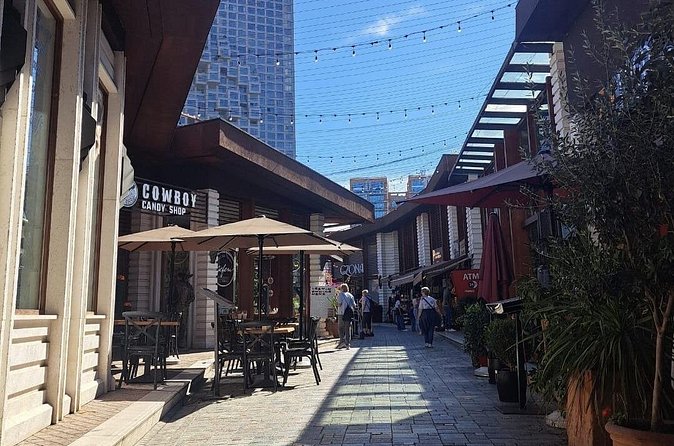
You get a quick stop at the pyramid, described as repurposed. You are not stuck here long, but that is fine. This stop works like a checkpoint in the tour’s narrative: it signals the communist-era monument style, then hints at what came after.
A good guide uses quick stops like this to help you connect the dots. In Tirana, the twentieth century is not hidden in a museum wing only. It shows up in shapes, spaces, and what has been reused or reinterpreted.
If you are the type who likes to read deeper on your own afterward, make note of the pyramid during the walk. Later, when you look at photos or read about what happened here, the physical reference will make the story click.
Blloku and Enver Hoxha’s Area: From Power to Cafes
Blloku is the district most linked to Tirana’s current “Dolce Vita” feel, with cafes and restaurants, and the tour uses that context well. You visit the Blloku area along with the dictator Enver Hoxha villa area. That pairing is the whole point.
This is not a dry political lecture. It becomes a street-level contrast: who had access in the past, and who now fills the tables. That before-and-after effect is what makes the walk feel alive. You might also have the chance to ask follow-up questions about local restaurants, customs, and general life in Albania.
One detail that came up in reviews: guides kept the pace relaxed and adjusted based on group needs. Some guests even described the tour as feeling like a walk with a friend. That matters here, because Blloku is where your questions will naturally turn more personal, like what it felt like to grow up through the change.
Bunk’Art 2 and the Twentieth Century Kept in Place
The tour includes a stop at Bunk’Art 2. Even without adding extra time for a full independent visit, it gives you a guided entry point into how Tirana documents its twentieth-century story.
This works as a momentum builder. After you walk through older quarters and then arrive at Blloku, you have now crossed into the era where Albania’s political shift shaped daily life more directly. Bunk’Art 2 fits that arc, and it keeps you from treating the communist period as “just buildings.”
In practical terms, plan to spend attention here more than rushing for photos. Let the guide connect the site to what you have already seen. That is how the tour stops become more than checkmarks.
Tirana Castle Break Time: Shop, Rest, and Look Around
You then reach Tirana Castle, with a break time built in. The itinerary also suggests shopping during that pause, which is useful because it gives you a chance to refuel and reset your legs.
This is one of the best “take stock” moments of the day. From higher or edge areas, you can often see how modern development spreads across the city. If you came in expecting a historic-only capital, this is the point where you adjust your expectations. Tirana’s ongoing transformation is part of the story now, not only the background.
Also, because the tour is only 3 hours, that break is more valuable than it looks. If you are hungry or thirsty, use this window. Some review notes mention cooling beverage stops and staying in shade when it is warm, which fits the reality of walking in a city that can get hot.
Namazgah Mosque, Saint Paul’s Cathedral, and Mother Teresa Square
Religious sites appear at several points, including Namazgah Mosque and Saint Paul’s Cathedral, plus Mother Teresa Square. Even if you are not a religious traveler, these stops help explain how different communities and historical periods left their imprint on the city center.
Namazgah Mosque continues the tour’s Ottoman-to-older-expansion story, while Saint Paul’s Cathedral adds a different architectural voice. Mother Teresa Square is a symbolic civic anchor. It is the type of place where you can feel the modern capital identity.
This section is also a good time to ask about the city’s direction. The tour description emphasizes what the future will bring, and your guide should be able to talk about today’s development boom and why so many designs are getting attention internationally. Even a short answer can help you read what you see while walking.
Postbllok Checkpoint, Blloku Again, and the City’s “Hard Edges”
You pass the Postbllok checkpoint and then revisit Blloku in the route. That structure is not accidental. It reinforces that certain places are not one-note. They were built for a purpose, then life shifted, and now they are interpreted differently.
A checkpoint stop is a strong visual reminder that control and movement shaped daily life in the past. Seeing it in a walking route also helps you place those concepts into a geography you can remember. If you want to understand the city beyond its cafes, this is one of the most important segments.
In reviews, some guests praised guides for answering questions and showing pictures of how Tirana looked over a century ago. If your guide has those visuals available during your tour, this checkpoint section is likely where they will fit best. Ask if they can share a before photo, because it makes the city’s physical changes feel real.
Resurrection of Christ Orthodox Cathedral and House of Leaves Museum
The tour ends with another set of significant sites, including Resurrection of Christ Orthodox Cathedral and the House of Leaves Museum, before finishing back at the Tirana International Hotel.
This closing stretch works because it pulls you into the twentieth-century theme from multiple angles. You already visited major monuments and district contrasts, plus Bunk’Art 2 and the repurposed pyramid. The House of Leaves Museum adds another layer to the way Tirana memorializes its difficult chapters.
I like tours that do not treat museums as islands. By weaving museum-linked stops into the walk, you keep your brain in city mode. You are not switching from street noise to indoor explanations only. You are seeing how the city preserves memory in its own built environment.
How to Make the Most of Your Guide (Ask These Things)
The reviews are full of one theme: the guide can turn the experience from informative into memorable. People mentioned that guides like Ilir, Gloria, Thomas, Iris, Aron, and Bledi shared personal perspective, adjusted pace, and answered questions well.
So do not be shy. If you want better hearing at the start, get closer to the guide before the first few landmarks. One guest noted that the tour could benefit from more explain-then-walk rhythm, and the guide responded by adjusting after being told. That tells you something important: the guides listen.
Here are a few questions that fit the route without slowing it down:
- What should I look for when comparing Italian-era vs communist-era buildings here?
- How did access to Blloku change after the dictatorship period?
- Which stop is most worth revisiting later on my own, and why?
- If some museums are closed, what should I still prioritize on the route?
Who Should Book This Tirana Walking Tour
I think this tour is a great fit if you want:
- A first-day orientation to Tirana, without spending hours figuring out where everything is
- A guide who can connect architecture to Albania’s complex twentieth-century story
- A route that mixes major squares, mosques, churches, and districts like Blloku
It also works well for solo travelers who want structure, because reviews mention that it can still run even with a small number of participants. The same small-group setup is also good for questions and slower moments.
If you hate walking, or if you want only long museum visits, you might feel rushed. But for the sweet spot of travelers who like cities and short guided explanations, this is a practical choice.
Should You Book the Tirana Walking Tour?
Book it if you are trying to understand Tirana fast, and you want more than postcard sightseeing. The combination of Monumental Center contrasts, Blloku storytelling, and multiple landmark types in a single loop makes this a solid value at $17.
Skip it only if you already know Tirana well and you want deeper museum time, not a three-hour overview. Otherwise, treat this as your anchor walk, then come back later for the one or two places that really grabbed you during the tour.
FAQ
How long is the Tirana Walking Tour?
The tour lasts about 3 hours.
Where does the tour meet?
The meeting point is in front of the Tirana International Hotel, though the exact meeting point may vary depending on which option you book.
How much does it cost?
It costs $17 per person.
What is included in the price?
You get a city tour and a qualified guide.
Are meals and drinks included?
Meals and drinks are not included, but the tour highlights mention enjoying a coffee or a cocktail during the walk, so plan to pay for what you order at the stop.
Do I need tickets for the stops?
The tour includes a skip-the-ticket-line feature, which can help reduce waiting if a stop involves entry lines.
What languages is the guide available in?
Guides can speak Albanian, English, and Italian.
Is the tour wheelchair accessible?
Yes, it is wheelchair accessible.
Is a private group available?
Private group options are available.
What is the cancellation and payment flexibility?
You can cancel up to 24 hours in advance for a full refund. There is also a reserve now, pay later option.
Is it allowed for children?
Unaccompanied minors are not allowed, and children must be accompanied by an adult.
Added to Tirana lately
- Kosovo, Prizren Day Trip from Tirana★ 3.0 · 1 review
- Semi-Private Hiking Tour; Theth,Valbona&Koman Lake in 3 Days★ 5.0 · 1 review
- Private 1 Day Berat Tour from Tirana★ 5.0 · 1 review
- Private 3 Days Adventure in Albania and Gjirokaster County★ 5.0 · 1 review
- From Tirana: Ksamil Islands, Saranda, & Blue Eye Day Trip★ 5.0 · 1 review
- Tirana Airport Private Transfer To City★ 5.0 · 1 review
- Architectural Walking Tour Discovering Tirana’s Modern Identity★ 5.0 · 1 review
- From Shkoder: 3-Day Valbona to Theth Hike Tour All Inclusive★ 5.0 · 1 review
Walking Tours, compared.
Tirana Center: Magic Walking Tour French/Italian/English Etc
Read our review →
Blue Eye Kayak and walking tour & Lekursi Castle
Read our review →
Browse the lists this tour appears in