
Reviewed · WALKING TOURS
Tirana Walking Tour
Tirana hits different when you walk it. This themed Tirana walking tour uses a local, Italian-speaking guide and story-driven stops to connect Skanderbeg Square with Albania’s communist past, the transition years, and the city’s modern rebirth.
I like the small group size (up to 10) because it stays interactive, with time for questions while you move between major landmarks. The main drawback to consider is simple: it’s fully on foot for about 2 to 2.5 hours, so plan for steady walking.
In This Review
- Key things that make this Tirana walking tour worth it
- Meeting at Et’hem Bej Mosque, then getting your bearings fast
- Skanderbeg Square and Et’hem Bej Mosque, the city’s center with a story
- Bunk’Art 2 and Tirana Castle, where the past shows up in real places
- Parliament of Albania and Namazgah Mosque, power and faith in the same walk
- Tanners’ Bridge and Saint Paul’s Cathedral, everyday life across communities
- Pyramid of Tirana and Postbllok checkpoint, how the city remembers control
- Blloku, Sky Club, and the shift from restriction to reinvention
- Orthodox Cathedral and House of Leaves, where memory meets modern identity
- Price and value: is $21 a good deal?
- Pace, what to bring, and how to set yourself up for an easy walk
- Language and how the tour is delivered in real life
- Should you book this Tirana walking tour?
Key things that make this Tirana walking tour worth it
- A local guide who tells it through personal experience, not just facts on a sign
- A recent-history focus, covering communist-era themes, transition, and what changed day to day
- A tight route with major landmarks, from Skanderbeg Square to Postbllok and Blloku
- Small-group energy with room to ask questions, even if you are solo
- A storyline you can follow, where each stop adds a new layer to modern Tirana
More Walking Tours in Tirana
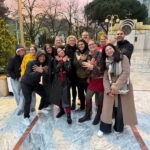
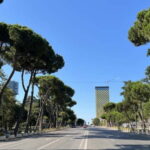
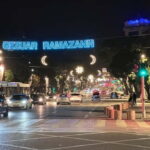

Meeting at Et’hem Bej Mosque, then getting your bearings fast
You start right in the heart of Tirana, at the main entrance of Et’hem Bej Mosque on Skanderbeg Square. The guide waits outside near the entrance, easy to spot, and it helps to arrive at least 10 minutes early so you do not miss the start.
This is a 150-minute walk, entirely on foot, and that timing matters. You are not getting a sleepy stroll that takes forever. You’re moving at a pace designed to cover a lot of ground while still letting the guide connect the dots with context and personal anecdotes.
One practical note: the tour goes ahead in light rain. So bring comfortable clothes you can wear through a damp afternoon. Also, there is no requirement for the guide to wait if you arrive late past the departure time, so treat the start time seriously.
Skanderbeg Square and Et’hem Bej Mosque, the city’s center with a story
The tour begins with Skanderbeg Square (about 15 minutes). It’s the kind of place that works even if you only know a few names. Here, the guide sets the tone, so you understand why Tirana’s center is not just scenery. It becomes the launching point for the rest of the walk.
Then you head into Et’hem Bej Mosque (about 10 minutes). Even if you’ve seen plenty of mosques in other cities, this stop lands differently because the guide’s job is not just describing architecture. The focus is on how Tirana has changed over recent decades, and what everyday life looks like after major political shifts.
The biggest value of these first stops is alignment. You’re not wandering. You’re being oriented, and you’ll keep that orientation for the rest of the tour, especially once the itinerary shifts into communist memory and the city’s transition.
Bunk’Art 2 and Tirana Castle, where the past shows up in real places
Next you visit Bunk’Art 2 (about 10 minutes). This is one of those stops that makes the communist past feel less like a chapter in a textbook and more like something people had to live with. The guide frames it with clear explanations and personal storytelling, so you can connect what you see to the themes of control, uncertainty, and change.
After that, Tirana Castle comes next (about 10 minutes). The guide uses it to help you understand continuity. Tirana is not just a series of modern developments. Older spaces are part of the city’s identity, and the tour’s recent-history angle makes you notice how new life sits on top of old structure and older meaning.
What I like about combining Bunk’Art 2 and Tirana Castle in the same stretch is the contrast. You get memory tied to one of Tirana’s most specific historical moods, then you step into a place that helps you reframe the city as something that keeps evolving.
Parliament of Albania and Namazgah Mosque, power and faith in the same walk
At Parliament of Albania (about 10 minutes), the tour shifts toward governance and public life. Again, the point is not just seeing a building. It’s hearing how this modern capital tells its story through the institutions that shape daily routines.
Then you go to Namazgah Mosque, Tirana (about 15 minutes). This is one of the longer stops in the itinerary, and that extra time can feel meaningful. It gives the guide room to explain the role of faith in public space and everyday culture, right alongside the political themes you just heard at Parliament.
This part of the tour works well because you’re seeing two big pillars of society in sequence: power in one direction, belief in another. When you put those together on foot, the city stops feeling like separate landmarks and starts feeling like a real place where multiple threads exist at once.
Not sold yet? More of Tirana to sift through:
- From Tirana: Bovilla Lake & Gamti Mountain Hiking Day Trip
★ 4.9 · 4,397 reviews - From Tirana: Bovilla Lake & Gamti Mountain Hiking Tour
★ 4.9 · 3,003 reviews - From Tirana: Bovilla Lake & Gamti Mountain Viewpoint Hike
★ 4.8 · 2,053 reviews - Tirana/Durres/Golem: Saranda, Ksamil, Blue Eye Day Trip
★ 4.8 · 1,584 reviews
Tanners’ Bridge and Saint Paul’s Cathedral, everyday life across communities
The tour then includes Tanners’ Bridge (about 10 minutes). Even without getting stuck on technical details, bridges are powerful story locations. They naturally suggest movement, trade, and the practical side of how people used to navigate daily life. The guide’s commentary helps you interpret what you’re seeing as part of Tirana’s everyday rhythm, not just a photo stop.
After that, Saint Paul’s Cathedral, Tirane (about 15 minutes). Cathedrals in a mostly Orthodox or Muslim context can be a way to understand how the city has long hosted different communities. In this tour, the time at the cathedral is used to connect cultural identity to the city’s bigger transition story, so you are not only looking at religion as architecture, but as lived social space.
The value here is balance. You get a mix of civic, religious, and cultural stops, so Tirana comes across as something you can actually picture living in, not just visiting.
Pyramid of Tirana and Postbllok checkpoint, how the city remembers control
Now comes a strong narrative turn. You visit the Pyramid of Tirana (about 10 minutes), and the guide uses it as a reference point for the city’s shifts in meaning over time. The pyramid is famous, and even if you only know the name, the tour helps you understand why it matters in a story about transition and how symbols change once politics does.
Then you go to Postbllok – Checkpoint (about 10 minutes). This stop fits the recent-history theme perfectly because it pushes you to think about how control worked in practice. Checkpoints are not abstract history. They are a feeling of surveillance, interruptions in routine, and the tension of passing from one space to another.
I like that the itinerary doesn’t treat communist memory as heavy and then move on. Instead, it treats memory as something you walk past in real neighborhoods, with real streets, real angles, and real context you can understand quickly.
Blloku, Sky Club, and the shift from restriction to reinvention
After the checkpoint theme, you head into Blloku (about 10 minutes). Blloku is one of those places where a guide’s stories can do a lot of work. In this tour format, it becomes a shorthand for the city’s transition, showing how social life and public access can change dramatically over a few decades.
Next is Sky Club (about 10 minutes). This stop may look like a modern layer, and that is exactly the point. The guide ties it into the theme of Tirana’s modern rebirth, showing how the city’s identity keeps evolving, not only through politics but through where people gather and what public life looks like now.
This section can be especially rewarding if you like your history to be human. Instead of memorizing dates, you’re learning how social freedom and public space can shift, and how that shows up in a walk through the city.
Orthodox Cathedral and House of Leaves, where memory meets modern identity
You visit Resurrection of Christ Orthodox Cathedral (about 15 minutes). This is the kind of stop that works well after Blloku and Sky Club because it adds another thread to Tirana’s identity. The tour keeps the pace moving, but that extra time helps you take in how faith and tradition stay present even as the city changes.
Then you finish with House of Leaves (about 10 minutes). This is a good closing stop because it fits the tour’s theme of modern rebirth and the way stories get told in new forms. You’re not only seeing the past. You’re learning how the city keeps reinterpreting it.
At the end, you arrive back at Tour a Piedi di Tirana (the tour’s return point). The walkthrough feels like a full arc rather than a list of stops, which is exactly what you want from a short, 150-minute experience.
Price and value: is $21 a good deal?
At $21 per person, this tour is priced like a practical intro to Tirana’s recent past. You are paying for four things that add up quickly: a local authorized guide, Italian delivery, a structured route that covers major landmarks, and story-based context you likely would not get if you self-guided.
Also, the small group matters here. Up to 10 participants means you are less likely to disappear into the crowd. You can ask questions and get answers that fit your interests, whether you care most about the communist era, the transition period, or what modern Tirana feels like today.
What you need to watch for is what isn’t included. Tickets for paid museum sites and attractions are not included, and food and drinks are not part of the tour price. If you plan to add museum time beyond the walking stops, budget for separate tickets when needed.
Pace, what to bring, and how to set yourself up for an easy walk
The tour is fully on foot, lasting about 2 to 2.5 hours. That makes it a great fit if you want a concentrated orientation without committing to a full day. Still, it’s not ideal if you have mobility limits that make steady walking difficult.
Wheelchair accessibility is listed, so the route is designed with that in mind. On the other hand, the tour is not suitable for people with heart problems and not for people over 95 years old. If any of that applies to you, it’s worth choosing a different pace or a shorter plan.
For what to bring, keep it simple: wear comfortable clothes. You’ll also want to be prepared for light rain because the tour goes ahead. And keep the rules in mind: no weapons or sharp objects, and no alcohol or drugs.
Language and how the tour is delivered in real life
The guided tour is in Italian. The information also notes that some content is shown in its original language. If you understand Italian, you’ll likely enjoy the personal storytelling even more, because tone and nuance come through better than a quick summary.
If Italian is not your strong suit, you can still benefit from the structure: landmarks, guided explanations, and a clear route through the city’s recent history. Just expect that the best part of this tour is the guide’s narrative voice.
Should you book this Tirana walking tour?
Book it if you’re a first-time visitor who wants more than the classic “see the big sights” approach. This tour is built for people who are curious about recent history and want to understand how the communist past, the transition years, and modern rebirth shape daily life in Tirana.
Skip it if you want long museum time, timed tickets included, or a purely scenic walk with minimal historical interpretation. Also, be cautious if you cannot handle 2 to 2.5 hours of walking, even if you do not expect strenuous climbs.
If you match the vibe, I think it’s a smart choice: small group size, a story-first local guide, and a tight route that helps you leave Tirana with a clearer mental map, not just photos.
Added to Tirana lately
- Bike Tour Tirana with Local Guide in English or Czech★ 5.0 · 1 review
- Communist Winery: Tour, Tasting and Lunch★ 5.0 · 1 review
- N. Macedonia, Kosovo & Albania; Semi – Private Tour★ 5.0 · 1 review
- Pellumbas Cave Tour and Petrela Castle from Tirana★ 4.0 · 1 review
- From Tirana Krujë and Durrës Day Trip with Guide★ 5.0 · 1 review
- Private Day Trip to Berat from Tirana or Durres★ 5.0 · 1 review
- Blue Eye Spring, Ksamil and Gjirokaster Tour from Durres★ 5.0 · 1 review
- Private Tour in Albanian Riviera★ 5.0 · 1 review
Walking Tours, compared.
Tirana Center: Magic Walking Tour French/Italian/English Etc
Read our review →
Blue Eye Kayak and walking tour & Lekursi Castle
Read our review →

Browse the lists this tour appears in