
Reviewed · HISTORICAL TOURS
Tirana Walking Tour: History, Culture &Gems by a Passionate Guide
Tirana history is written on sidewalks. This small-group walking tour threads Ottoman architecture and communist-era memory through the center of the city, starting at Skanderbeg Square and ending right where you began. I like the included shot of raki, because it turns a history walk into something local, not just instructional.
My second favorite part is the way Albiona tells the story, with context that you usually do not get from guidebooks. With a maximum of 11 people, it stays conversational and flexible, but there is one trade-off: the route is packed with many short stops, so you get real variety, just not long stays inside every site. If you need slow museum time, build in extra time on your own after the tour.
In This Review
- Key things to know before you walk
- Why This 3 to 4 Hour Tirana Walk Works on Day One
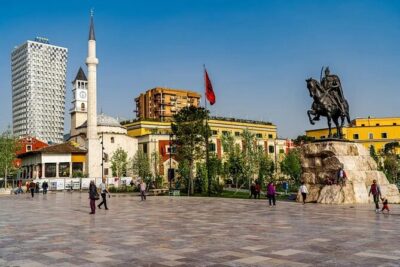
- Starting at Skanderbeg Square, then jumping into Albanian identity
- Skanderbeg Square to Et’hem Bej Mosque and the Clock Tower
- Ottoman and civic life at Sulejman Pasha’s square
- Market textures and Bektashi spiritual Tirana
- Kapllan Pasha’s tomb and a traditional home museum moment
- Bunk’Art 2 and the communist memory route
- Socialist nostalgia at Komiteti Kafe Museum and the Pyramid of Tirana
- Postbllok, Enver Hoxha’s villa, and the Blloku shift
- Shallvaret, the Orthodox Cathedral of Resurrection, and faith after repression
- House of Leaves is the one paid exception
- Ending with the Bank of Albania and the city’s ongoing system
- Price and What You Get for $36.20
- Who This Tour Suits Best (and who should skip it)
- Should you book the Tirana Walking Tour?
- FAQ
- How long is the Tirana Walking Tour?
- What does the tour cost?
- Is the tour offered in English?
- How big is the group?
- What is included in the price?
- Are entrance tickets included for all stops?
- Where does the tour start and end?
- Does the tour require good weather?
- What is the cancellation policy?
Key things to know before you walk
- Small group pace (up to 11): enough time for questions without the tour feeling rushed.
- Raki shot included: a quick cultural moment that breaks up the walking.
- Most entrances are free: the itinerary is built to keep costs down, with one notable exception.
- Albania’s 20th-century story is front and center: from surveillance and bunkers to Blloku’s communist past.
- You cover both faiths and styles: Ottoman, Venetian, Catholic, and Orthodox landmarks appear in one loop.
- Good first-day orientation: it helps you understand what you are looking at before you wander on your own.
More Walking Tours in Tirana

Why This 3 to 4 Hour Tirana Walk Works on Day One
Tirana can feel like it is changing in real time, and that is exactly what this tour is designed for. In just a few hours, you get the city’s main “wayfinding clues”: names of squares, landmark architecture styles, and the neighborhoods tied to Albania’s political shifts.
The route is also smart for value. The price is $36.20 per person, and most stops list free admission, meaning your money goes mostly toward a guide who can connect dots. You are not just ticking boxes, you are learning how Tirana became Tirana.
Finally, this is a great size for first-day nerves. With a maximum of 11 people, you can ask practical questions about what to do next, and the guide can adjust timing if you run into slowdowns in the center. One guest even noted Albiona handled a traffic delay smoothly, keeping the experience efficient without turning it into a sprint.
Starting at Skanderbeg Square, then jumping into Albanian identity
You begin at Skanderbeg Square, Tirana’s central public space named for the national hero. Even if you have never heard of Skanderbeg, this stop quickly explains why the square feels like a civic “heart.” It is where the city’s story gets announced in big public form.
From here, the walking tone changes fast. The tour moves from broad national symbolism into specifics: Ottoman-era religious art, mixed architectural influences, then more everyday city life. That shift is useful because Tirana is not one uniform style. It is layers.
A practical tip: this opening is your best moment to ask your guide what kind of photos you should prioritize. If you know you want architecture shots, you can pace yourself later. If you care more about political history, you can pay attention to the stops that connect to that theme.
Skanderbeg Square to Et’hem Bej Mosque and the Clock Tower
Stop 2 is Et’hem Bej Mosque, and it is one of those places where the outside looks simple, but the inside tells a different story. The mosque is associated with Ottoman architecture, and what really catches attention is the interior decoration. Frescoes show intricate floral and natural motifs, including scenes of trees, waterfalls, and bridges. That combination matters because it shows how art, faith, and regional style mixed together here.
Stop 3 is the Clock Tower, a recognizable Tirana landmark rising about 35 meters. What I like about this stop is the visual clue it offers. The tower is described as blending Ottoman and Venetian architectural styles, and it becomes an easy reference point when you start spotting other European-influenced details around the center.
Time-wise, these are short stops, but they function like “anchors.” If you get tired later, you still have clear landmark memories to hold onto.
Ottoman and civic life at Sulejman Pasha’s square
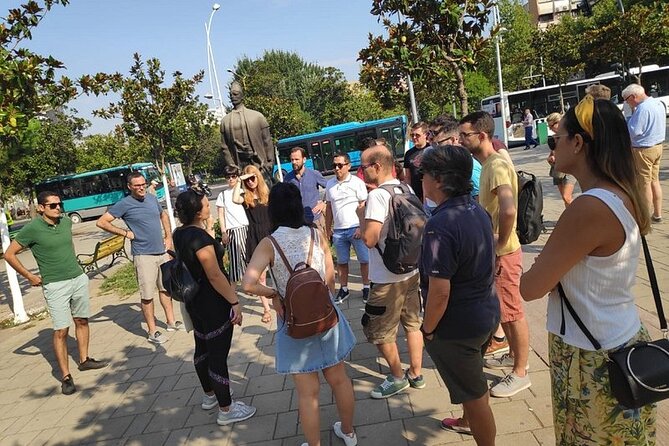
Stop 4 is Sheshi Sulejman Pasha, also tied to Sulejman Bargjini Square. This is the smaller sibling to Skanderbeg Square, but it is still a key civic hub. You get the sense that Tirana’s public life is built on named spaces, each tied to specific people and eras.
Even if you are not a history person, this stop helps you stop seeing Tirana as random streets. Streets connect to names. Names connect to stories. That alone makes the rest of your self-guided wandering easier.
Not sold yet? More of Tirana to sift through:
- From Tirana: Bovilla Lake & Gamti Mountain Hiking Day Trip
★ 4.9 · 4,397 reviews - From Tirana: Bovilla Lake & Gamti Mountain Hiking Tour
★ 4.9 · 3,003 reviews - From Tirana: Bovilla Lake & Gamti Mountain Viewpoint Hike
★ 4.8 · 2,053 reviews - Tirana/Durres/Golem: Saranda, Ksamil, Blue Eye Day Trip
★ 4.8 · 1,584 reviews
Market textures and Bektashi spiritual Tirana
Stop 5 is Pazari i Ri, the New Bazaar. Here you get something different: a practical look at daily life through food and goods. Expect colorful stalls selling fresh produce, local crafts, spices, and Albanian foods. The point is not to do a full shopping spree. It is to see how a market district feels when it is active and still serving locals.
Stop 6 is Teqja Pazari, a Bektashi religious site. The Bektashi Order is a Sufi Muslim sect known for mysticism and values described as progressive. The quick stop works well here because it adds nuance. Tirana is not just one kind of religion experience. It has multiple traditions sharing space in the city’s identity.
If you want to make the most of these two stops, look for sensory details: how people talk to shopkeepers, what goods are in motion, and how the site’s atmosphere feels compared with a mosque. It gives you a fuller picture than architecture alone.
Kapllan Pasha’s tomb and a traditional home museum moment
Stop 7 is Kapllan Pasha’s Tomb, an Albanian Cultural Monument. It was designated in 1948, built in the early 19th century, and described as octagonal, with carved stonework and plant decor. A detail worth noting: the former ruler of Tirana was interned there in the 19th century, then later repatriated back to Istanbul, Turkey. That kind of detail helps you understand how Tirana’s story is not only local. It is connected to wider regional power.
Stop 8 is the Ethnographic Museum of Tirana, also known as Toptani Sarajet Old Typical House. This is your glimpse into traditional Albanian life through preserved domestic architecture. It is a short visit on the tour, but the takeaway is clear: Tirana has a “before” too, not just the Ottoman and communist layers.
What to do: if you have any flexibility later in your trip, consider spending extra time at the ethnographic site or finding a similar traditional-house setting. It is the kind of contrast that makes everything else click.
Bunk’Art 2 and the communist memory route
Stop 9 is Bunk’Art 2, an immersive historical site inside a former communist-era bunker. This is a key stop because it reframes the communist period from slogans into lived space. You are not just reading about fear and control. You see how the architecture of power physically shaped daily realities.
Stop 10 is Rruga Murat Toptani, a culturally rich street. A street like this may sound like a filler, but it is actually a bridge between major monuments. Use it for orientation. You can start mapping which directions lead you toward neighborhoods, squares, and museums you might want to revisit.
Stop 11 is Tirana Castle, described as a site with ancient ruins and modern attractions. The short stop works if you treat it like a quick “future revisit” marker. If you want deeper views, come back later. If you just want context, you get enough here to know it exists and what kind of atmosphere it has.
Stop 12 is Saint Paul’s Cathedral. The tour frames it as a mix of architectural beauty, spiritual calm, and cultural insight. This is a welcome change of pace after the heavy 20th-century memory stops.
Socialist nostalgia at Komiteti Kafe Museum and the Pyramid of Tirana
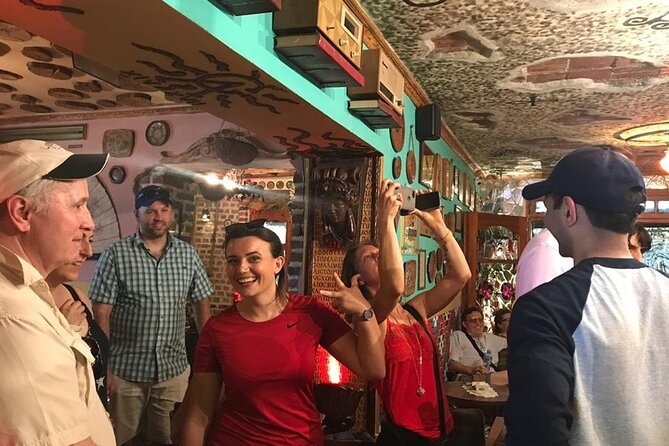
Stop 13 is Komiteti Bar, also referred to as Komiteti Kafe Museum. This is a nostalgic stop built around socialist-era culture and history, tied to Albanian hospitality. It matters because it shows the communist era in everyday textures, not only as oppression. You learn how people experienced the period in routines, not just in headlines.
Stop 14 is the Pyramid of Tirana. It is described as a unique structure with historical significance and contemporary transformation. The quick stop is enough to understand why it is a conversation piece today, and it also helps you see how post-communist Tirana repurposes its legacy structures.
Practical note: if you are the type who likes to take architecture photos, bring your camera settings. These two stops are strong for shots because they contrast old ideology buildings with newer city usage.
Postbllok, Enver Hoxha’s villa, and the Blloku shift
Stop 15 is Postbllok, a checkpoint memorial. It is an open-air installation meant to remind you of Albania’s communist past, near the entrance of the Blloku neighborhood. This is one of the tour stops that makes the political story feel visible. It is not abstract.
Stop 16 is Shtepia Partise Enver Hoxha, the former villa of Enver Hoxha. The tour describes it as a key part of communist history, located in Blloku, once off-limits to ordinary citizens. Even a brief look helps you grasp the power distance that shaped people’s lives.
Stop 17 is Blloku, now Tirana’s social center. The tour describes it as transformed into a hub of modern social life after being an exclusive zone for the communist elite. This contrast is the point. You are seeing the same geographic area reinterpreted across decades.
If you want to get the most from this stretch, watch how your surroundings change as you move through Blloku. The transition from memorial mindset to everyday city energy is the tour’s emotional payoff.
Shallvaret, the Orthodox Cathedral of Resurrection, and faith after repression
Stop 18 is Shallvaret, described as an area with deep historical roots. This is a quieter stop, more about giving you neighborhood context than hitting a single landmark.
Stop 19 is the Orthodox Cathedral of Resurrection, explained as a symbol of Albania’s religious revival after decades of suppression under communism. The tour notes the dictatorship’s declaration of Albania as the world’s first atheist state in 1967, and that religious practices were banned. Churches, mosques, and religious sites were destroyed or repurposed. After communism fell in the early 1990s, Albania rebuilt religious institutions, and the cathedral construction happened from 2001 to 2012. It was officially consecrated on June 24, 2012.
This stop is emotionally heavier than it sounds on paper, because it connects architecture to a policy reality. If you have ever wondered how a country rebuilds after an ideological rupture, this is one of the clearest examples you will see in Tirana.
House of Leaves is the one paid exception
Stop 20 is Museum of Secret Surveillance, known as Shtëpia me Gjethe or the House of Leaves. Here is the practical point: admission is not included in the tour price. The tour still includes the stop so you understand why it matters, but you will need to pay separately if you want to go inside.
If you are curious about communist surveillance culture, this is your signal. If you prefer not to spend extra time or money, you can still walk away with the context for what you saw outside and move on.
Ending with the Bank of Albania and the city’s ongoing system
Stop 21 is Bank of Albania, the central bank of the country. The tour describes it as established in 1925, one of the oldest financial institutions in Albania, and founded to manage the country’s currency and monetary policy.
This is a neat final note because it snaps the story back to today. After walking through Ottoman, Venetian-influenced, and communist layers, you finish with the idea that Tirana also runs on modern institutions. It keeps the tour from feeling like only the past is relevant.
Price and What You Get for $36.20
Let’s talk value in plain terms. At $36.20 per person for roughly 3 to 4 hours, you are paying for:
- a guided route through major center landmarks
- a small group size (max 11)
- an included shot of raki
- a loop where most stops have free admission
The main cost “watch-out” is the Museum of Secret Surveillance stop, since admission there is not included. Everything else on the itinerary is marked as free admission.
So for most people, this tour is a smart way to spend a first half-day because your budget does not get eaten by entrance fees. Your money is spent on someone who can explain the why behind the what.
Also, the tour is often booked about 33 days in advance, and it has a 5 out of 5 rating from 52 reviews. That does not automatically mean it is right for you, but it is a useful signal that the experience lands well, especially for people who want context rather than just directions.
Who This Tour Suits Best (and who should skip it)
This is a strong match if you:
- are in Tirana for a short trip and want a fast orientation
- care about Albania’s modern history and how it shaped everyday spaces
- like walking tours that mix architecture with political context
- enjoy asking questions and getting answers in English
You might want to skip or pair it with extra time on your own if you:
- want a museum-heavy day with long, slow time inside fewer sites
- dislike tours with lots of quick stops and frequent movement
- are very sensitive to weather, since the experience requires good conditions
The good news is that because the tour returns you to the meeting point at Skanderbeg Square, it is easy to extend your day. You have a clear starting anchor for later choices.
Should you book the Tirana Walking Tour?
If you want the most efficient way to understand central Tirana, I would book it. You get a practical loop through the city’s most important symbols, from Skanderbeg Square to Blloku, with a strong mix of Ottoman, Venetian-influenced, Catholic and Orthodox sites, plus the communist story told through places like Bunk’Art 2 and the checkpoint memorial route.
The biggest reason to say yes is the combination of small group size and guide storytelling. In other words, you get context without feeling like homework. The one reason to hesitate is the pace, because the tour tries to cover a lot of meaningful stops in a half-day frame.
If you are planning your first day, this tour is a great way to get your bearings fast, then decide what deserves more time after you understand what you are looking at.
FAQ
How long is the Tirana Walking Tour?
It lasts about 3 to 4 hours.
What does the tour cost?
The price is $36.20 per person.
Is the tour offered in English?
Yes, it is offered in English.
How big is the group?
The tour has a maximum of 11 travelers.
What is included in the price?
You get a complimentary shot of rakia.
Are entrance tickets included for all stops?
Most stops on the itinerary have free admission. The Museum of Secret Surveillance stop is not included.
Where does the tour start and end?
It starts at Skanderbeg Square, Plaza Tirana, Sheshi Skender Beu, Tiranë 1001, Albania, and it ends back at the meeting point.
Does the tour require good weather?
Yes. It requires good weather. If it is canceled due to poor weather, you will be offered a different date or a full refund.
What is the cancellation policy?
You can cancel for a full refund up to 24 hours in advance of the experience start time. If you cancel less than 24 hours before, the amount paid is not refunded.
A Few More History Tours in Tirana
Added to Tirana lately
- Kosovo, Prizren Day Trip from Tirana★ 3.0 · 1 review
- Semi-Private Hiking Tour; Theth,Valbona&Koman Lake in 3 Days★ 5.0 · 1 review
- Private 1 Day Berat Tour from Tirana★ 5.0 · 1 review
- Private 3 Days Adventure in Albania and Gjirokaster County★ 5.0 · 1 review
- From Tirana: Ksamil Islands, Saranda, & Blue Eye Day Trip★ 5.0 · 1 review
- Tirana Airport Private Transfer To City★ 5.0 · 1 review
- Architectural Walking Tour Discovering Tirana’s Modern Identity★ 5.0 · 1 review
- From Shkoder: 3-Day Valbona to Theth Hike Tour All Inclusive★ 5.0 · 1 review
Historical Tours, compared.
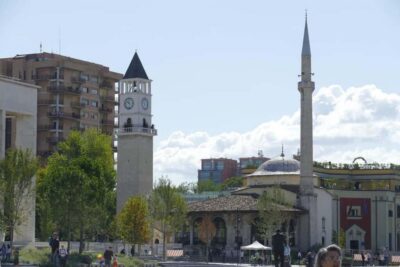
Guided tour in Tirana – discoveries, history, culture (in FRENCH)
Read our review →
Durres city & Golem beach, Sun & History Day Trip
Read our review →
Semi – Private Tour at Cape of Rodon; Hidden Beaches & History
Read our review →
Ancient City of Butrint, UNESCO World Heritage site – A Must
Read our review →
Browse the lists this tour appears in