
Reviewed · BUNKERS & COMMUNIST-ERA TIRANA
Tirana’s Communist Past; Small Group Walking Tour
Tirana has ghosts, and you can walk to them. This Tirana communist past walking tour turns key places into a clear story, from the fear of the regime to the public space where communism collapsed. I love the stop at Postblloku (Checkpoint Memorial), where you get a visceral sense of what repression looked like in real objects, not vague history. I also like the walk through Blloku, the former gated zone of the communist elite, now full of everyday life and street-level energy.
The only catch is the format: at 2 hours, it is a fast, walking-heavy overview. You will pass by or get brief looks at some big sites, like Bunk’Art 2, so if you want deep time inside every museum, you may want to plan a follow-up on your own.
In This Review
- Key highlights you should clock first
- Where the tour starts: Twin Towers, then downtown history on foot
- Postblloku checkpoint memorial: the regime’s bunker logic, up close
- Blloku neighborhood: how the elite lived behind rules
- House of Leaves and Sigurimi shadows on the route to Skanderbeg Square
- Skanderbeg Square: where the public script changed
- Bunk’Art 2 and Tirana Castle: Cold War shelter meets older stone
- Namazgah Mosque and the religious reset after the atheist state
- The pacing that makes a 2-hour tour work
- Price and value: $13 for a guided political timeline in the center of Tirana
- Who should book this tour, and who might want something else
- Should you book this Tirana communist past walking tour?
- FAQ
- How long is the Tirana’s Communist Past small group walking tour?
- How big is the group?
- Where do I meet the guide?
- What sites will we see?
- Is the tour in English?
- What should I bring for the walk?
- Can I cancel or change my plans?
Key highlights you should clock first
- Postblloku checkpoint memorial for a hands-on look at communist-era artifacts and isolation
- Blloku neighborhood to understand how the elite lived behind walls and rules
- Skanderbeg Square as the public stage of parades, rallies, and the fall of Enver Hoxha’s statue
- House of Leaves as a clue to how the Sigurimi secret police operated
- Tirana Castle for a long view of Tirana that outlasted multiple political eras
- Atheist-state policy in 1967, explained while you see major religious landmarks in the city
More Walking Tours in Tirana

Where the tour starts: Twin Towers, then downtown history on foot
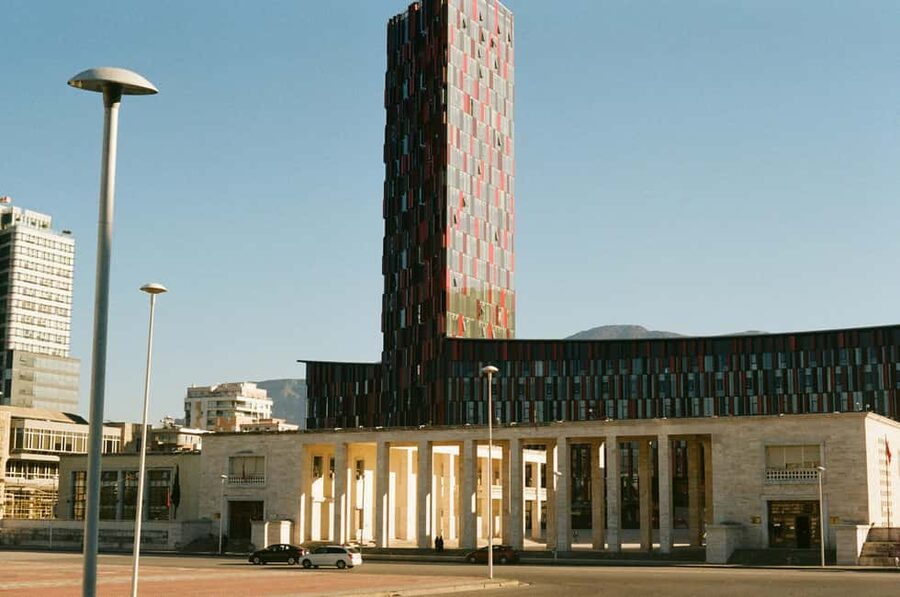
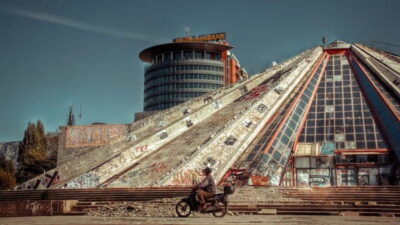
This tour is built for first-time orientation, and I like that you start at a landmark you can actually find. Meet at the Twin Towers, Tower 2, on Bulevardi Dëshmorët e Kombit, right across from the Pyramids of Tirana. The plan is to wait by Amo Sushi Albania outside on the ground floor, where the guide will pick you up.
Once you’re together, the pace feels intentional. You’re not just hopping between points on a map, you’re moving through a political timeline. The small group size, capped at 8 participants, matters here. It makes it realistic to ask follow-up questions, and it also keeps the guide’s explanations from turning into a one-way lecture.
Bring the basics for walking in Tirana. The tour includes outdoor time and sunny stretches, so sunglasses, sunscreen, and a sun hat are smart.
Postblloku checkpoint memorial: the regime’s bunker logic, up close
Your first major stop is Postblloku (Checkpoint Memorial), on Tirana’s main boulevard. This place hits because it is not a tidy museum display. It is an open-air installation that uses original elements from the dictatorship, so it feels like you’re seeing the machinery of control rather than reading about it.
What you should pay attention to:
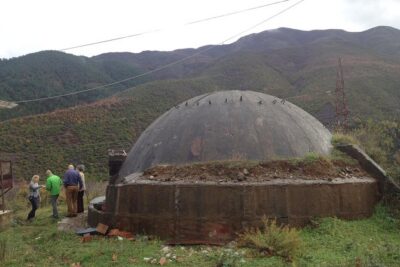
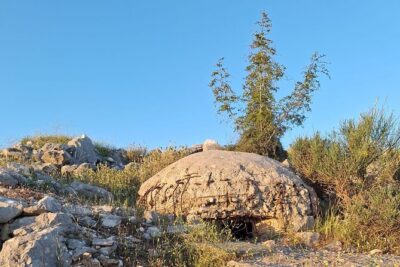
- A concrete bunker that signals how the regime expected danger
- A piece of the Berlin Wall, which links Albania’s isolation to the broader Cold War mindset
- Steel supports from a forced labor camp, which grounds the story in hardship, not slogans
The guide’s job here is to connect objects to human consequences. You’ll hear how Albania’s isolation under Enver Hoxha turned everyday life into a long pattern of repression, surveillance, and fear. Even if you know the headline facts, the memorial makes the era feel tangible.
A small practical note: because this stop is on a main boulevard, you get city life around you even as the memorial asks you to sit with difficult history. That contrast is part of why it works.
Blloku neighborhood: how the elite lived behind rules
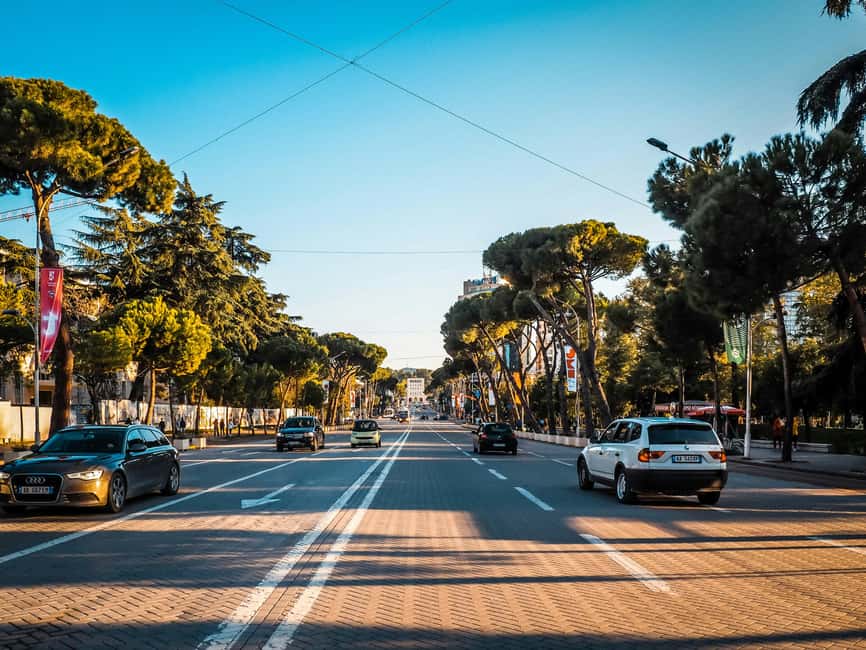
Next you head into Blloku, once the most prohibited area in Albania. This is one of the best parts of the tour because it changes your angle. Instead of only focusing on suffering, you also get the mechanics of power: who was allowed where, and what that did to the rest of the country.
Blloku used to be reserved for the communist elite. On your walk, you’ll pass the former residence of Enver Hoxha, a reminder that the country’s highest authority was physically separated from everyone else. Historically, that kind of separation matters because it creates two realities in one city, the privileged world behind controlled access and the everyday world beyond the checkpoints.
Today, Blloku is a neighborhood you can feel moving. The guide points out how it’s now known for cafés and street art, which is exactly the point. This is not “the past as a dead exhibit.” It’s the past reworked into normal life, and that transition is a big part of what Albania is about now.
House of Leaves and Sigurimi shadows on the route to Skanderbeg Square
On the way to Skanderbeg Square, you pass by the House of Leaves, once connected to the communist-era secret police, the Sigurimi. Even though you’re not spending long here, the stop is useful. It gives you context for the memorial and the restricted zone before you reach the big public center where power was performed.
Think of this as a bridge. Postblloku explains fear as infrastructure. Blloku shows how fear and privilege were built into the geography of the city. House of Leaves hints at what happened in between, the information system and the control system that kept both running.
A few more bunker and communist-era tours:
- A Communist Manifesto: Tirana before and after
★ 5.0 · 50 reviews - From Albania: Permet /Thermal Baths with Bunker Food Tasting
★ 5.0 · 19 reviews - The truest face of Communism
★ 5.0 · 18 reviews - Full-Day Tour of Albania’s Bunkers and Beaches, from Tirana
★ 5.0 · 16 reviews
Skanderbeg Square: where the public script changed
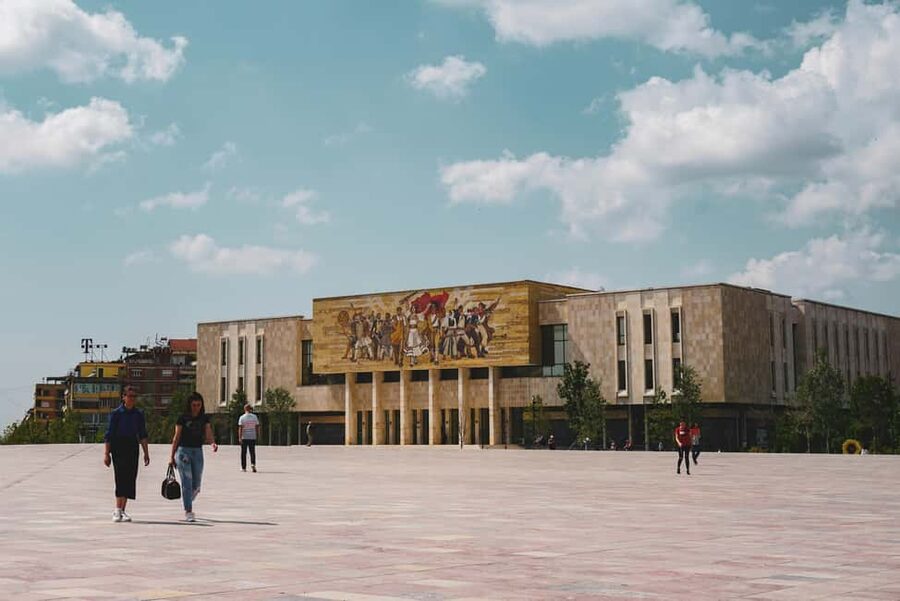
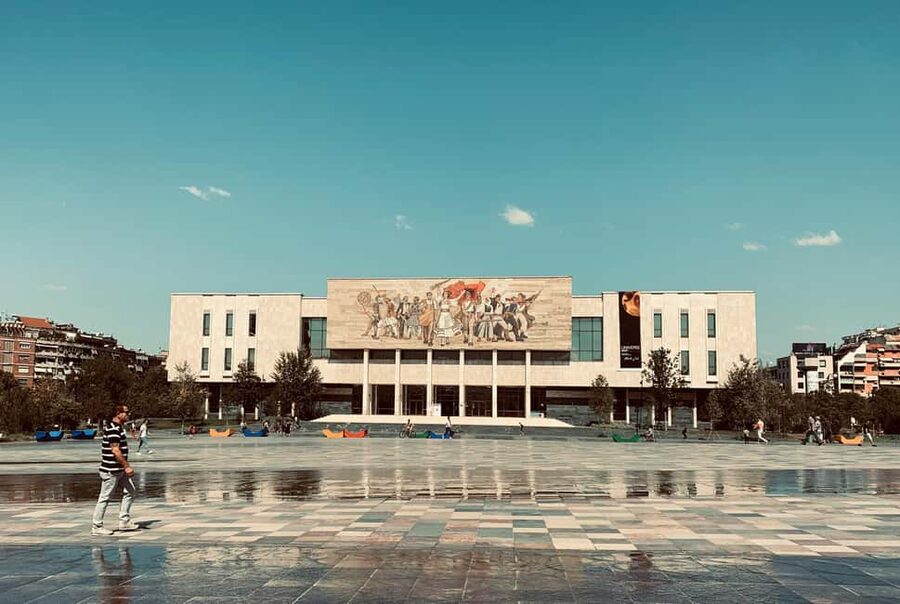
When you reach Skanderbeg Square, you’re stepping into the political theater of Tirana. During the communist era, this space served as a stage for military parades and political rallies. That matters because regime power was not only enforced privately, it was displayed publicly.
The most important takeaway for first-time visitors is this: the square also symbolizes the end of communism. You’ll hear about the period when the statue of Enver Hoxha stood here until it was overthrown in 1991.
As you look around, ask yourself what changed:
- The same open space, new meaning
- Old symbols removed, new interpretations allowed
- The city continuing after the breaking of a narrative
It is the kind of place where you can understand why people talk about 1991 as a turning point. Not just because things became different, but because public space became negotiable again.
Bunk’Art 2 and Tirana Castle: Cold War shelter meets older stone
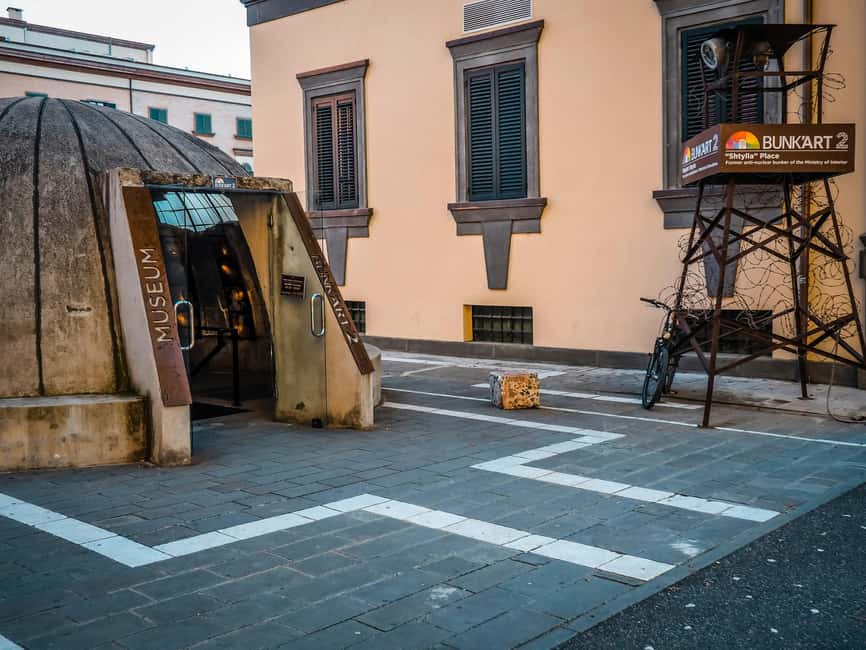
From Skanderbeg Square, you pass by Bunk’Art 2. Even if you are not going inside on this walk, it’s worth paying attention to what the guide tells you about it. Bunk’Art 2 was initially designed as a nuclear bunker, meant to shelter Albania’s communist supreme leader and his close party members during the Cold War.
That detail adds weight to everything you’ve seen so far. The checkpoint memorial shows control on the ground. Blloku shows the elite’s separation. The secret police stop shows how the system maintained itself. Bunk’Art 2 shows a top layer of fear, even at the highest level, the leadership preparing for catastrophe.
Then you head to Tirana Castle for a photo stop and a visit time. The castle is centuries-old, and it also stood through the communist years. Recently revitalized, it now blends the modern with tradition, so you’re not only looking backward. You’re seeing how Tirana keeps reorganizing its past to fit the present.
Practical tip: since the castle stop includes a visit portion, wear comfortable shoes. This is where you’ll be glad you packed for walking.
Namazgah Mosque and the religious reset after the atheist state
One of the most memorable parts of the tour is how it handles religion, because Albania’s communist era took a radical approach. In 1967, Albania was declared the world’s first atheist state, with all religious practices banned and institutions shut down or repurposed by the regime.
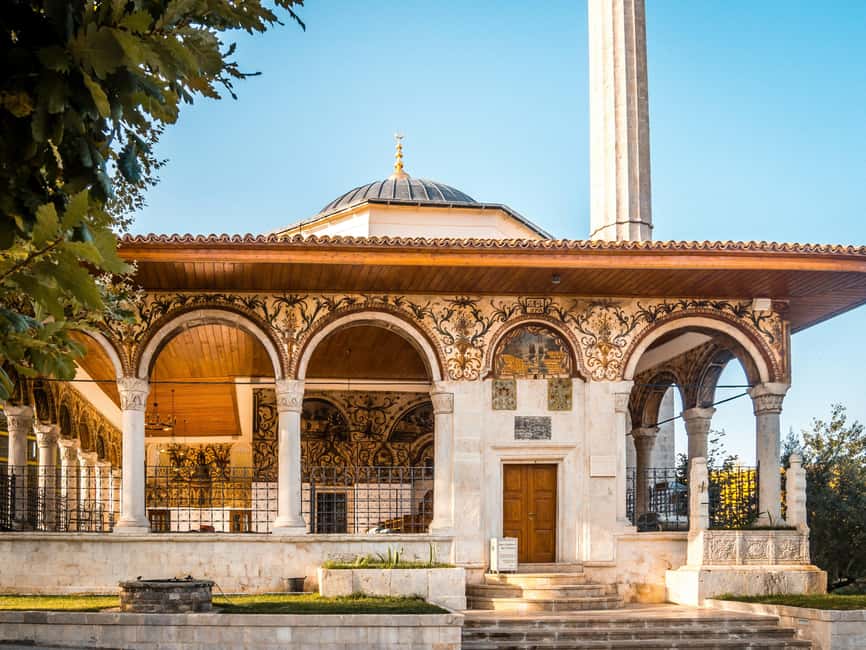
As you continue walking, you’ll see key landmarks connected to major faith communities, including Namazgah Mosque, the Orthodox Resurrection Cathedral, and St. Paul’s Catholic Cathedral. The guide uses these to frame how religious identity was suppressed, and how it has changed since the fall of communism.
This section can feel heavy, but it’s also grounded. You’re not getting history as an abstract lecture. You’re looking at real buildings and reflecting on how policy shaped people’s daily lives and choices.
This is also where the guide’s tone matters. Many of the strongest guides on this kind of tour, like Markel and Angjelo, are praised for keeping it human and engaging. You want explanations that connect dates to lived experience without turning the two hours into a classroom.
The pacing that makes a 2-hour tour work
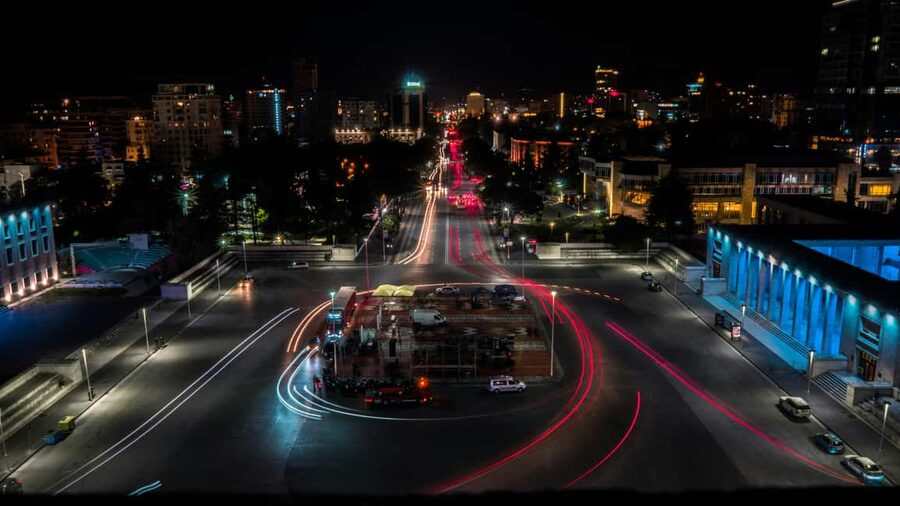
A 2-hour walking tour is always a negotiation between “see a lot” and “feel like you actually learned something.” The format here works best if you treat it like an orientation and context builder.
Here’s what you can expect in the structure:
- Short guided segments at the most important political sites
- Photo stops where you get quick visual anchors
- A couple of longer segments where the guide can tell the story without rushing
The stop at Namazgah Mosque includes a break time and extra breathing room, which helps you reset before you finish back near the meeting point.
If you like to ask questions, this group size helps. With a limit of 8 participants, the guide can answer without steamrolling the conversation.
Also, the route is designed for city comprehension. By the end, you should be able to look at Tirana and understand why certain squares, neighborhoods, and monuments matter, even if you never memorized a single year.
Price and value: $13 for a guided political timeline in the center of Tirana
At $13 per person for a 2-hour guided walk in central Tirana, the value is strong, especially because you are not paying for transportation or private transfers. You are paying for a local guide, storytelling, and a concentrated route through major sites that would take you longer to piece together on your own.
What you get that you usually miss when you DIY:
- A coherent explanation of how communist power shaped geography (Postblloku and Blloku)
- Context for secret police history (House of Leaves and Sigurimi references)
- A clear reason to care about public monuments and squares (Skanderbeg Square and the statue removal in 1991)
- Religion as policy, not just architecture (the 1967 atheist state and what changed afterward)
Plus, the guide includes recommendations for local restaurants and coffee. That might sound minor, but after a history-heavy walk, it’s useful to know where to go next without guesswork.
Who should book this tour, and who might want something else
This tour is a great fit if you:
- Are visiting Tirana for the first time and want the city’s political backbone explained
- Like walking tours that connect facts to specific places
- Want a small-group experience with time for questions
- Appreciate guides who balance history with what’s happening in the city now
It may be less ideal if you:
- Want deep museum time at Bunk’Art 2 during the same outing
- Prefer slow pacing and long stops in a single site
- Plan to treat Tirana history as purely visual, without much context
If you fall into the second group, you can still do this tour for orientation, then add extra time elsewhere afterward.
Should you book this Tirana communist past walking tour?
Yes, if your goal is understanding Tirana fast, in a way that actually sticks. The mix of Postblloku, Blloku, Skanderbeg Square, and the religion policy context gives you more than a sightseeing checklist. It turns the communist era into a map you can read.
I’d especially book it early in your trip. Once you understand why the city is arranged the way it is, the rest of Tirana feels less random.
If you can, go in with one or two questions you genuinely want answered, like how ordinary people experienced the state, or why 1967 matters for religion. Guides like Markel, Angjelo, Brikena, and others are repeatedly praised for being friendly and professional while staying engaging, which is exactly what you want from a tour built around sensitive history.
FAQ
How long is the Tirana’s Communist Past small group walking tour?
The tour lasts 2 hours.
How big is the group?
The experience is limited to a small group of up to 8 participants.
Where do I meet the guide?
Meet at Bulevardi Dëshmorët e Kombit, Twin Towers, Tower 2, in Tirana. The guide waits outside near Amo Sushi Albania on the ground floor. The Twin Towers are directly opposite the Pyramids of Tirana.
What sites will we see?
You’ll visit Postblloku, explore Blloku, pass by House of Leaves, visit Skanderbeg Square, pass by Bunk’Art 2, photo stop and visit Tirana Castle, and have time around Namazgah Mosque while also reflecting on religion and walking past Orthodox Resurrection Cathedral and St. Paul’s Catholic Cathedral.
Is the tour in English?
Yes, the live tour guide speaks English.
What should I bring for the walk?
Bring sunglasses, a sun hat, and sunscreen.
Can I cancel or change my plans?
Yes. You can cancel up to 24 hours in advance for a full refund. You can also reserve now and pay later, meaning you can book your spot without paying today.
Added to Tirana lately
- Semi-Private Hiking Tour; Theth,Valbona&Koman Lake in 3 Days★ 5.0 · 1 review
- Kosovo, Prizren Day Trip from Tirana★ 3.0 · 1 review
- Private 1 Day Berat Tour from Tirana★ 5.0 · 1 review
- Private 3 Days Adventure in Albania and Gjirokaster County★ 5.0 · 1 review
- From Tirana: Ksamil Islands, Saranda, & Blue Eye Day Trip★ 5.0 · 1 review
- Tirana Airport Private Transfer To City★ 5.0 · 1 review
- Architectural Walking Tour Discovering Tirana’s Modern Identity★ 5.0 · 1 review
- From Shkoder: 3-Day Valbona to Theth Hike Tour All Inclusive★ 5.0 · 1 review
Bunkers & Communist-Era Tirana, compared.

ATV Guided Tour in Kallm with Secret Bunker Visit
Read our review →
From Albania: Permet /Thermal Baths with Bunker Food Tasting
Read our review →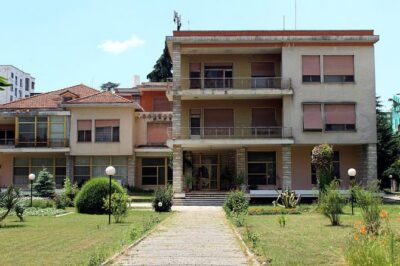
Full-Day Tour of Albania’s Bunkers and Beaches, from Tirana
Read our review →
Browse the lists this tour appears in