
Reviewed · BUNKERS & COMMUNIST-ERA TIRANA
Tirana Walking Tour & Bunk’Art 2 entrance
Tirana tells its story underground. I love how Bunk’Art 2 turns Albania’s 20th century into something you can walk through, and I love the stop at the Clock Tower for views over Tirana’s central square. One trade-off: it is a lot of ground in just three hours, so comfortable shoes matter, and the communist-era sites can feel heavy.
This is a structured, center-of-town route that mixes architecture from different eras, from Ottoman mosques to fascist-era government buildings and post-communist monuments. The tone stays practical, with a live guide who keeps you moving and explains what you are actually looking at. If you’re lucky enough to get Elis as your guide, the storytelling style is clear, engaging, and grounded in real context.
In This Review
- Key things that make this tour worth your time
- Start where the city wakes up, at Rruga George W. Bush
- Sulejman Pashë Bargjini Square and the Unknown Soldier symbolism
- Et’hem Bey Mosque and the Clock Tower, Tirana’s “look up” moment
- Skanderbeg Square: the civic heart of Tirana
- Bunk’Art 2: the communist bunker museum you actually remember
- Tirana Castle walls, cafes, and art galleries
- Tabak Bridge over the Lana River, a trading-era crossing
- Pyramid of Tirana and the story of Enver Hoxha’s legacy
- Mother Teresa Square: modern symbols in a lived-in setting
- Blloku: a guided look at the communist-era change
- Government Complex, Postbllok Memorial, and the geography of power
- Enver Hoxha’s Villa and House of Leaves: two angles on the same era
- Ottoman and modern faith landmarks, plus a lot of skyline watching
- Air Albania Stadium and University Corps: modern Tirana in motion
- Museums that frame Albania, from prehistory to the 20th century
- New Bazaar, the practical finish for food and local life
- Price and what $35 gets you in real terms
- Who should book this tour, and who should think twice
- Should you book this Tirana Walking Tour with Bunk’Art 2?
- FAQ
- Where does the tour start?
- How long is the walking tour?
- What is included in the price?
- Do I need to buy the Bunk’Art 2 ticket separately?
- What languages are the guides available in?
- What should I bring and wear?
Key things that make this tour worth your time
- Bunk’Art 2 entrance included, so you can focus on the stories instead of ticket hassles
- Clock Tower panoramas that help you understand where everything sits in the city center
- Blloku neighborhood guided segment, a quick hit of communist-era change and memory
- Sights layered by era, Ottoman, fascist, communist, and modern all in one walking loop
- New Bazaar time to see day-to-day market life in a renovated space
More Walking Tours in Tirana

Start where the city wakes up, at Rruga George W. Bush
The tour starts at the Coral Travel & Tours main office on Rruga George W. Bush. That matters because you are already in the core area, where you can walk to many of Tirana’s most meaningful landmarks without a long transfer. If you like getting your bearings fast, this kind of central start is a real advantage.
The route is built for a 3-hour visit, so the pace is not slow sightseeing for its own sake. Expect a steady rhythm: walk, look, listen, then move on again. Bring water, and plan to spend most of the time on foot.
Sulejman Pashë Bargjini Square and the Unknown Soldier symbolism
Your first major orientation point is Sulejman Pashë Bargjini Square, which sets the tone for how Tirana connects public space to national identity. The tour explains the square’s background and the Unknown Soldier monument, which is the kind of landmark that only makes sense once you know what it represents.
This is the kind of stop that helps you read the city later. Once you understand why a monument exists and what it was meant to communicate, you start noticing the bigger pattern: Tirana uses squares and buildings to tell political and cultural stories in plain sight.
Et’hem Bey Mosque and the Clock Tower, Tirana’s “look up” moment
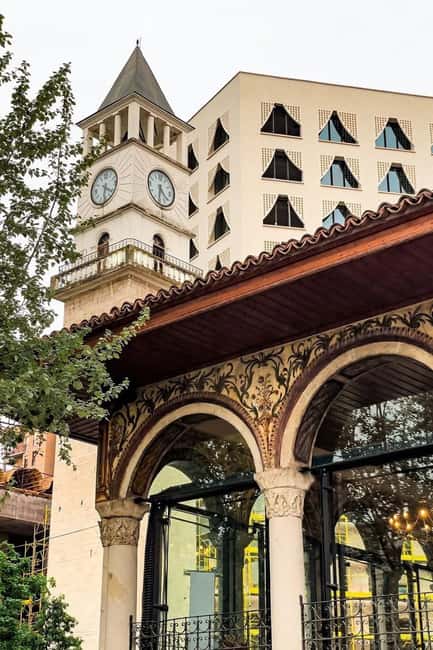
Next comes Et’hem Bey Mosque, built toward the end of the 18th century, with details tied to Ottoman-era design and fresco work. Even if you do not consider yourself a religious-architecture expert, this is worth it because the tour frames the mosque as a visual record of craftsmanship and an era that shaped the city.
Then you reach the Clock Tower of Tirana, a symbol you see in photos, but only truly understand after you stand there. The tour adds the key context: why the tower matters, and how it relates to Skanderbeg Square and the surrounding civic buildings. When you step back and take in the panoramic view, it starts to feel like Tirana is laid out for you, not the other way around.
Skanderbeg Square: the civic heart of Tirana
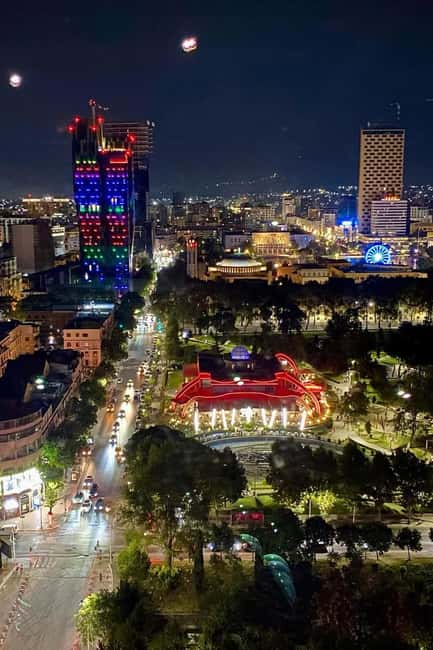
Skanderbeg Square is the main square most first-time visitors aim for, and here you get a guided walk that connects it to government presence and national symbolism. The tour keeps the time tight, but focused, so you are not stuck staring at stone without knowing the point.
This is also where you can quickly spot the city’s shifting styles. You see how official architecture tends to cluster, and how later periods either build on that setting or react against it. If you want a shortcut to understanding Tirana’s “center of power” geography, this stop helps.
A few more bunker and communist-era tours:
- Tirana’s Communist Past; Small Group Walking Tour
★ 4.9 · 59 reviews - A Communist Manifesto: Tirana before and after
★ 5.0 · 50 reviews - From Albania: Permet /Thermal Baths with Bunker Food Tasting
★ 5.0 · 19 reviews - The truest face of Communism
★ 5.0 · 18 reviews
Bunk’Art 2: the communist bunker museum you actually remember
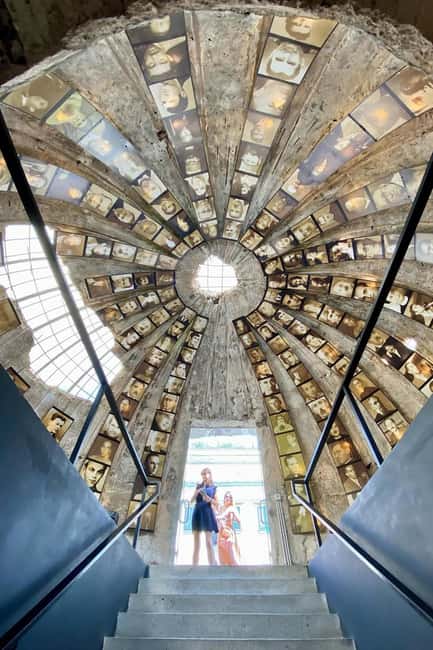
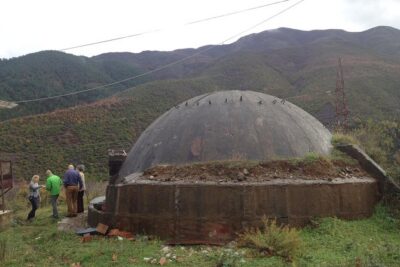
The highlight for many people is the visit to Bunk’Art 2, an underground museum in a bunker built during the communist regime. The museum presents the history of Albania’s state security and persecution, and it does so in a way that hits hard because you are moving through the physical space where control was imagined and enforced.
The tour schedules about one hour for this visit, which is long enough to take in the main themes without feeling like you are trapped in a long, exhausting crawl. It is also enough time to read enough of the story so it does not turn into blur.
What I like about this stop for value is simple: the tour includes the Bunk’Art 2 entrance fee, and you skip the ticket line. That removes two common travel frustrations, waiting and uncertainty. You show up, you go in, and you spend your limited time on interpretation rather than logistics.
Tirana Castle walls, cafes, and art galleries
After the darker theme of Bunk’Art 2, Tirana Castle feels like a reset. The complex dates back to the Byzantine period, and the old walls now act as an open space where cafes and art galleries live.
This stop is useful even if you are not planning to spend money on refreshments. Why? Because the walls give you a real sense of how old defensive space became modern public space. You start noticing the city’s habit of reusing structures instead of erasing everything and starting fresh.
Tabak Bridge over the Lana River, a trading-era crossing
The walk continues toward Tabak Bridge, also referred to as Tanners’ Bridge, an Ottoman bridge built in the 18th century over the Lana River. The tour explains its role as a crossing point for trade caravans, which turns a bridge from a photo subject into a clue about how Tirana worked.
Bridges are underrated for city understanding. They show you where movement mattered, and they hint at which parts of town gained economic importance. Even if you only spend about ten minutes moving to and across the bridge area, you leave with a better sense of the city’s flow.
Pyramid of Tirana and the story of Enver Hoxha’s legacy
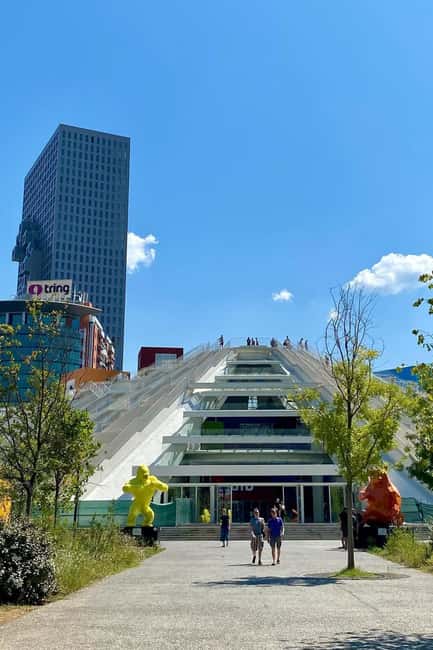
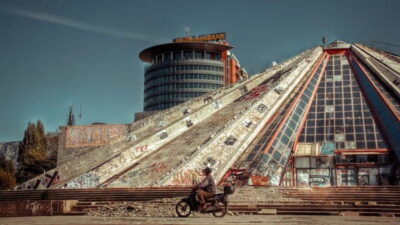
Next is the Pyramid of Tirana, built in the 1980s as a museum for Enver Hoxha. Today it serves other cultural and social functions, but the structure still carries the heavy imprint of how leadership tried to shape public memory.
The tour allots about 20 minutes here, which is the sweet spot. You can look at the building, understand why it was conceived, and then walk away with context for how the same physical space gets repurposed over time.
If you prefer your history with explanations attached, this stop is a good one. It shows how the same object can mean different things depending on who controls the narrative.
Mother Teresa Square: modern symbols in a lived-in setting
From the Pyramid, you move toward Mother Teresa Square, with about 20 minutes allocated. The tour points out the statue of Mother Teresa in the courtyard of the Cathedral of Saint Paul, a Catholic church built in the 2000s with modern architecture.
This is where Tirana’s present becomes easier to understand. It is not only about monuments and regimes, it is also about contemporary identity, religious plurality, and public symbolism that locals actually pass through.
If you are photographing, take a second to check your framing and be respectful. This is a public space with real people going about their day.
Blloku: a guided look at the communist-era change
Then you hit Blloku, a neighborhood segment that lasts about 30 minutes with guided commentary. Blloku is often the name visitors know, but what makes this stop useful is the tour’s framing of what it represented during the communist era and how that identity connects to later life in Tirana.
If you want a quick way to connect place names to political history, this is one of the better segments. It also helps you understand why some neighborhoods in Tirana feel like chapters in a book rather than just locations on a map.
Government Complex, Postbllok Memorial, and the geography of power
The tour also takes you through the area of the Government Complex, described as main government buildings built in neoclassical style during the fascist period. You also learn about the Postbllok Memorial, an installation built in memory of the victims of communism.
Even in a short walking segment, this kind of pairing matters. The government buildings show how authority was built to impress, while the memorial points to who suffered under that system. Together, they make it harder to reduce political history to dates only.
For me, this is the part of the tour that helps you connect the architecture to the human cost behind it. It is not meant to be comfortable, but it is meant to be understood.
Enver Hoxha’s Villa and House of Leaves: two angles on the same era
You also see Enver Hoxha’s Villa, now a museum that tells the story of his life and the dictatorship period. Later in the route, you get another crucial stop: House of Leaves, a museum located in a former State Security investigation center that documents persecutions and the secret service’s activities during communism.
These two stops work well as a pair because they do not tell the same story in the same tone. One focuses on the dictator and the personal side of power. The other focuses on the machinery of control and the fear that system produced.
This is also why the tour can feel emotionally intense. If you tend to avoid heavy topics, plan for it mentally ahead of time and take short breaks during the walks.
Ottoman and modern faith landmarks, plus a lot of skyline watching
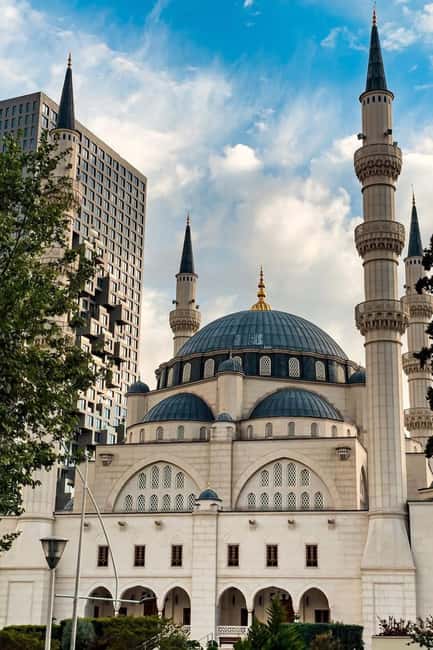
A big strength of this tour is that it keeps switching viewpoints. You see New Mosque, one of the largest in Albania, and also the Catholic Cathedral of Saint Paul with modern architecture and the Mother Teresa statue.
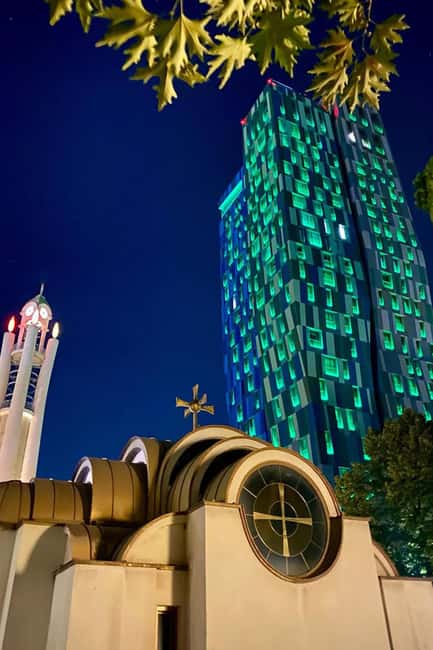
You also get the Orthodox Resurrection of Christ Cathedral, built in 2012 and described as the largest Orthodox church in Tirana, with modern design and detailed frescoes. For city photos, this is where your camera benefits from the different textures and angles.
The practical tip here is simple: some sites may require modest dress for entry. If you do not want to risk being turned away, bring something light you can cover with quickly, especially in warmer months when you might naturally dress lighter.
Air Albania Stadium and University Corps: modern Tirana in motion
As you move through central Tirana, the tour also includes stops around Air Albania Stadium, the national stadium of Albania after renovation, and the University Corps of the University of Tirana.
These are not necessarily “museum stops,” but they help you see the city as it is used today. Stadiums and campuses create daily rhythms, and they influence how people experience public space. It is an easy reminder that Tirana is not only a history lesson, it is a living city.
Museums that frame Albania, from prehistory to the 20th century
The route includes the Archaeological Museum, opened in 1948 and described as the first museum in Albania, showing artifacts from different periods including prehistory and the Middle Ages. It also includes the National Historical Museum, described as the largest museum in Albania with a broad overview from antiquity to contemporary times.
If you love museums but do not want to commit to a full day indoors, this is a smart strategy. You get a guided orientation to the kinds of collections that exist and why they matter, even if you do not spend hours in each hall.
The value angle: a walking tour like this helps you decide what to prioritize later. If one museum type really grabs you, you can come back with a clearer plan.
New Bazaar, the practical finish for food and local life
One of the listed highlights is the New Bazaar, described as a recently renovated traditional market. That is a great way to end the morning’s or afternoon’s history focus, because you shift into real-world atmosphere.
Even if you do not buy much, this part helps you calibrate prices, understand what people are shopping for, and see how Tirana’s traditional market culture continues inside updated spaces. Markets are also where you can pick up small items or snacks for later, but the tour itself is mostly about the experience and context.
Price and what $35 gets you in real terms
The tour costs $35 per person and lasts three hours. What makes it feel reasonable is that it includes a live guide plus Bunk’Art 2 entrance, and the tour also notes that you skip the ticket line.
In other words, you are paying for structure. Instead of spending your first visit wandering from one landmark to the next and guessing what you are looking at, you get a guided route that hits major themes: Ottoman legacy, civic symbolism, and communist-era memory sites. For short stays, that kind of efficiency is often worth more than squeezing in one extra stop on your own.
Who should book this tour, and who should think twice
This tour is a great fit if you want Tirana’s highlights in a guided format, especially if you are curious about 20th century Albania and the way places like Bunk’Art 2 and House of Leaves turn history into something tangible.
It may not be ideal if you need a very light, relaxed pace. The route is a lot of walking and includes intense topics connected to state security and persecution. Also, if you have dress limitations for religious sites, plan ahead for modest coverage.
Should you book this Tirana Walking Tour with Bunk’Art 2?
Yes, if you are staying in Tirana for a short time and want a guided, efficient route that connects key landmarks. The combination of Skanderbeg Square and Clock Tower views with Bunk’Art 2 gives you both the city’s civic face and its darker memory. The fact that the Bunk’Art 2 entrance fee is included and you can skip the ticket line makes it feel smoother for a half-day schedule.
Book it thoughtfully if you prefer history without heavy emotional weight. If that is you, pace yourself during the museums and keep an eye on comfort, especially shoes and hydration.
FAQ
Where does the tour start?
The meeting point is Coral Travel & Tours main office on Rruga George W. Bush.
How long is the walking tour?
The duration is 3 hours.
What is included in the price?
The tour includes a walking tour of Tirana, a live tour guide, and the Bunk’Art 2 entrance fee.
Do I need to buy the Bunk’Art 2 ticket separately?
No. The Bunk’Art 2 entrance fee is included, and the tour notes that you skip the ticket line.
What languages are the guides available in?
The live tour guide is available in Albanian, English, and Italian.
What should I bring and wear?
Wear comfortable shoes, bring water, and consider modest dress for sites that require it. It is also listed to bring drinks and cash, and a credit card.
Added to Tirana lately
- Semi-Private Hiking Tour; Theth,Valbona&Koman Lake in 3 Days★ 5.0 · 1 review
- Kosovo, Prizren Day Trip from Tirana★ 3.0 · 1 review
- Private 3 Days Adventure in Albania and Gjirokaster County★ 5.0 · 1 review
- Private 1 Day Berat Tour from Tirana★ 5.0 · 1 review
- From Tirana: Ksamil Islands, Saranda, & Blue Eye Day Trip★ 5.0 · 1 review
- Tirana Airport Private Transfer To City★ 5.0 · 1 review
- Architectural Walking Tour Discovering Tirana’s Modern Identity★ 5.0 · 1 review
- From Shkoder: 3-Day Valbona to Theth Hike Tour All Inclusive★ 5.0 · 1 review
Bunkers & Communist-Era Tirana, compared.
ATV Guided Tour in Kallm with Secret Bunker Visit
Read our review →
Tirana’s Communist Past; Small Group Walking Tour
Read our review →
From Albania: Permet /Thermal Baths with Bunker Food Tasting
Read our review →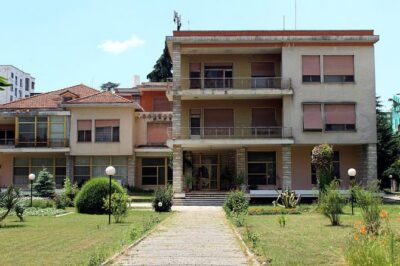
Full-Day Tour of Albania’s Bunkers and Beaches, from Tirana
Read our review →
Browse the lists this tour appears in