
Reviewed · DURRES BEACH & AMPHITHEATRE DAYS
Durrës: Walking tour with Roman Amphitheater
A Roman arena in Durrës feels instantly real. This guided stop centers on the Roman Amphitheatre Durres and gives you a local read on what you’re seeing, how it was used, and why so much of it is still partly out of view. I like that it is simple and focused, not a rushed photo sprint.
I also like the value setup: the guide is included, and the amphitheater entrance ticket is included too. With a group capped at 15, it stays easy to ask questions and hear the story without shouting over each other.
The main drawback is expectation management. A few comments point out that the site is not perfectly kept, and the amphitheater can feel less dramatic than bigger, fully preserved arenas. If you want walls and lettering in pristine condition, you might be a bit disappointed.
In This Review
- Key points to know before you go
- Roman Amphitheatre in Durrës: worth it if you read it like a ruin
- How the 1.5-hour format works around Sheshi Liria
- What you’ll learn at the amphitheater: Trajan, capacity, and the 350 AD turning point
- Site condition and expectations: missing inscriptions, partial burial, and the “not impressive” feeling
- Price and value check: what $40.65 buys you in real terms
- Group size and pacing: why a max of 15 keeps it comfortable
- Mobile ticket and practical logistics that actually matter
- Who should book this Durrës amphitheater walking tour
- Should you book this tour?
- FAQ
- Where does the tour start and end?
- How long is the Durrës Walking tour with Roman Amphitheater?
- What is included in the price?
- Do I need to pay separately for the amphitheater entrance?
- Is a mobile ticket used?
- How big is the group?
- Is there a minimum number of travelers?
- When will I get confirmation after booking?
- What if the weather is bad?
- What is the cancellation policy?
Key points to know before you go
- 30 minutes at the amphitheater gives you enough time to look closely without turning it into a long slog.
- Trajan-era context (2nd century) helps the stones make sense instead of looking like random ruins.
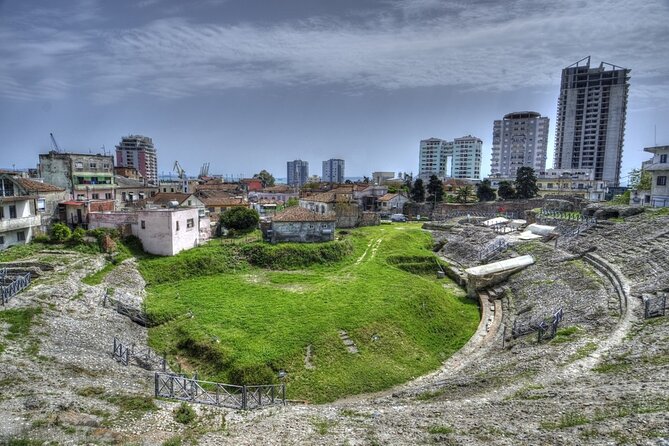
- Part of the structure is still under the ground, so scale and seating will not register like major landmark arenas.
- Small group size (max 15) keeps the pace human and the guide audible.
- Mobile ticket means less fuss, once you have it ready on your phone.
- Good weather is required, so plan for a backup date if conditions are rough.
More Walking Tours in Tirana




Roman Amphitheatre in Durrës: worth it if you read it like a ruin
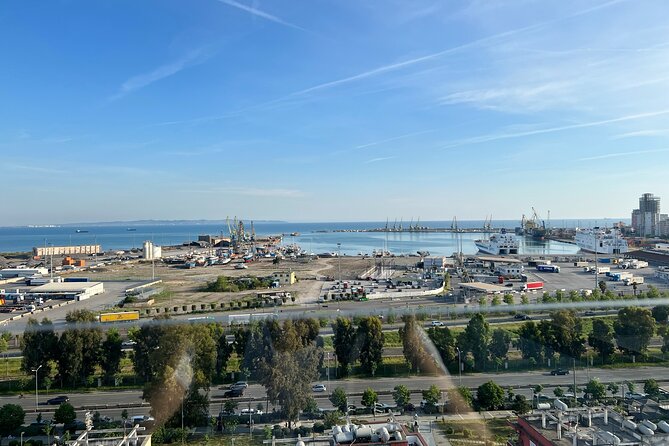
Durrës is one of Albania’s older ports, and the Roman amphitheater is one of the clearest places to connect the city to that era. But here is the truth you should carry with you: this is not the Colosseum. It is a historic place with a different kind of drama, the slow drama of a site that has been worn down and partly buried.
That is exactly why a guided walkthrough can be so helpful. When you know the amphitheater’s origin story, you stop scanning for perfection and start noticing clues. One of the most useful details you can pick up here is that the amphitheater’s origin is tied to Emperor Trajan in the 2nd century. The capacity is often cited as around 20,000 people, which explains why this was built to matter in a big way. You also get the follow-up: its peak did not last forever, with major decline around the mid-4th century, linked to a violent earthquake around 350 AD.
I like that kind of context because it turns a short stop into a meaningful one. Instead of just seeing an arena-shaped patch of stone, you start understanding why it was built, how people likely used it, and why what you see today is what remains.
How the 1.5-hour format works around Sheshi Liria
This is a short walking tour, about 1 hour 30 minutes total. It starts and ends at Sheshi Liria in Durrës, which is convenient because you are not stuck with an awkward “end somewhere else” situation. It is also listed as near public transportation, so you can slot it into a day without reinventing your route.
The schedule is anchored by one main stop at the Roman amphitheater, with about 30 minutes on site. That timing matters because it shapes what the tour can realistically do. You will not get an hours-long excavation tour. You will get a focused visit: orientation at the start, a guided look at the amphitheater itself, and enough time to ask questions and take photos without being herded onward every ten seconds.
In practice, I recommend you treat the visit like a careful circuit, not a sprint. Spend your first few minutes understanding layout and structure, then use the rest to look for what a guide is pointing out: architectural edges, where seating would have been, and any surviving inscriptions or markings.
What you’ll learn at the amphitheater: Trajan, capacity, and the 350 AD turning point
A big part of the value here is turning the amphitheater from an object into a story. The tour is built around seeing one attraction through a local lens, and the Roman context is not vague. You should come away with the idea that the amphitheater was associated with Trajan and built in the 2nd century, at a scale significant enough to be described as the largest in the Balkans in some accounts. Even if you take that with a grain of reality, the point stands: this was a major showpiece.
Then the story hits its pivot. By around 350 AD, the amphitheater’s glory is described as having ended, connected to a violent earthquake. That matters because it explains why you may not be seeing a perfectly intact arena. Earthquakes do not just break stone. They change how long a site stays readable, and whether later generations can fully restore it.
What I like about a guided visit is that it helps you connect the timeline to visible clues. If you notice that certain parts look less crisp, or that the site seems incomplete, the guide’s explanation can make those “missing” details feel less like neglect and more like evidence of how old damage reshapes ruins over time.
Site condition and expectations: missing inscriptions, partial burial, and the “not impressive” feeling
Several comments you can use as your expectation barometer point to a real issue: the amphitheater is not perfectly maintained. One note says the site is not kept very well, with illustrative inscriptions missing. Another comment says it is not particularly impressive, adding that a big portion is still under the ground.
That combination can create two kinds of experiences:
- If you expect a polished, lettered, tourist-ready landmark, you might feel let down.
- If you expect an archaeological site with visible fragments and gaps, you will likely find it more satisfying.
I fall into the second camp, and I suggest you do too. Come ready to read absence. When inscriptions are missing, look for structure instead. When part of the amphitheater is under the ground, look for the lines where the visible portion changes, and ask the guide what is typically buried versus what remains exposed.
Also, pay attention to what “easily accessible” can mean in this context. It usually means you can see a lot without major effort. Even if it is not a grand “wow” site, it can still be worth your time because you can get close, observe details, and understand the scale of what used to be there.
A few more Durres beach and amphitheatre days:
- Tirana/Durres/Golem: Saranda, Ksamil, Blue Eye Day Trip
★ 4.8 · 1,584 reviews - From Tirana/Golem/Durres: Kruja, Bazaar, Sari Salltik Tour
★ 4.8 · 471 reviews - From Tirana: Durres History Trip with Beach or Promenade
★ 4.8 · 455 reviews - From Tirana/Durres: Saranda & Ksamil Beach and Gjirokastra
★ 4.9 · 428 reviews
Price and value check: what $40.65 buys you in real terms
At $40.65 per person for about 1 hour 30 minutes, this is not an impulse-buy street stroll. So you want to make sure the value math works for you.
Here is the key: the price includes the guide and includes the entrance ticket to the Roman amphitheater. The listed admission ticket is described as free, which tells you the money is mostly paying for interpretation and the guided flow, not paying for a pricey ticket.
That is actually good news if you care about context. You are basically paying for someone to help you see the site beyond its shape. If you enjoy learning, asking questions, and translating ruins into a story, this cost starts to make sense quickly.
Where it may feel less worth it is if you are the type who is happy with reading a basic sign and moving on. If you already have deep background on Roman arenas and are comfortable navigating alone, the guide might feel optional.
So my advice is simple: if you want a local explanation for a short, high-impact stop, book. If you just want pictures and you are fine handling the site solo, you might choose a less guided option.
Group size and pacing: why a max of 15 keeps it comfortable
The group size is capped at 15, and that small upper limit can be a big deal in a short tour. With fewer people, the guide can slow down when something is unclear, and you can step into better viewing angles without constantly waiting your turn.
Another factor: there is a minimum requirement of 2 persons. That means if you are traveling alone, you might need to check whether you can join a group or if the tour could be canceled for not meeting that minimum.
I like the cap because Durrës is not a rushed mega-city site. You are walking and looking. When the group is too large, that turns into a queue. Here, the design of the experience supports a steadier pace.
Mobile ticket and practical logistics that actually matter
This tour uses a mobile ticket, which is typically easier than printing. The important bit for you is to make sure you have access to your ticket on your phone when you arrive at Sheshi Liria. Keep your screen brightness up and your battery charged, because you will not want to waste prime sightseeing minutes fiddling with connectivity.
The tour is also near public transportation. That helps if you are bouncing around Durrës for the day and do not want to rely on a taxi just to reach the meeting point.
Finally, plan around weather. The experience requires good weather. That is not just a polite note. A damp, gloomy day can make stone ruins feel even more “meh,” and it can also affect how comfortable the walking portion feels. If conditions are poor, you should expect the operator to offer another date or a full refund.
Who should book this Durrës amphitheater walking tour
This works best for people who:
- Want a focused 1.5-hour stop tied to one major attraction
- Prefer a local guided explanation over solo guessing
- Enjoy Roman stories, especially when they include a clear origin and a turning point like the Trajan link and the later earthquake
It might be less ideal if you:
- Expect a fully restored, inscription-covered, wow-at-every-angle landmark
- Want a long route with many stops, since this experience centers mainly on one site
If you are the type who likes to travel with your eyes open, bringing curiosity instead of a wish list, you will probably find it a smart use of time.
Should you book this tour?
I would book if you want the amphitheater to make sense quickly and you are okay with a site that is partially buried and not always perfectly maintained. With the guide included and entrance included, you are paying mainly for interpretation during a short visit, and the format is built to keep it manageable.
If you are chasing maximum grandeur, this probably will not scratch that itch. But if you want a real Roman presence in Durrës, with clear context about Trajan, an old capacity scale around 20,000, and why the site shifted after the 350 AD earthquake era, this tour has a lot going for it.
Go in ready to look closely, and you will get more out of 30 minutes than you might expect.
FAQ
Where does the tour start and end?
The tour starts and ends at Sheshi Liria, Durrës, Albania.
How long is the Durrës Walking tour with Roman Amphitheater?
It is approximately 1 hour 30 minutes total.
What is included in the price?
The guide and the entrance ticket for the Roman Amphitheater are included.
Do I need to pay separately for the amphitheater entrance?
No, the entrance ticket is included with the tour.
Is a mobile ticket used?
Yes, the tour uses a mobile ticket.
How big is the group?
The tour has a maximum of 15 travelers.
Is there a minimum number of travelers?
Yes, the tour requires a minimum of 2 persons.
When will I get confirmation after booking?
Confirmation will be received at the time of booking.
What if the weather is bad?
The experience requires good weather. If it is canceled due to poor weather, you will be offered a different date or a full refund.
What is the cancellation policy?
Free cancellation is available, and you can cancel up to 24 hours in advance for a full refund.
Added to Tirana lately
- Semi-Private Hiking Tour; Theth,Valbona&Koman Lake in 3 Days★ 5.0 · 1 review
- Kosovo, Prizren Day Trip from Tirana★ 3.0 · 1 review
- Private 1 Day Berat Tour from Tirana★ 5.0 · 1 review
- Private 3 Days Adventure in Albania and Gjirokaster County★ 5.0 · 1 review
- From Tirana: Ksamil Islands, Saranda, & Blue Eye Day Trip★ 5.0 · 1 review
- Tirana Airport Private Transfer To City★ 5.0 · 1 review
- Architectural Walking Tour Discovering Tirana’s Modern Identity★ 5.0 · 1 review
- From Shkoder: 3-Day Valbona to Theth Hike Tour All Inclusive★ 5.0 · 1 review
Durres Beach & Amphitheatre Days, compared.


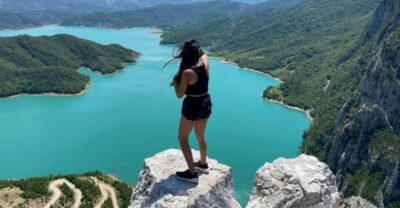
Bovilla Lake Serenity:Day Tour from Durres/Golem
Read our review →Browse the lists this tour appears in