
Reviewed · HISTORICAL TOURS
UNESCO Heritage Sites in Albania on 3 day tour
Albania’s UNESCO trail moves fast. In three days you link the Butrint National Park ruins with the slopes of Gjirokastra, with an English-speaking guide and a private AC car.
What makes this trip feel efficient is the mix of sites, not just one big stop after another. You get a southward ride along the coast toward Saranda and Ksamil, then you move inland and end with the classic coastal city of Durres.
You also travel with a small group and private vehicle pickup from around Tirana or Durres, so you are not spending the day figuring out how to get around. One consideration: lunches and dinners are not included, so you’ll want to budget for food stops along the way.
In This Review
- Quick hits for UNESCO Albania in 3 days
- Day 1: Tirana down to Butrint, where the past sits near the water
- Gjirokastra Fortress, the Stone City effect you can feel in your legs
- Day 2: Apollonia’s calm ruins, then Berat’s thousand-window hillside
- Day 3: Durres amphitheatre, then back to Tirana
- What you’re really paying for: $1,213 group price, private car, one room
- How to pace your days with this kind of route
- Who this UNESCO Albania tour fits best
- Should you book this 3-day UNESCO Albania tour?
- FAQ
- What UNESCO sites are included on this 3-day Albania tour?
- How long is the tour?
- What places does the itinerary cover besides the UNESCO sites?
- Is the group small?
- Will I be picked up from Tirana or Durres?
- What’s included and what’s not included?
- Does the price include lodging, and are separate rooms possible?
- FAQ
- What is the cancellation policy?
- Is there an option to reserve now and pay later?
Quick hits for UNESCO Albania in 3 days
- Butrint National Park: a UNESCO site and one of the most important archaeological areas in the Balkans
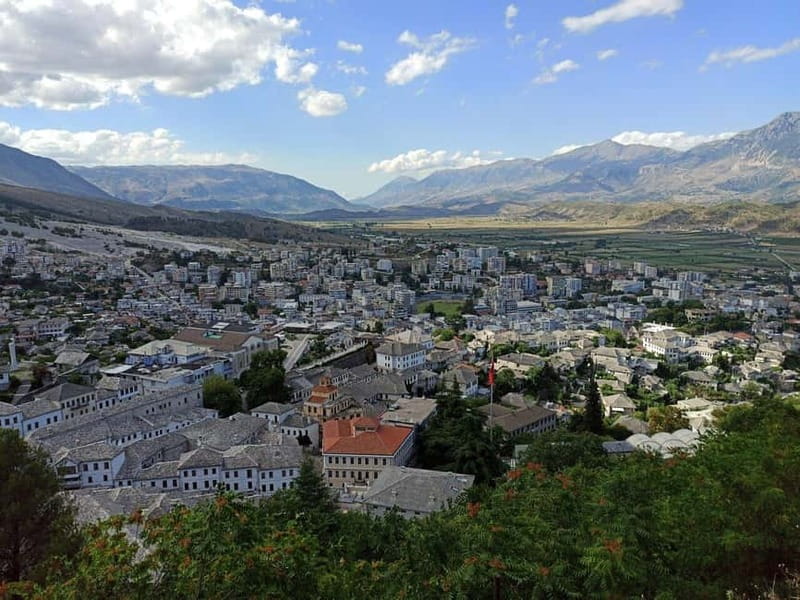
- Gjirokastra: Ottoman-era stone city streets and a fortress with valley views
- Berat: UNESCO-listed City of a Thousand Windows, with hillside architecture and religious heritage
- Apollonia Archaeological Park: ancient ruins near Fier, with calmer scenery for photos and walking
- Durres Amphitheatre: one of the biggest Roman amphitheatres in the Mediterranean region
- Private AC + pickup: get collected near Tirana or Durres, then ride comfortably between sites
- Group limited to 4: easier pacing, less waiting, more time at viewpoints
A few more history tours in Durres:
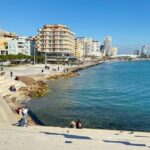

Day 1: Tirana down to Butrint, where the past sits near the water
Your first day starts with a scenic drive south along Albania’s Riviera. The route passes big beach names along the way, including Saranda and Ksamil, so you get that classic coastal feel before you hit the archaeology. It is a good way to shake off the stress of travel, because you are not just staring at a highway. You are watching the coastline shift from bright tourist beaches to the quieter stretches that lead to ancient sites.
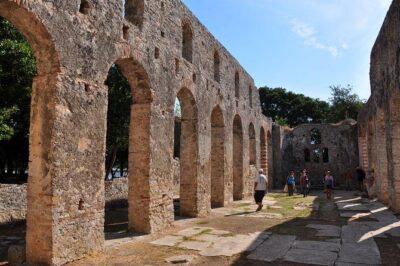
Then comes Butrint National Park, a UNESCO World Heritage site. The appeal here is the layering. You do not see one clean, single-era ruin. Instead, you get a sense of how multiple civilizations worked this area over time, leaving visible traces you can still walk among. If you like when a site explains itself with physical evidence, Butrint does that. You walk in an outdoor history lesson.
What I like about this kind of stop on day one is timing. Hitting Butrint early in the program makes it easier to keep the rest of your trip coherent. You get your UNESCO standards set immediately. From there, you can compare how Gjirokastra’s fortress-style drama and Berat’s hillside architecture feel like different answers to the same big question: how people built and defended themselves in this region.
Possible snag to plan for: this kind of day can feel long because you are mixing coastal driving with park time. Comfortable shoes matter. Also, bring cash for snacks or a quick meal later, because lunches and dinners are not included on this tour.
Gjirokastra Fortress, the Stone City effect you can feel in your legs
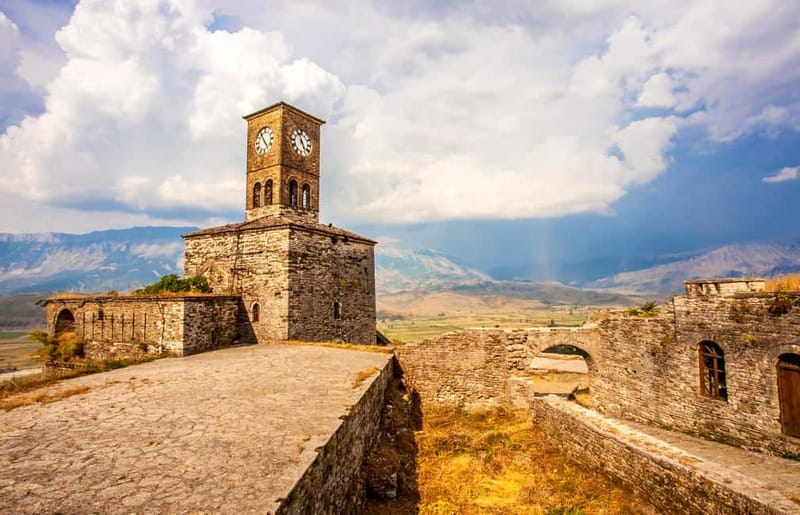
In the afternoon, you head toward Gjirokastra, another UNESCO World Heritage site. The city is famously dramatic because it sits on the slopes of Mount Gjere. On foot, that translates to steep streets and the kind of walking where you immediately understand why the fortress matters.
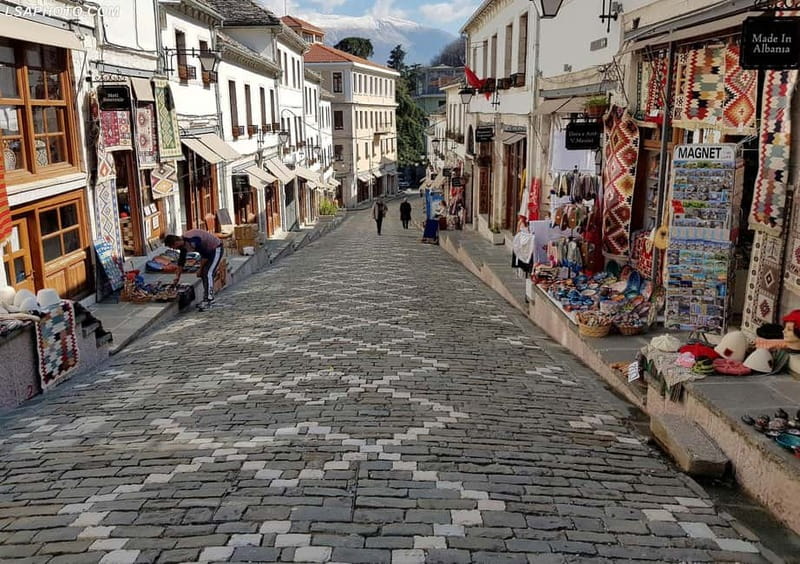
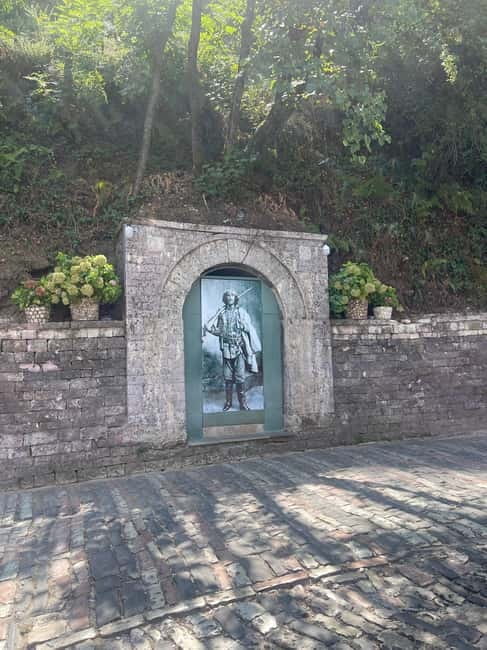
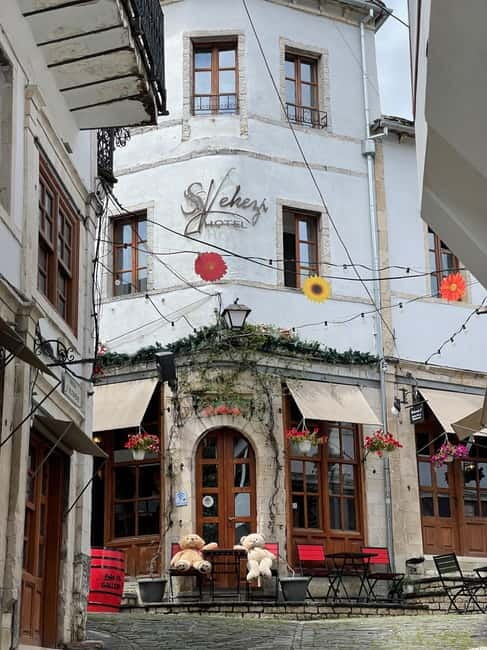
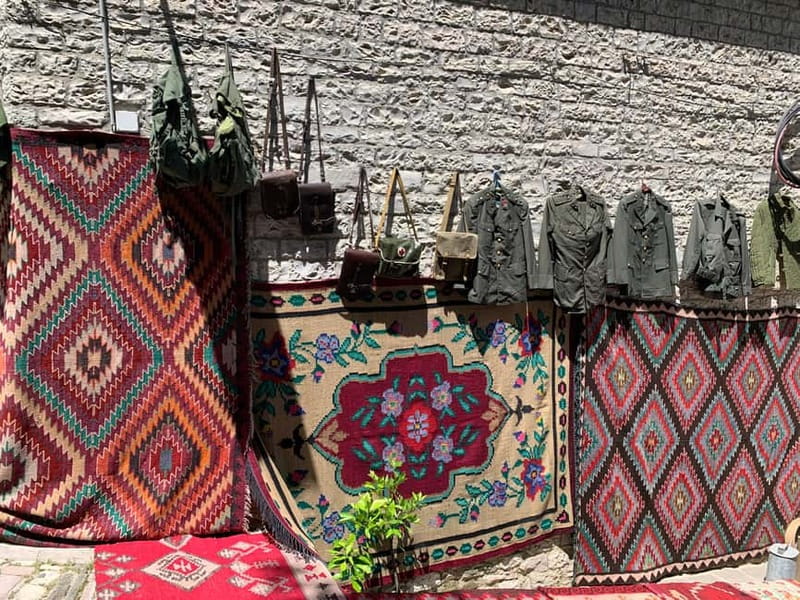
Gjirokastra’s reputation as the Stone City is not just marketing. The architecture is preserved and cohesive, especially in the older areas where the stone work and Ottoman-era design show up in a very “you are looking at something real” way. The cobbled lanes are narrow and steep, and they make the city feel lived-in rather than staged. You also get the Old Bazaar, with artisan shops and local crafts. It is one of those places where you can slow down, browse, and pick up a small souvenir without turning it into a shopping mission.
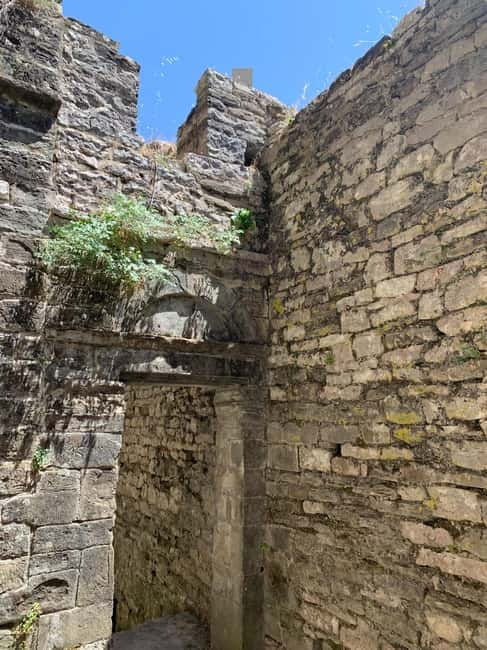
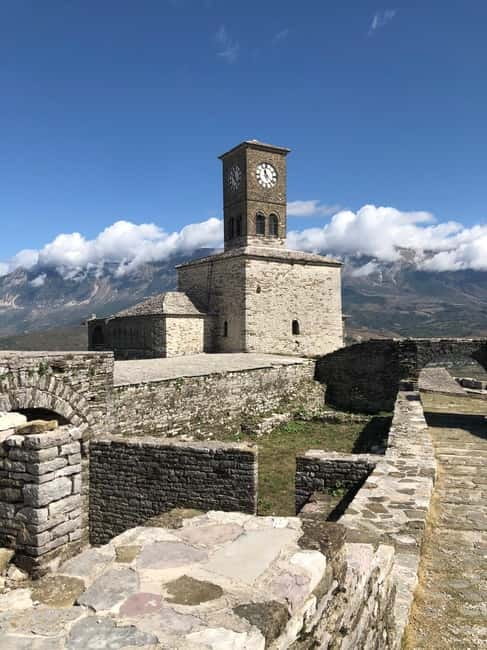
Then you go up to the Gjirokastra Fortress, the city’s iconic landmark. Fortresses always look impressive from the outside, but the real payoff is the viewpoint. From up there, you can connect the layout to the history. You understand why control mattered, and you see how the valley and surrounding terrain frame the city.
This is also where the small group format helps. With only a small number of participants, it is easier for your guide to manage pacing on uneven streets and keep everyone together without long waits. One of the best parts of the experience is that the guide is described as friendly and flexible, so if you need a quick pause for a photo or a breather, you usually can.
Day 2: Apollonia’s calm ruins, then Berat’s thousand-window hillside
After breakfast, you travel toward Apollonia, an ancient city near Fier founded in the 6th century BC. This stop gives your itinerary a useful pause. After Butrint and Gjirokastra, Apollonia feels more open and spacious, with striking ruins and serene natural beauty. That matters because it shifts you from “steep streets and fortress views” to “wandering among remains in a quieter setting.”
Apollonia is not trying to be a theme park. You are there to walk, look, and let the setting do part of the explaining. If your travel style is more about lingering than rushing, this is one of the days that rewards you for taking your time. You’ll likely find that you enjoy the in-between moments here, like stepping back from the main features to see how the site sits in its environment.
Next up is Berat, known as the City of a Thousand Windows, and listed as a UNESCO World Heritage site since 2008. The “thousand windows” nickname sounds exaggerated until you start noticing the hillside houses and how the façades are arranged. Berat’s Ottoman architecture and the stacked layers of homes make the view feel like you are looking at a working city museum.
Berat also brings cultural variety into the mix. The tour description highlights a blend of religious and cultural heritage, and you can feel that in how the city is arranged and what it emphasizes as you move through older areas. In a short 3-day span, it is a smart choice, because it balances pure archaeological remains (Butrint, Apollonia) with architecture you can study in place (Gjirokastra, Berat).
Practical note for your day: Berat’s hillside streets can be tiring, even if you do not think of yourself as a “climb-heavy” traveler. Plan for short walks with breaks. If you are the type who likes to take photos at every stop, you will want extra time for Berat, because the city’s visual details keep rewarding you.
Day 3: Durres amphitheatre, then back to Tirana
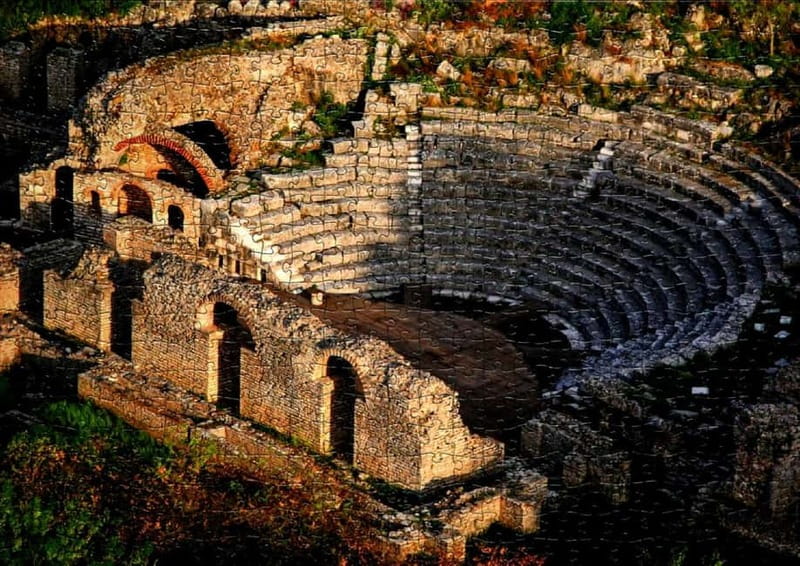
Your final day keeps the history theme but shifts it toward a coastal setting. You head to Durres, Albania’s main coastal hub and one of the oldest cities in the country. If you want variety within the same trip, this is a strong ending. Instead of another fortress viewpoint, you get a major Roman structure and a sense of modern coastal energy around it.
At Durres, you visit the Roman Amphitheatre, described as one of the biggest amphitheatres in the Mediterranean. That is an important detail because it tells you what to expect when you arrive: this is not a small ruin you barely notice. It has size. Standing there, you can imagine the scale of crowds and performances that would have filled the space.
After the amphitheatre, you enjoy a stroll along the seaside promenade. This part matters more than you might think. After three days of moving between UNESCO sites and ancient remains, the promenade is your decompression zone. It gives you a chance to connect the physical history you’ve seen with the reality of where you are right now, on the coast.
Then your trip concludes with your return to Tirana. At that point, you are not just leaving a city. You are wrapping the route into a neat loop: coastal drive, inland stone cities, an archaeological interlude, and then a Roman anchor by the sea.
A few more Durres tours and coast days:
- From Golem/Durres: Bovilla Lake and Gamti Mountain Tour
★ 5.0 · 3,685 reviews - From Durres/Golem: Kruja Castle & Old Bazaar Day Tour
★ 4.9 · 1,317 reviews - Durres: Kallmi Guided ATV Quad Bike Tour with Helmet
★ 4.9 · 549 reviews - From Tirana/Durres/Shkoder: Day Tour to Theth and Blue Eye
★ 4.9 · 470 reviews
What you’re really paying for: $1,213 group price, private car, one room
Let’s talk value, because 3-day UNESCO tours can either be a great deal or a pricey shuffle.
The price is listed at $1,213 per group with the note up to 1 participant, and the tour runs for 3 days. Since the group is limited to 4 participants and you travel with a private vehicle, your per-person cost can change depending on how the group fills. Before you book, I’d check how the price is calculated for your exact party size, because that is the difference between a bargain and an overpay.
Here’s what the price includes:
- a private vehicle with AC
- an English-speaking tour guide
- pickup included from anywhere near Tirana or Durres
- 1 room included (if you need separate rooms, an extra fee applies)
That is the core of the value. A private AC car and pickup reduce friction. The English guide reduces confusion. And a pre-arranged hotel setup reduces decision fatigue.
What is not included:
- lunches and dinners
- private expenses
- gratuities
So, the “real” cost includes meals you’ll pay out of pocket and tips. Also, if you are sensitive to food budgeting, plan for it early. One day without lunch included can easily add up, especially when you are in archaeological parks where options may be limited.
Bottom line: if you want to cover multiple UNESCO stops in a short window without public transport headaches, this setup usually makes sense.
How to pace your days with this kind of route
This trip is efficient, but efficiency has a cost: you will walk and you will ride. You are packing in Butrint, Gjirokastra, Apollonia, Berat, and Durres in just 3 days. That means you should travel like a “one site per block” person. Do not expect to wander for hours outside the tour stops, because the route is designed around getting you to the next highlight.
Here’s how I recommend you manage it:
- Wear shoes you trust on cobbles and uphill streets. Gjirokastra and Berat are the ones that test your legs.
- Bring a light day bag for water and a quick snack. Lunch and dinner are not included, so having something small helps when timing gets tight.
- Bring a layer. Coastal mornings and inland afternoons can feel different even when the overall weather is warm.
- Pace your photos. You will want shots from viewpoints, especially near the Gjirokastra Fortress. If you spend 40 minutes at one spot, you might feel rushed elsewhere.
On the human side, the experience is described as well organized, and the guide is characterized as friendly and flexible. That combination usually makes a packed itinerary feel smoother because small issues get handled without drama. It also helps that the group is limited to 4, so you are not dealing with the chaos of a larger coach.
Who this UNESCO Albania tour fits best
This tour is a strong match if you want:
- UNESCO World Heritage sites in southern Albania without planning between cities
- a mix of archaeological parks and living architecture, not just one type of stop
- an English-speaking guide to connect the dots between places
It is also a good fit for couples, small groups of friends, and solo travelers who like the comfort of private transport but still want the social tone of a small group.
Who should think twice?
- If you hate walking uphill or on uneven surfaces, the stone-city days in Gjirokastra and Berat may feel like too much.
- If you want lots of free time for independent exploration in each city, a 3-day route covering five major highlights can feel tightly scheduled.
Should you book this 3-day UNESCO Albania tour?
If your goal is to see Butrint, Gjirokastra, and Berat in a short trip, and you value a private AC ride with a guide who keeps things moving, I think this is a smart way to spend 3 days. The added bonuses, Apollonia for a calmer archaeological walk and Durres for that huge Roman amphitheatre plus seaside time, make the itinerary feel balanced rather than one-note.
I’d book if you can handle some uphill walking and you are okay paying for your own lunches and dinners. If that sounds like you, this is the kind of tour that saves you time, reduces stress, and lets you leave Albania with a set of UNESCO memories that actually connect.
FAQ
What UNESCO sites are included on this 3-day Albania tour?
The tour includes visits to UNESCO World Heritage sites Butrint National Park, Gjirokastra, and Berat (the City of a Thousand Windows).
How long is the tour?
The duration is 3 days.
What places does the itinerary cover besides the UNESCO sites?
You also visit Apollonia Archaeological Park and the Roman Amphitheatre in Durres, plus you return to Tirana at the end.
Is the group small?
Yes. This is a small group, limited to 4 participants.
Will I be picked up from Tirana or Durres?
Yes. Pickup is included, and you can be picked up anywhere near Tirana or Durres.
What’s included and what’s not included?
Included are a private vehicle with AC and an English-speaking tour guide. Not included are lunches and dinners, private expenses, and gratuities.
Does the price include lodging, and are separate rooms possible?
The price includes 1 room. If you need separate rooms, an extra fee applies.
FAQ
What is the cancellation policy?
You can cancel up to 24 hours in advance for a full refund.
Is there an option to reserve now and pay later?
Yes. You can reserve now & pay later, meaning you can book your spot and pay nothing today.
More 3-Day Experiences in Durres
Added to Durres lately
- Sektor Rinia Tour (ATV 4 hours)★ 5.0 · 1 review
- Durres/Golem/Qerret: Bovilla Lake Tour with Hike and Guide★ 5.0 · 1 review
- Wine tasting tour, Optional wine yard tour and kayak rides★ 5.0 · 1 review
- Tirana & Durres: 2 city tours – 1 day★ 5.0 · 1 review
- Durrës: Walking Tour and Roman Amphitheater★ 5.0 · 1 review
- Durres: 3-Hour 4×4 Jeep Safari Tour in Sektor Rinia★ 5.0 · 1 review
- Golem/Durrës: Karavasta Lagoon Tour★ 2.0 · 1 review
- From Tirana: Cape of Rodon Castle, Beach & Wine Tasting Tour★ 5.0 · 1 review
Historical Tours, compared.
Guided tour in Tirana – discoveries, history, culture (in FRENCH)
Read our review →
Durres city & Golem beach, Sun & History Day Trip
Read our review →
Tirana Walking Tour: History, Culture &Gems by a Passionate Guide
Read our review →
Semi – Private Tour at Cape of Rodon; Hidden Beaches & History
Read our review →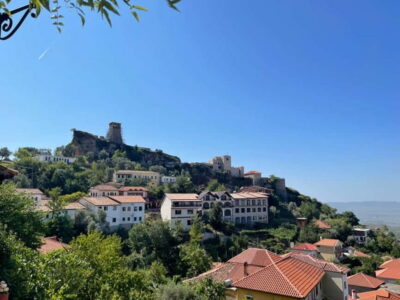
Ancient City of Butrint, UNESCO World Heritage site – A Must
Read our review →Browse the lists this tour appears in