
Reviewed · DURRES BEACH & AMPHITHEATRE DAYS
Durrës: Walking Tour and Roman Amphitheater
Durres packs layers fast, even on a short walk. I really like the small group size and how the tour makes the Roman Amphitheater feel real instead of just old stone. One thing to consider, though, is that this is a walking tour, so you will want solid shoes and weather-ready clothes.
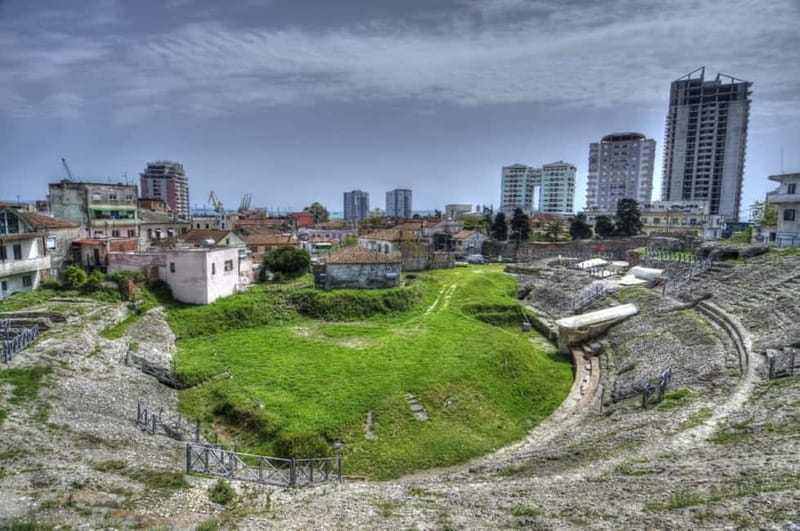
You’ll start with the city’s Greek and Roman identity, the stretch where Durres was known as Epidamnos and later Dyrrachium, then you move to the Venetian Tower and its port defenses. The tour finishes at the Trajan amphitheater, built to hold 20,000 people, and your entrance ticket is included.
In This Review
- Key highlights you will feel right away
- Durres in 90 minutes, what this walking tour really covers
- Getting oriented with Durres, Epidamnos, and Dyrrachium
- Venetian Tower and Durres castle walls by the port
- Trajan’s Roman Amphitheater: seeing 20,000 seats in real space
- Why the group size and language options matter on this walk
- Price and value: what $41 buys you in Durres
- Practical tips for comfortable shoes, photos, and weather
- Should you book the Durrës Walking Tour and Roman Amphitheater?
- FAQ
- How long is the Durrës walking tour?
- How much does the tour cost?
- What are the main stops on the tour?
- Is the Roman Amphitheater entrance ticket included?
- What is included in the price?
- Which languages are available for the live guide?
- How big is the group?
- What should I bring?
- Is free cancellation available?
Key highlights you will feel right away
- A guided walk in a group of up to 10 that keeps the pace comfortable and questions easy
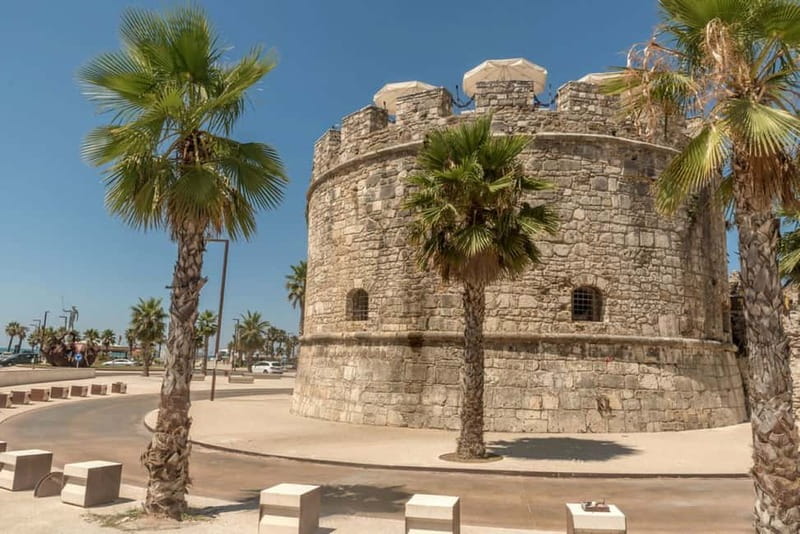
- Venetian Tower (15th century) connected to the older castle walls by the port
- Roman Amphitheater of Trajan with a 20,000-seat scale, and entry included
- Clear storytelling about Epidamnos and Dyrrachium so you know what you are looking at
- Three language options: Albanian, English, and Italian for smooth explanations
A few more Durres beach and amphitheatre days:


Durres in 90 minutes, what this walking tour really covers
This is a tight, 90-minute introduction to Durres, in Albania’s Durres District. At $41 per person, you are not just paying for a ticket or a quick photo stop. You are paying for a guided route that links the places you see to the bigger story of the city: Greek roots, Roman power, later fortifications, and what the port life became.
The group is limited to 10 participants, which changes the whole vibe. Instead of rushing and trying to hear over the crowd, you can actually follow the guide’s explanation and keep your bearings as you walk. The pace works best if you like short, focused touring where you get the big points fast and then decide what to explore on your own afterward.
Also, this is not a museum-style experience. It is a walking tour that emphasizes what is still visible in the urban fabric. That means you will spend your time looking at structures, walls, and the amphitheater’s shape in context, not just reading about them.
If you are staying in Durres for a day and want something that feels meaningful without eating your whole afternoon, this is a very practical choice.
Getting oriented with Durres, Epidamnos, and Dyrrachium
Durres has a long timeline, and the tour uses that timeline to help you understand what you are seeing. The city was known as Epidamnos in the 7th century BC, tied to Greek colonies from Korint and Corfu. Later, in Roman times, it grew in importance, and it even became part of the Civil War era tension between the armies of Caesar and Pompey.
After the Byzantine period, the city faced pressure from Bulgarians and Ottomans, and the port eventually became a major gateway again. Today, Durres Port is one of the biggest tourist and commercial ports on the Adriatic Sea. That modern role matters because it explains why fortifications show up near the water, and why the city’s edges were always worth defending.
During the walk, you will get introduced to archaeological monuments tied especially to ancient Dyrrachium. This matters because Dyrrachium is the Greek-period and Roman-era identity you will hear mentioned when the guide points out the older layers around the city center. In other words, you will not just see monuments, you will learn how the labels and time periods connect.
This kind of orientation is the difference between looking at ruins and actually understanding why the site is shaped the way it is. You will also be better prepared if you plan to continue exploring after the tour, since you will know what time period you are standing in.
Venetian Tower and Durres castle walls by the port
One of the stops you will appreciate early on is the Venetian Tower. It was built in the 15th century, with construction dated between 1400 and 1500. The basic idea is simple and useful: this was a military fortified tower meant to protect the port.
The guide ties that purpose to the geography. You will see how the Venetian Tower sits near the ancient walls of the Durrës castle that once surrounded the city center. That connection makes the tower more than a standalone structure. It becomes part of a bigger system: walls, defenses, and the port zone that mattered for trade and power.
For your photos, think in terms of angles and context. You are not photographing an indoor exhibit. You are photographing a defensive structure in a living city, so wide shots that include the surrounding walls help you remember the relationship between the tower and the fortifications. Close-ups can work too, especially if you focus on texture and openings, but the tour’s value is strongest when you capture the bigger setting.
This stop also helps you “read” the city as you walk. Once you learn why the tower exists, you start noticing the logic of where defenses would be placed. That makes the rest of the tour easier to enjoy, because you are not just moving from point A to point B. You are collecting clues.
Trajan’s Roman Amphitheater: seeing 20,000 seats in real space
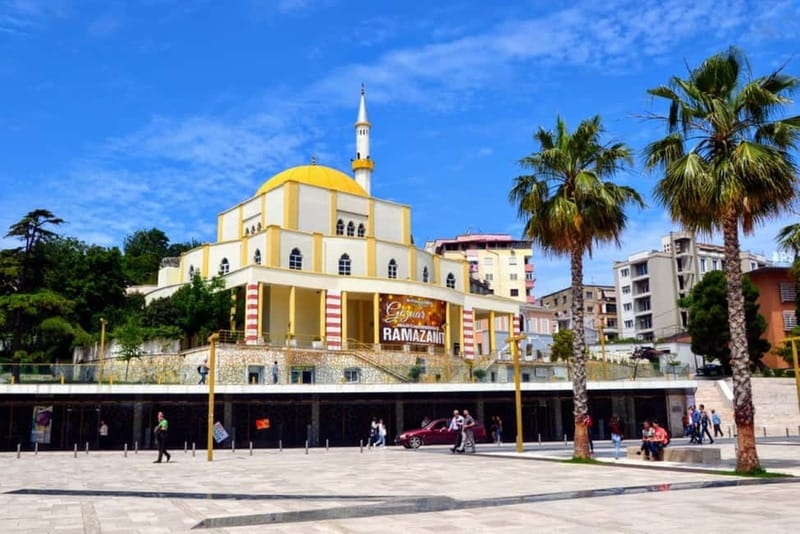
Then comes the anchor moment: the Roman Amphitheater built by Emperor Trajan in the early 2nd century AD. The size is where your brain first catches up with the facts. The amphitheater was built to accommodate about 20,000 people, and it is described as the biggest in the Balkan area.
That capacity number is useful, but it only becomes meaningful when you see the space layout. This is where the guided explanation does more than label stones. An amphitheater is a designed experience: seats, sightlines, circulation, and the central performance area. Even if you are not studying architecture, you can understand why crowds would fit there and why the building would have dominated public life.
Your entrance ticket is included, so you do not need to hunt for the right add-on ticket or figure out the timing details in the middle of the tour. That keeps the visit smooth, and it also protects your budget. You can focus on walking in, understanding what the guide points out, and then taking photos while you have time.
What I like most about this final stop is that it gives Durres a Roman signature you can recognize. You finish with a monument that is both large in scale and clearly tied to imperial planning under Trajan. That makes your mental map of the city feel complete, because you now have a modern port city, a medieval defense layer, and a Roman public-life core.
If you are the type who enjoys ancient sites with obvious geometry, you will likely love this one.
More walking tours in Durres:
- Walking tour Durrës
★ 5.0 · 4 reviews - Walking Tour of Tirana
★ 5.0 · 646 reviews - Tirana: Express Walking Tour with a Guide
★ 4.8 · 503 reviews - Tirana Center: Magic Walking Tour French/Italian/English Etc
★ 4.9 · 402 reviews
Why the group size and language options matter on this walk
A small group is not just a comfort perk. It changes how much you absorb. Limited to 10 participants, the guide can pause for clarifications and keep the group from scattering. You also have a better chance to actually hear the explanation rather than catching only fragments.
Language is another practical benefit. The tour runs with a live guide in Albanian, English, and Italian. If you prefer hearing details in one of those languages, you will get smoother storytelling, including explanations about the city’s identities like Epidamnos and Dyrrachium.
This matters because Durres has a lot of time periods stacked close together. Without language clarity, you can end up with a blur of names and centuries. With a guide delivering the story in a language you understand, you can follow the logic: Greek colonies lead to Epidamnos, then Roman expansion strengthens the city, then later Byzantine and Ottoman conflicts reshape the priorities around the port.
For me, that is where the tour turns from sightseeing into understanding.
Price and value: what $41 buys you in Durres
Let’s talk value honestly. At $41 per person for 90 minutes, you are paying for two concrete things: a guide plus an entrance ticket for the Roman Amphitheater. The value question depends on your travel style.
If you would otherwise visit the amphitheater anyway, having the entrance ticket included lowers your friction. It also makes the tour more predictable: you are not guessing whether you will have the right time window or whether you will need extra stops.
If you are undecided about whether you will visit the amphitheater on your own, then the guided context is what you are really buying. Seeing the amphitheater without explanation can still be impressive, but a guide helps you connect the scale of 20,000 seats and the Trajan-era timing to the rest of the city’s story. That connection is what turns a visit into a more satisfying experience.
The Venetian Tower stop also makes the money feel grounded in something you can see, not just read about. Even if you view it from the street or around the surrounding areas, the guide explains why it exists and how it relates to the castle walls and port defenses.
So the short version: $41 feels fair if you want a guided primer on Durres and you plan to spend time at the Roman Amphitheater. It feels less necessary only if you already know Durres very well and you would rather explore independently with no guided story.
Practical tips for comfortable shoes, photos, and weather
This is a walking tour, so your comfort affects your enjoyment. Bring comfortable shoes because you will be moving through the city between stops. Add weather-appropriate clothing, especially if you are touring in heat, wind, or rain.
A camera is specifically recommended, which tells you what to expect: photo opportunities are built into the route. For the Venetian Tower, try to capture context shots that include nearby walls. For the amphitheater, focus on scale from viewpoints that let you see the seating curve and the relationship to the central area.
Clothing-wise, keep it simple. Comfortable clothes let you move and pause for photos without fuss. If you wear sunglasses, bring water too, even though water is not listed. When a tour is only 90 minutes, you can still feel the weather fast, and a small hydration buffer helps you stay cheerful through the amphitheater visit.
Finally, arrive ready to listen. This tour works best when you let the guide fill in the connections, instead of treating it as just a checklist of sights.
Should you book the Durrës Walking Tour and Roman Amphitheater?
I think this is a strong pick if you want a focused first taste of Durres with an easy timeline. You get a small-group pace, a friendly live guide, and two major stops that actually connect to each other: the fortified port story via the Venetian Tower, and the Roman public-life story at Trajan’s amphitheater.
Book it if:
- You like short guided walks that make places feel understandable
- You want the Roman Amphitheater experience with your entrance ticket handled
- You prefer small groups and clear explanations in English, Albanian, or Italian
Skip it only if:
- You are hoping for a long, slow museum-style visit with lots of free time
- You want to spend most of your day elsewhere and Durres monuments are not your priority
If your goal is to get oriented in Durres and leave with a mental map you can use for the rest of your trip, this one delivers.
FAQ
How long is the Durrës walking tour?
The tour lasts 90 minutes.
How much does the tour cost?
It costs $41 per person.
What are the main stops on the tour?
You will visit the Venetian Tower and the Roman Amphitheater.
Is the Roman Amphitheater entrance ticket included?
Yes. The entrance ticket for the Roman Amphitheater is included.
What is included in the price?
Included are the guide and the entrance ticket for the Roman Amphitheater.
Which languages are available for the live guide?
The live guide offers Albanian, English, and Italian.
How big is the group?
The group is small, limited to 10 participants.
What should I bring?
Bring comfortable shoes, a camera, and comfortable weather-appropriate clothing.
Is free cancellation available?
Yes. You can cancel up to 24 hours in advance for a full refund.
Added to Durres lately
- Sektor Rinia Tour (ATV 4 hours)★ 5.0 · 1 review
- Durres/Golem/Qerret: Bovilla Lake Tour with Hike and Guide★ 5.0 · 1 review
- Wine tasting tour, Optional wine yard tour and kayak rides★ 5.0 · 1 review
- Tirana & Durres: 2 city tours – 1 day★ 5.0 · 1 review
- Durres: 3-Hour 4×4 Jeep Safari Tour in Sektor Rinia★ 5.0 · 1 review
- Golem/Durrës: Karavasta Lagoon Tour★ 2.0 · 1 review
- From Tirana: Cape of Rodon Castle, Beach & Wine Tasting Tour★ 5.0 · 1 review
- Durres Self-guided Tour with transport included★ 5.0 · 1 review
Durres Beach & Amphitheatre Days, compared.

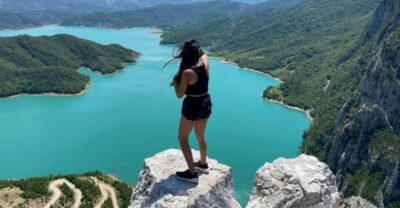
Bovilla Lake Serenity:Day Tour from Durres/Golem
Read our review →Browse the lists this tour appears in