
Reviewed · RAKI TASTINGS & VILLAGE WINERIES
Tirana Walking Tour, Extra Virgin Olive Oil and Raki Tasting
Olive oil, raki, and politics on one walk. I like that you get a proper extra virgin olive oil and raki tasting as part of the tour, and I like the local guide perspective that turns street corners into clear, real-world stories. One thing to consider is that this experience is weather dependent, so if Tirana is having an off day, plan for the possibility of rescheduling.
This is a 2 to 3 hour downtown stroll that starts at the equestrian statue of Skanderbeg and loops back to the same meeting point. You’ll cover major symbols of Tirana, from the communist-era landmarks around Blloku and the Enver Hoxha Pyramid to the Castle area, plus stops that connect the city’s older layers, Ottoman influences, and the later reshaping of the center.
The group is kept small, with a maximum of 30 people, and the tour is offered in English. Most people can join, and the pace is described as something you can manage with your own group, but it still means you’re on your feet for most of the time, wearing comfortable shoes helps.
In This Review
- Key points to know before you go
- Food tasting meets city history in Tirana
- Skanderbeg Square and the Clock Tower, where Tirana’s symbols changed
- Murat Toptani pedestrian street, a timeline you can walk
- Tirana Castle and the tasting stop that makes the walk worth it
- Blloku, from a restricted communist zone to Tirana’s nightlife
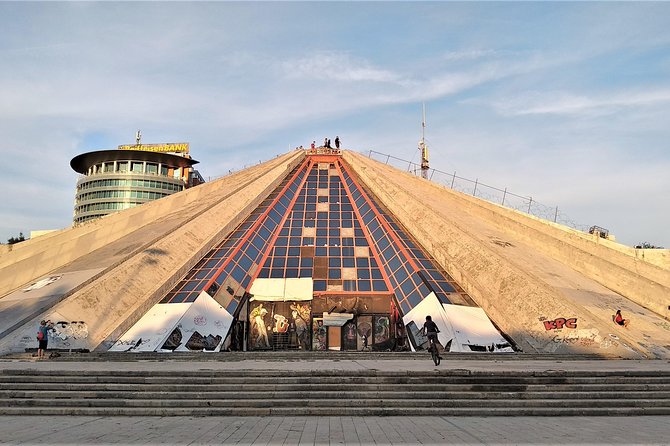
- The Enver Hoxha Pyramid, from museum idea to a new look
- Price and value: why $22.69 can make sense
- Where you start, where you end, and how to plan your afternoon
- Who should book this Tirana walking tour
- Should you book it
- FAQ
- How long is the Tirana walking tour with olive oil and raki tasting?
- What is the price per person?
- What food and drink are included in the tour?
- Is the tour offered in English?
- Where does the tour start, and does it end at the same place?
- How many people are in the group?
- Are admission tickets included for the stops?
- What happens if the weather is poor?
- Is free cancellation available?
Key points to know before you go
- Olive oil and raki tasting included, with raki options like blackberry and plum
- Skanderbeg Square to the Castle area, with guided context that puts the buildings in order
- Blloku explained in plain terms, from restricted communist life to today’s nightlife zone
- Enver Hoxha Pyramid time marker, how it was used and what it looks like now
- Small-group size (max 30) and a route built for a 2 to 3 hour walk
More Food Tours in Tirana




Food tasting meets city history in Tirana
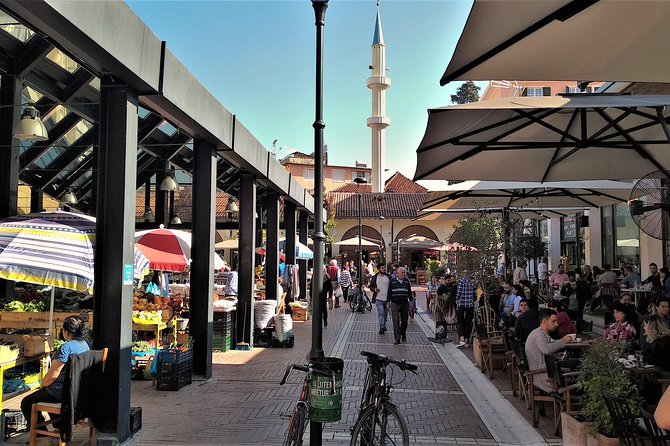
What makes this tour work is the mix. You’re not just collecting photos of monuments. You’re stopping long enough to taste products that reflect Albania’s culture of land, preservation, and everyday hospitality, then you walk those stories back into the streets.
The route is also a quick way to understand why Tirana feels layered. The center looks like it’s been rebuilt and rebranded multiple times, and that’s exactly the point. You’ll see how power, ideology, and design choices shaped what people recognized as important in each era.
Also, the value is strong for the price. For about $22.69, you get a certified guide plus a tasting, and the main historical spots on the plan are listed as free admission. That combination is hard to beat if you want one guided afternoon that does both culture and food.
Skanderbeg Square and the Clock Tower, where Tirana’s symbols changed
Your tour begins at the equestrian statue of Skanderbeg in Sheshi Skënderbej. This is a good starting point because the square is basically a cheat sheet for Tirana’s modern identity, even when history got complicated.
The square was first shaped under Italian architect A. Brasini before World War II, and it later became the staging ground for Stalin-era statuary. Today, the plan focuses on what’s left, including the continued presence of the Skanderbeg statue, and the guide route helps you connect the dots between those eras and the modern look the square eventually settled into.
From there, you’ll also see the Tirana Clock Tower, completed in 1822. It’s one of the older structures from the late Ottoman period, and it gives you a useful contrast to the more recent political layers around it. It’s a small stop, but it helps your brain sort time periods instead of treating everything as one big blur.
Tip for you: this is the kind of area where details matter. If you want the most from the guide, stand still for a few seconds when you’re given context, instead of walking ahead for photos.
Murat Toptani pedestrian street, a timeline you can walk
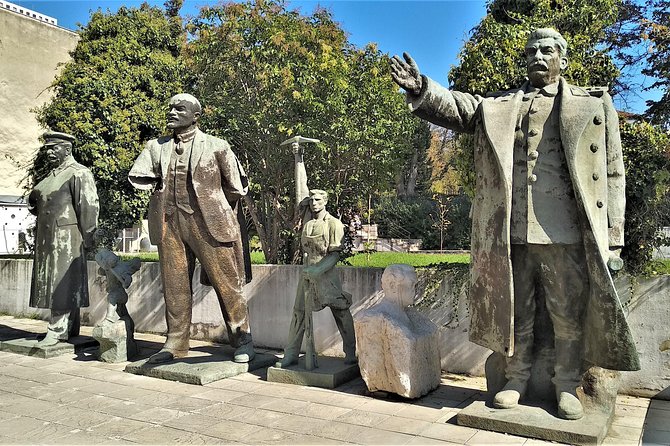
One of the strongest parts of this plan is the Murat Toptani pedestrian route. It’s described as having historical value, and it reads like a natural, open-air gallery. Instead of doing one museum, you’re moving through a sequence of landmarks that explain the city’s identity building block by block.
As you walk, you pass multiple major references, including the Fortress of Tirana, the headquarters of the Academy of Sciences, and a park described as the country’s first national park. You’ll also encounter the old National Library and the former Political Persecutor’s Building, which is the kind of site that makes history feel less abstract.
The route also links into places that are more familiar in today’s sightseeing loop, like Kalaja e Tiranes, the National Gallery of Arts, and the Residence of the Albanian Royal Family. The blend matters because it shows how Tirana didn’t just have one identity. It keeps reusing spaces and symbols, then reframing them.
Practical note: this segment is best experienced at a human pace. If you rush through to the next stop, you’ll miss the thread the guide is building about how the city remembers and edits itself.
Tirana Castle and the tasting stop that makes the walk worth it
Tirana Castle, known as Kalaja e Tiranës, is positioned near the Toptani pedestrian street. It’s a free admission stop on the plan, and it’s the setting for the included tasting, which is the moment most people remember.
Here, you’ll try different extra virgin olive oils and multiple rakis. The tour information specifically mentions rakis distilled from fruits like blackberries and plums. That matters because Albania’s raki culture often reflects local ingredients, and a guided tasting helps you notice differences instead of drinking something once and moving on.
Why this stop is valuable for you: olive oil and raki are not just souvenirs. They’re part of daily life and local hospitality, and tasting them during the walk turns the whole afternoon into one connected experience. You’re literally going from stories about power and place to flavors tied to land and tradition.
A quick tasting mindset: take small sips, pause between samples, and pay attention to aroma. If you can ask your guide what they’re noticing, do it. Even basic comparisons, like how each sample feels on the palate or how strong the fruit notes are, can make the tasting more memorable.
One consideration: snacks and meals are not included. If you tend to get hungry while walking, plan for it and eat before or after, or bring a small plan for yourself. The tasting is part of the experience, but it’s not positioned as a full meal.
More Walking Tours in Tirana
- Walking Tour of Tirana
★ 5.0 · 646 reviews - Tirana: Express Walking Tour with a Guide
★ 4.8 · 503 reviews - Tirana Center: Magic Walking Tour French/Italian/English Etc
★ 4.9 · 402 reviews - Walking tour of Tirana
★ 4.8 · 285 reviews
Blloku, from a restricted communist zone to Tirana’s nightlife
Next, you move into Blloku, also called Ish-Blloku. This area is widely known for its shops, restaurants, trendy bars, pubs, and cafes, and it’s the kind of place where you can feel today’s energy immediately.
Blloku is described as the playground of the young Albanian elite. That line matters, because the guide’s context helps you understand why the area carries that reputation. During the communist period, it was a restricted residential zone for the Albanian politburo, while ordinary people were not allowed in.
The modern version of Blloku is entertainment-focused, but the past still has physical markers. The plan notes that you can find the residence of communist leader Enver Hoxha there. Even without entering a building, seeing where the old power base was helps you connect the city’s shift in tone after communism.
Time at this stop is listed as about 15 minutes. That’s enough to get orientation and to understand the why behind what you see, especially if your guide ties it to earlier landmarks.
Good fit for you if: you like walking tours that explain the story behind neighborhoods, not just their storefronts.
The Enver Hoxha Pyramid, from museum idea to a new look
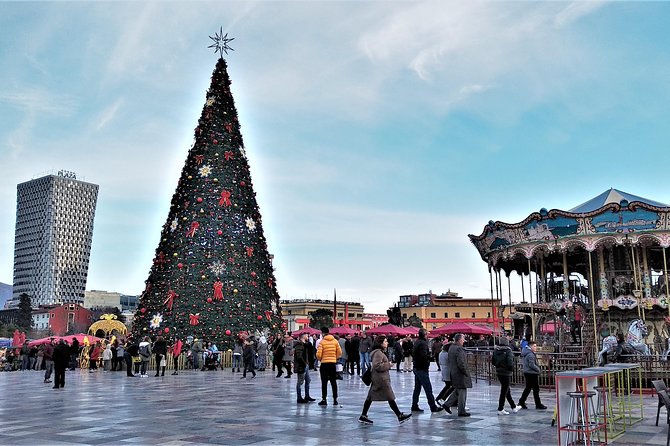
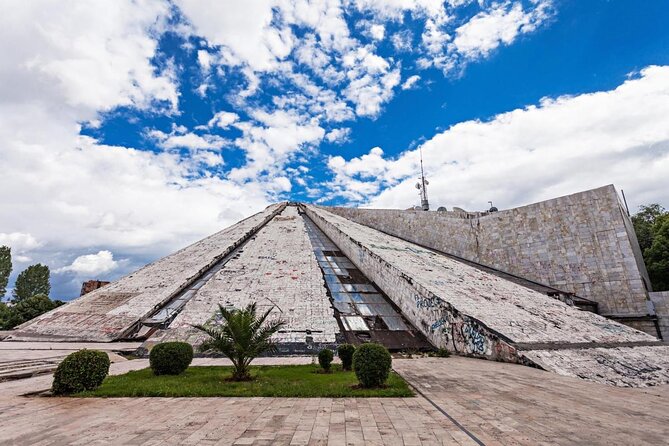
The final major themed stop is the Enver Hoxha Pyramid. It used to be known as the Enver Hoxha Museum and was inaugurated in 1988. The plan says it served as the heritage museum of Enver Hoxha until 1991.
Architecturally, it resembles an Egyptian pyramid, but the interesting detail is what it becomes from above. From above, the shape reveals a communist star spreading its rays. That contrast is exactly why the Pyramid works as a storytelling stop, because it’s both symbolic and visually specific.
Today, the plan notes that renewed construction will surprise you. In other words, you’re not just looking at a historical object. You’re also seeing how Tirana has handled the legacy, including the reality that political monuments often get reused, reinterpreted, or rebuilt when the story changes.
Time at this stop is listed as about 15 minutes. If you want more time for photos, you may need to balance that with the rest of the walk, since the tour is structured as a 2 to 3 hour route overall.
Consideration for you: the Pyramid’s meaning is partly in what you’re told, not just in what you see. When you arrive, take a few seconds to listen before you start shooting photos.
Price and value: why $22.69 can make sense
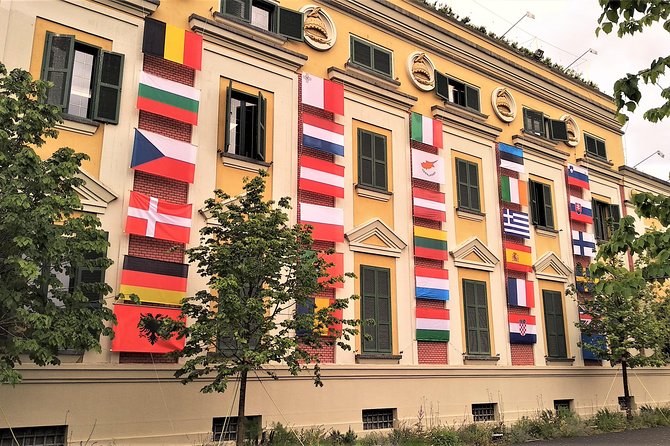
Let’s talk value clearly. The tour costs $22.69 per person, lasts about 2 to 3 hours, and includes a certified guide plus extra virgin olive oil and different rakis tasting. The tasting itself is the main cost lever, because it’s a real included activity, not something you pay extra for on the spot.
It also includes listed free admission for multiple stops, such as Skanderbeg Square, the Clock Tower stop, Tirana Castle, and the Pyramid. You’re paying mainly for the guidance and the tasting, which is how you usually get the most from a walking tour.
Group size is capped at 30 travelers, and there are notes about group discounts. That can matter if you’re traveling with friends and you want the value of a small-group experience without paying for a full private car.
If you’re the type who likes to learn through streets and small stops, this is a strong option. If you want big museum time or a slow, sit-down meal experience, you might feel the schedule moves briskly, because the format is built around short, frequent points of interest.
Where you start, where you end, and how to plan your afternoon
The meeting point is the equestrian statue of Skanderbeg, at Sheshi Skënderbej, Tirana. The tour ends back at the meeting point, which makes it easy to continue your day without figuring out transport between distant neighborhoods.
It’s offered in English and includes a mobile ticket. That’s useful if you like simple confirmations and not too many printed documents.
The tour is also listed as near public transportation. So if you plan to arrive early or want to break away briefly for a coffee, it’s not a far reach from transit options.
One more practical detail: the experience requires good weather. Tirana can have hot sun or rainy interruptions, so check the forecast the day before and wear shoes that handle uneven sidewalks well.
Who should book this Tirana walking tour
This is a smart fit if you:
- Want a guided intro to central Tirana without doing separate food and sightseeing tours
- Like learning why places look the way they do, not just what they’re called
- Enjoy tasting local products like extra virgin olive oil and fruit rakis
- Prefer a route where most stops are short, clear, and easy to move between
It might not be your best match if you:
- Want only monuments or only food and zero political context
- Need long indoor museum time, since the format is designed as a walk with quick stops
- Are traveling on a day where weather is likely to be poor, since the plan is described as dependent on good conditions
Should you book it
Yes, I’d book it for the combination. The tasting makes the tour feel like more than a history walk, and the stop list helps you understand Tirana’s layers in a way that’s hard to do alone in one afternoon.
If you do book, show up ready to walk, bring water since snacks and meals are not included, and give yourself time to pause when your guide points out details. And if weather looks questionable, have the backup mindset that the experience might shift to another date or refund, based on how it’s handled locally.
FAQ
How long is the Tirana walking tour with olive oil and raki tasting?
The duration is approximately 2 to 3 hours.
What is the price per person?
The price is $22.69 per person.
What food and drink are included in the tour?
The tour includes a tasting of extra-virgin olive oils and different rakis, including raki distilled from blackberries and plums.
Is the tour offered in English?
Yes, it is offered in English.
Where does the tour start, and does it end at the same place?
It starts at the equestrian statue of Skanderbeg on Sheshi Skënderbej in Tirana, and it ends back at the meeting point.
How many people are in the group?
The maximum group size is 30 travelers.
Are admission tickets included for the stops?
The tour info lists admission tickets as free for the included stops such as Skanderbeg Square and other listed points.
What happens if the weather is poor?
The experience requires good weather. If it is canceled due to poor weather, you’ll be offered a different date or a full refund.
Is free cancellation available?
Yes, you can cancel up to 24 hours in advance for a full refund.
A Few More Raki Tastings & Village Wineries
Added to Tirana lately
- Kosovo, Prizren Day Trip from Tirana★ 3.0 · 1 review
- Semi-Private Hiking Tour; Theth,Valbona&Koman Lake in 3 Days★ 5.0 · 1 review
- Private 1 Day Berat Tour from Tirana★ 5.0 · 1 review
- Private 3 Days Adventure in Albania and Gjirokaster County★ 5.0 · 1 review
- From Tirana: Ksamil Islands, Saranda, & Blue Eye Day Trip★ 5.0 · 1 review
- Tirana Airport Private Transfer To City★ 5.0 · 1 review
- Architectural Walking Tour Discovering Tirana’s Modern Identity★ 5.0 · 1 review
- From Shkoder: 3-Day Valbona to Theth Hike Tour All Inclusive★ 5.0 · 1 review
Raki Tastings & Village Wineries, compared.

Traditional Cooking Class with Wine & Raki Tasting
Read our review →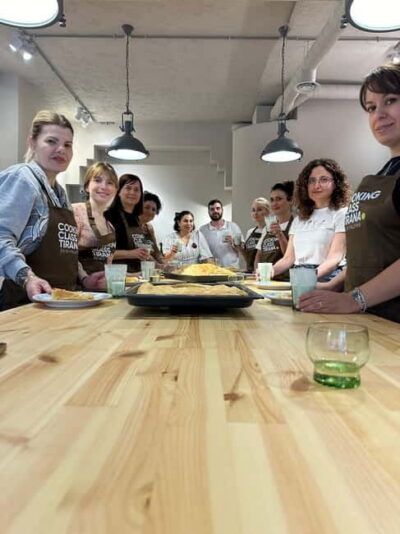
Traditional Albanian Cooking Class in Tirana & Raki Tasting
Read our review →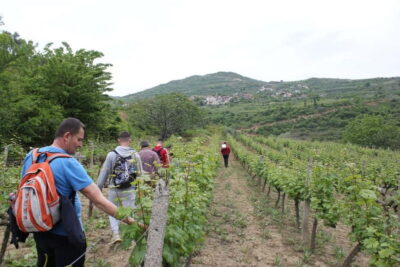
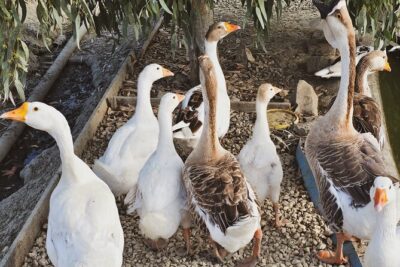
Durrës Countryside Vineyard Experience with Wine & Food Pairing
Read our review →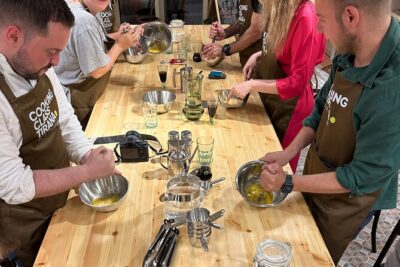
Traditional Albanian Cooking Class in Tirana with Raki Tasting
Read our review →
Durres Countryside Vineyards Wine Tasting & Food Pairing
Read our review →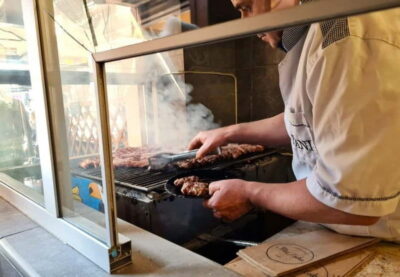
Tirana Stroll Tour, Walk and Taste Qofte & Raki!
Read our review →
Vineyards, Albanian Wine Tasting & Boat Tour from Tirana/Durres
Read our review →Browse the lists this tour appears in