
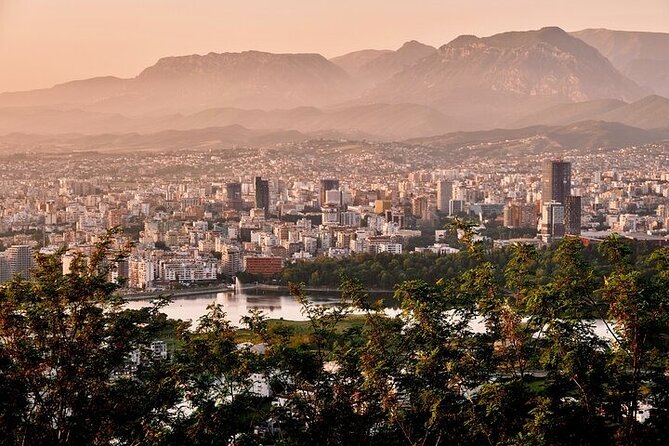
Reviewed · WALKING TOURS
Tirana Walking Tour
Tirana feels clearer after one good loop. This 3-hour English walking tour strings together Tirana’s symbols, government axis, and communist-era scars into a story you can follow without a map. I love how the guide turns landmarks into something you can actually remember, not just dates and names. I also love the small-group feel, so pace and questions stay easy to manage for most people.
The main thing to consider is simple: you’re on your feet for a few hours. Wear comfortable shoes and keep your weather plan flexible, since the tour works best in good conditions.
In This Review
- Key highlights worth showing up for
- Skënderbej Square: where Tirana’s symbols teach you the city
- Et’hem Bey Mosque and the Clock Tower: what to look for on the first stop
- Rruga Murat Toptani: a street that connects layers of power
- Bulevardi Dëshmorët e Kombit: the government corridor and the Pyramid
- Blloku (Ex-Blloku): the restricted world of communist leaders
- How the guide experience changes the value of your tour
- Price and logistics: why this tour feels like good value
- Timing, pace, and what to do with the rest of your day
- What kind of traveler should choose this tour
- Should you book the Tirana Walking Tour by Albania My Way?
- FAQ
- How long is the Tirana walking tour?
- Where do I meet, and where do we end?
- Is the tour offered in English?
- What is included in the price?
- How large is the group?
- What if the weather is bad or there are not enough travelers?
- Can I get a refund if I cancel?
Key highlights worth showing up for
- Skënderbej Square in one tight introduction with Et’hem Bey Mosque and Tirana’s skyline landmarks
- Murat Toptani street walk past Bunk Art 2, Toptani Castle area, and the Zogu Residence
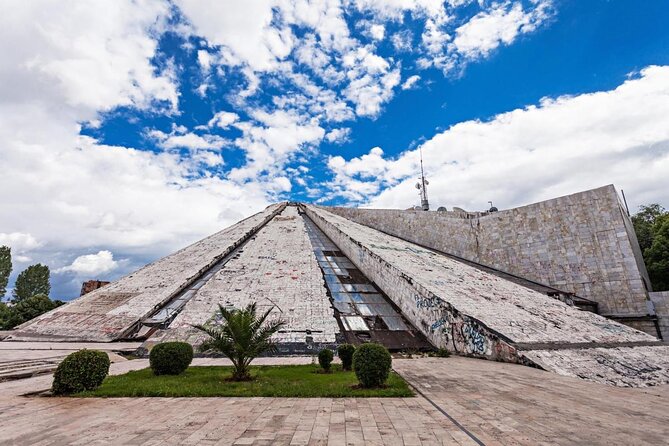
- The main boulevard power walk along Bulevardi Dëshmorët e Kombit, including the Pyramid area and major institutions
- Blloku (Ex-Blloku) perspective shift from communist leaders’ restricted world to what it is now
- Small group size (max 15) that makes it realistic to ask questions and get good answers
More Walking Tours in Tirana

Skënderbej Square: where Tirana’s symbols teach you the city
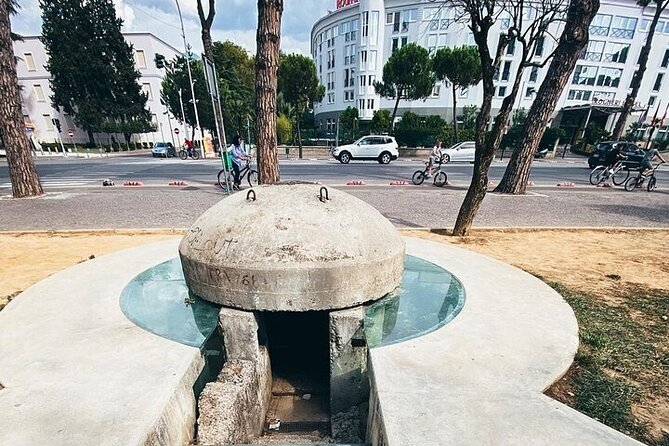
Most walking tours start with a landmark. This one starts with the one place that helps you orient fast: Sheshi Skënderbej. From here, you can read the city like a timeline, because the route is built around the shift from older Tirana to the institutions and ideologies that shaped the 20th century.
You begin at Et’hem Bey Mosque, described here as the oldest building in Tirana and one of the city’s key symbols. It’s the kind of stop that works even if you’re not a museum person. The guide points out what to notice, like the mosque’s decorative details and why it matters as a signature of old Tirana.
Next, you look toward the Clock Tower, another obvious marker of older Tirana. The guide ties it into how the city used to grow and what “tallest” meant back then. Then you expand outward to major civic buildings you can spot around the square area, including mentions of the National Bank of Albania, the National Museum, Hotel Tirana, the Palace of Culture, and the Tirana Municipality.
One practical bonus: seeing all those buildings in context early helps later. You’ll recognize names while you’re walking independently, and you’ll know what kind of places they are, not just that they look official.
Et’hem Bey Mosque and the Clock Tower: what to look for on the first stop
This first stretch is short, around 30 minutes, and it’s designed like an orientation lesson. You’ll get two big takeaways: how Tirana’s oldest symbols show up in the middle of modern life, and how the city’s important buildings cluster in readable blocks.
Here’s what I’d focus on while you’re there:
- Et’hem Bey Mosque details. Don’t rush past the decoration. Let the guide point out what makes it distinctive.
- The Clock Tower’s role as a reference point. Even if you never learn every fact, you’ll remember the tower as a visual anchor.
- The civic-building names. You don’t need to memorize everything, but getting the names early makes the rest of your trip feel smoother.
The downside of a first-stop highlight is that you can feel a bit “compressed.” If you want long photo time inside specific spaces, this tour is more about street-level history and quick orientation than deep sightseeing.
Rruga Murat Toptani: a street that connects layers of power
After Skënderbej Square, you move into Rruga Murat Toptani, and the tour starts to feel like a guided walk through Tirana’s changing political eras. This is where the city’s story becomes more uncomfortable, because you’re moving through areas tied to authoritarian history.
You’ll pass the Bunk Art 2 museum, presented here as covering Communist atrocities. You won’t spend time doing a full museum visit on this walk, but you’ll get the reason it exists. That context is the difference between seeing a building and understanding what it represents.
Then you pass by the Castle of Toptani area and the Prince Zogu Residence. This matters because it shows that Tirana did not begin as a communist capital. Even as the guide emphasizes later history, you can see older prestige and leadership physically in the city.
On this same route, you’ll also pass the House of Parliament and the new Mosque, described as the biggest in the Balkans and still under construction. Getting that update in the middle of the walk is useful. It reminds you that Tirana’s story is still being written, not just archived.
Two practical notes for this stop:
- Since you’re passing by key places, pay attention to what the guide suggests you might return to later.
- Expect about 1 hour for this whole segment, so don’t plan to treat it like a slow stroll for shopping.
Bulevardi Dëshmorët e Kombit: the government corridor and the Pyramid
The heart of the walking loop becomes Bulevardi Dëshmorët e Kombit, Tirana’s main boulevard. This is one long stretch of institutions, major buildings, and big-city symbolism. The guide uses the boulevard to show how power is displayed, and how architectural style can signal ideology.
You’ll walk for about 1 hour along the boulevard and pass the Pyramid, described as the Dictator Hoxha’s museum after his death. The Pyramid is one of those places that can feel visually strange on a first sight, but with context, it becomes easier to understand. You’re not just noticing a shape. You’re learning why it was given that role.
Along the way, you pass additional government and education-related buildings, including the Prime Ministry, Presidency, Parliament Offices, University, Academy of Arts, and the National Stadium, plus more. Even if you don’t catch every name, the pattern matters. This corridor shows how the city’s institutions line up, and it helps you picture where decisions were made.
If you’re the kind of traveler who likes order, this stop will feel satisfying. You get a clear “main axis” to remember, so later on you can navigate with confidence.
Possible drawback: because it’s a long boulevard walk, it can feel exposed to sun or wind. This is why good weather matters for this experience.
Not sold yet? More of Tirana to sift through:
- From Tirana: Bovilla Lake & Gamti Mountain Hiking Day Trip
★ 4.9 · 4,397 reviews - From Tirana: Bovilla Lake & Gamti Mountain Hiking Tour
★ 4.9 · 3,003 reviews - From Tirana: Bovilla Lake & Gamti Mountain Viewpoint Hike
★ 4.8 · 2,053 reviews - Tirana/Durres/Golem: Saranda, Ksamil, Blue Eye Day Trip
★ 4.8 · 1,584 reviews
Blloku (Ex-Blloku): the restricted world of communist leaders
The final emotional shift happens in Blloku, the ex-restricted neighborhood that communist leaders called home. The tour explains that this area was closed to normal citizens for access, which is key to understanding the social divide of the era.
You’ll spend about 30 minutes here, and the guide helps you feel what this meant, not just what it was. You’ll pass Hoxha’s house during his rule, and the point is to connect geography with social control.
Then the story turns to the present. Blloku is now described as the most impressive and lively place in Tirana. Even without getting stuck in a specific venue, the walk helps you see why: it’s where power used to sit, and now it’s where people actually gather.
This is the kind of stop that makes the tour worth doing even if you’re short on time. Lots of tours tell you political history as if it happened to paper. Here, you see the location and get a better sense of daily life restrictions.
How the guide experience changes the value of your tour
The biggest strength of this walk is the licensed guide doing more than reciting facts. The best versions of the tour focus on pace and clarity, and the guide is set up to answer questions and connect the dots.
In particular, the guide approach is often praised for being both informative and engaging. One guide named Aldo is specifically mentioned as on time, prepared, and able to adjust pace to what the group needs. That matters more than it sounds. A great walking tour is not just about knowledge. It’s about timing, explanation style, and remembering what you asked five minutes ago.
Another smart element is that the tour tends to include “thinking time,” not just moving time. If your guide recommends a quick coffee break, take it. In a short tour, a brief pause helps you store the information instead of just collecting it.
Finally, you’ll usually leave with practical suggestions, not just a photo set. That’s helpful for travelers who want Tirana to feel manageable right away.
Price and logistics: why this tour feels like good value
At about $11.91 per person for around 3 hours, this is priced like a high-impact introduction rather than a premium museum day. The tour includes a licensed guide, and the stops are mostly structured around street-level viewing and context.
What makes it feel like value:
- Small group size with a max of 15 travelers, which keeps the experience conversational.
- English delivery, so you’re not relying on translations.
- Free admission tickets listed for the stop segments, meaning you likely won’t need to plan extra paid entries just to understand the story.
What might not feel like value:
- If you prefer deep indoor visits, this route may feel a bit “outside-focused,” since much of what you do is pass-by and orientation rather than spending extended time inside multiple attractions.
For most first-timers, though, the pricing makes sense. A tour like this saves time, prevents confusion, and helps you choose what to do next.
Timing, pace, and what to do with the rest of your day
This walk runs about 3 hours, starting and finishing at the same meeting point at Sheshi Skënderbej 1, Tiranë 1000. That loop format is practical because you can plan dinner nearby and avoid long transfers.
Because you’re seeing major institutions, you’ll want to follow up the same day with something light and flexible. Use the tour route as a mental map. After you learn what Blloku and the main boulevard represent, you’ll have a better sense of where to wander next.
If you’re planning museum visits later, bring the questions the guide gave you. When you return independently, you’ll know what details matter.
What kind of traveler should choose this tour
This is a good fit if you want:
- A first-timer orientation to Tirana’s key landmarks in a short window
- A guide who explains how political and cultural forces show up in buildings and neighborhoods
- A manageable walking pace with room for questions
It may be less ideal if you want:
- A fully indoor, ticket-heavy itinerary
- Long stays in each monument
- A completely off-the-beaten-path route, since the emphasis is on major symbols and corridors
Should you book the Tirana Walking Tour by Albania My Way?
If you’re trying to get oriented fast, I’d book it. For the price, you get a structured introduction to Tirana’s most important symbols, plus the context needed to understand why places like the Pyramid area and Blloku feel the way they do.
I’d especially recommend it as your first day in town, because it gives you a mental map you can use immediately. And if you’re someone who benefits from clear, passionate explaining, this tour has the kind of guide-led story that makes the city click.
Book it, wear comfortable shoes, and treat the walk like your Tirana decoder ring. Then go explore with fewer doubts and more confidence.
FAQ
How long is the Tirana walking tour?
It runs for about 3 hours.
Where do I meet, and where do we end?
You meet at Sheshi Skënderbej 1, Tiranë 1000, Albania, and the tour ends back at the same meeting point.
Is the tour offered in English?
Yes, the tour is offered in English.
What is included in the price?
The tour includes a licensed guide. Everything else is not included unless it is mentioned in the inclusion section.
How large is the group?
The tour has a maximum of 15 travelers.
What if the weather is bad or there are not enough travelers?
The tour requires good weather. If it is canceled due to poor weather, you’ll be offered a different date or a full refund. It also requires a minimum number of travelers; if that minimum is not met, you’ll be offered a different date or a full refund.
Can I get a refund if I cancel?
Yes. You can cancel for free up to 24 hours in advance for a full refund. If you cancel less than 24 hours before the start time, the amount paid will not be refunded.
Added to Tirana lately
- Kosovo, Prizren Day Trip from Tirana★ 3.0 · 1 review
- Semi-Private Hiking Tour; Theth,Valbona&Koman Lake in 3 Days★ 5.0 · 1 review
- Private 1 Day Berat Tour from Tirana★ 5.0 · 1 review
- Private 3 Days Adventure in Albania and Gjirokaster County★ 5.0 · 1 review
- From Tirana: Ksamil Islands, Saranda, & Blue Eye Day Trip★ 5.0 · 1 review
- Tirana Airport Private Transfer To City★ 5.0 · 1 review
- Architectural Walking Tour Discovering Tirana’s Modern Identity★ 5.0 · 1 review
- From Shkoder: 3-Day Valbona to Theth Hike Tour All Inclusive★ 5.0 · 1 review
Walking Tours, compared.
Tirana Center: Magic Walking Tour French/Italian/English Etc
Read our review →
Blue Eye Kayak and walking tour & Lekursi Castle
Read our review →

Browse the lists this tour appears in