
Reviewed · WALKING TOURS
Inside Tirana Walking Tour
Tirana tells its story in plain sight. This 2-hour walking tour threads together landmark culture, a national-hero square, and memory sites tied to Albania’s communist past, all at a super-budget price. It’s a straightforward way to understand the city without hunting for context on your own.
I especially liked the chance to learn from guide Era, who was friendly and clearly up to speed on Tirana and Albania. I also loved that the tour hits major points quickly, with free-admission stops that make it easy to spend your money on coffee instead of tickets. One thing to consider: it runs best in good weather, since you’re outside for much of the time.
In This Review
- Key highlights before you go
- Why this Tirana walking route is such good value
- Meeting at Et’hem Bej Mosque and getting oriented fast
- National Theatre of Opera and Ballet: Albania’s culture in one stop
- Skanderbeg Square: where Tirana turns into a storybook
- National History Museum: what you can grasp in 15 minutes
- Postbllok Checkpoint Monument: a memory site you’ll feel
- Blloku: from restricted elite zone to Tirana’s hangout strip
- Price and pacing: what you’re really paying for
- Who should book this walking tour in Tirana
- Should you book it?
- FAQ
- How long is the Tirana walking tour?
- Where does the tour start and end?
- What language is the tour offered in?
- Do I need admission tickets for the stops?
- How much does the tour cost?
- What if the weather is bad?
Key highlights before you go
- English-guided walk that keeps the context clear while you move
- Free-admission stops across major cultural and historic sites
- Era as an example of the guiding style, friendly and well-informed
- A smart mix of places, from opera and squares to the Postbllok checkpoint
- Small-group feel with a maximum of 30 travelers
- Back to the start point, so you can hop to lunch right after
More Walking Tours in Tirana

Why this Tirana walking route is such good value
For a little over two hours, this tour covers a lot of ground in central Tirana. The price is strikingly low for an English guide and a guided route that links what you see to what it means. At $6.02 per person, the value isn’t just the cost, it’s that you get context for major landmarks you would otherwise treat as photos and street corners.
What makes it especially efficient is the stop structure. You’re looking at five key places, mostly with short time blocks, so you get a city overview rather than a slow museum crawl. That works well if you’re on a first visit, or if you know you’ll come back later for deeper exploring.
You also get a simple format: a guide, a route, and then you’re done. The tour ends back where it starts, so you don’t have to rework your plans afterward.
Meeting at Et’hem Bej Mosque and getting oriented fast
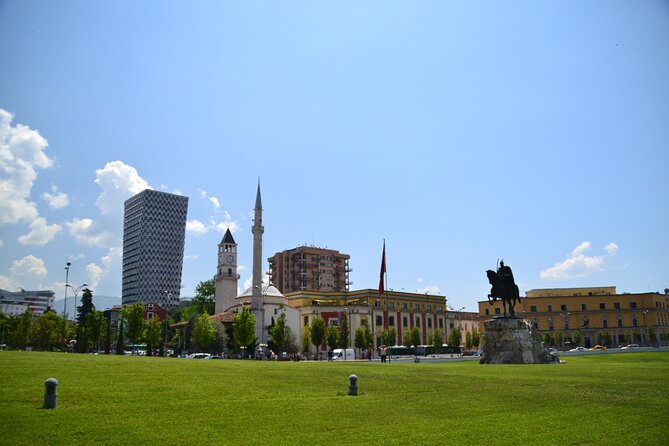
The walk begins at Et’hem Bej Mosque on Sheshi Skënderbej. This is one of the easiest places to orient yourself because the square sits right in Tirana’s center of gravity. If you arrive a few minutes early, you’ll likely get a smoother start.
From there, the route is designed to help you build a mental map quickly. You start with the cultural institutions near the center, then move through the national-hero focal point (Skanderbeg Square), and then pivot into the layers of modern Albanian identity, including the museum and the communist-era memory sites.
If you’re thinking about logistics, the tour is near public transportation and the end point is the same as the start point. That means you can plan lunch, a café break, or a follow-on neighborhood wander without worrying about a complicated drop-off.
National Theatre of Opera and Ballet: Albania’s culture in one stop
Your first major stop is the National Theatre of Opera and Ballet of Albania, tied to the Albanian Philharmonic. The story starts in 1950, when the Philharmonic was established and grew into a broad musical institution with the choir, symphony orchestra, opera singers, ballet troupe, and the conductor all under one umbrella.
The key detail here is how the arts moved into a lasting home. Today’s National Theatre location is connected to the Palace of Culture area, where the theatre sits from 1966 onward. In other words, this is not a random pretty building. It’s part of Albania’s national cultural infrastructure, built and sustained across decades.
In the short time allotted, you’re not meant to study opera history like a scholar. You’re meant to understand the role of the place in Tirana’s identity. If you like architecture and cultural institutions, you’ll enjoy spotting the grandeur and the idea of a state-backed arts scene.
One practical note: the stop says admission ticket free. That’s great because it removes the friction of planning around entry costs. Still, the viewing time is limited, so treat this stop as a “set the stage” moment, not a full cultural immersion.
Skanderbeg Square: where Tirana turns into a storybook
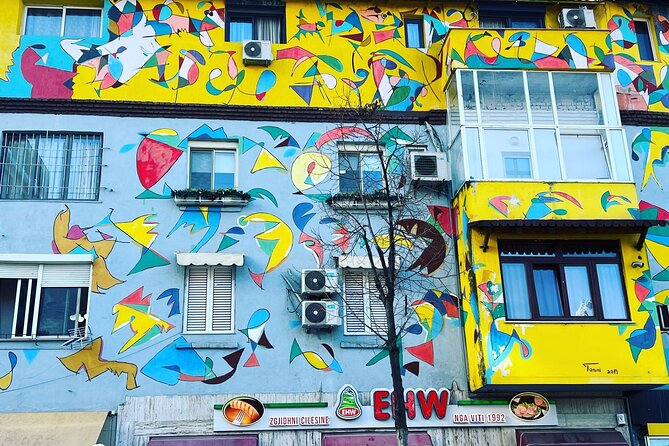
Then you step into Skanderbeg Square, Tirana’s main plaza and the city’s central stage. The square honors Gjergj Kastrioti Skënderbeu, Albania’s national hero, and the dominating monument helps anchor your sense of where you are.
The square isn’t tiny. The total area is about 40,000 square meters, which helps explain why it feels like a hub even when you’re not there at peak times.
What I found useful is how the route ties the square to city planning. Tirana’s master plan was initially designed by Armando Brasini in 1925 and continued by Florestano Di Fausto in a Neo-Renaissance style, with strong emphasis on big forms and orderly layout. Later, after the Italian invasion, the master plan was updated in 1939 by Gherardo Bosio.
This matters because you can actually see the planning logic when you stand at the square. You’re not just looking at a statue. You’re watching different eras of influence show up in the city’s layout and nearby buildings.
The tour also connects you to the cluster of important sites around the square, including the National Opera, National Library, National Bank, Ethem Bey Mosque, the Clock Tower, City Hall, multiple ministries, and the National Historical Museum. In a short block of time, you get a sense that the center of Tirana is a dense government-and-culture zone.
Tip for your own photos: stand back from the monument for wide shots, then move closer for tight details. The square’s size rewards both approaches.
Not sold yet? More of Tirana to sift through:
- From Tirana: Bovilla Lake & Gamti Mountain Hiking Day Trip
★ 4.9 · 4,397 reviews - From Tirana: Bovilla Lake & Gamti Mountain Hiking Tour
★ 4.9 · 3,003 reviews - From Tirana: Bovilla Lake & Gamti Mountain Viewpoint Hike
★ 4.8 · 2,053 reviews - Tirana/Durres/Golem: Saranda, Ksamil, Blue Eye Day Trip
★ 4.8 · 1,584 reviews
National History Museum: what you can grasp in 15 minutes
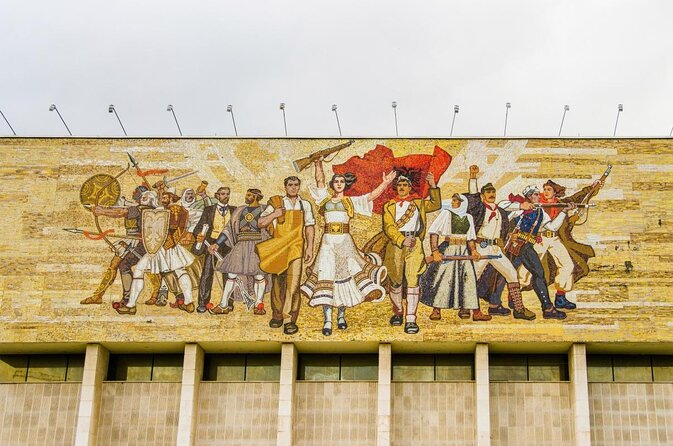
Next up is Muzeu Historik Kombetar, the National History Museum. It opened on 28 October 1981 and is a large museum by any standard, covering 27,000 square meters, with 18,000 square meters available for exhibitions.
Over the entrance, you’ll notice a large mosaic titled The Albanians. That artwork depicts figures that stretch from ancient times to modern periods of Albania’s history. Even if you don’t have time for the full galleries, this mosaic works like a visual thesis statement: the museum is trying to connect many time periods into one national story.
Inside, the tour’s allotted time is brief, but the museum itself is organized into clear thematic pavilions. These include:
- Antiquity
- Middle Ages
- Renaissance
- Independence
- Iconography
- National Liberation Antifascist War
- Communist Terror
- Mother Teresa
That list helps you understand what you’re walking into. In about 15 minutes, you won’t cover everything, but you can do something valuable: get your bearings and identify what categories you want to return to later.
If museum time is your priority, consider this your orientation visit. Then, after the tour, you can go back on your own for the pavilion topics that grabbed you. Since the museum stop indicates free admission, it’s easier to justify that follow-up without extra ticket planning.
Postbllok Checkpoint Monument: a memory site you’ll feel
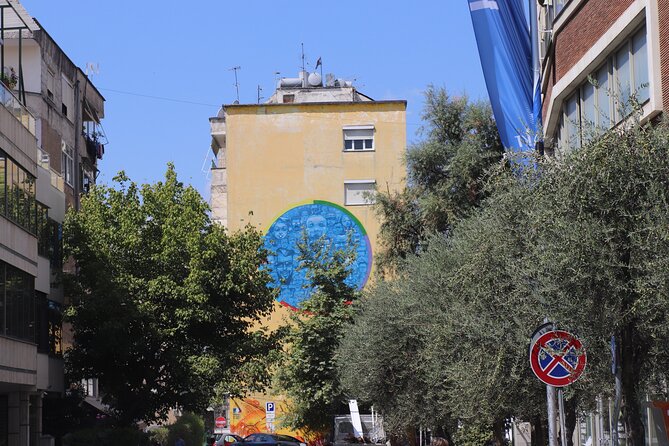
The tour shifts tone at Postbllok – Checkpoint Monument. This isn’t a celebratory landmark. It’s meant to be a somber reminder of Albania’s communist past, especially the atmosphere of surveillance and persecution tied to Enver Hoxha’s regime.
The site uses physical remnants to make the message stick. The installation includes original concrete pillars from a notorious labor camp, an old bunker, and part of the Berlin Wall. Even without a long speech, that mix of elements signals that this place is about oppression, imprisonment, and resistance.
During your visit, you’ll be guided toward the site’s purpose: it is dedicated to those who suffered under the communist dictatorship and meant to show the resilience of the Albanian people as they moved toward freedom and democracy.
In a short stop like this, your job is mostly to slow down and take it seriously. If you’re the kind of person who likes history that affects how a country explains itself, this will likely be the emotional peak of the walk.
Also, because it’s a memorial space, it’s smart to keep your voice low and your photo-taking respectful.
Blloku: from restricted elite zone to Tirana’s hangout strip
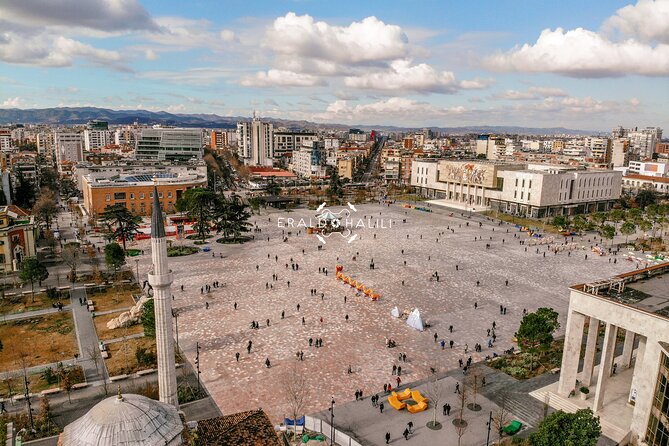
Then the tour moves to Blloku, commonly known as Ish-Blloku. This is an upmarket area in Tirana that’s known for shops, boutiques, restaurants, trendy bars, pubs, and cafés. In other words, after learning the heavier parts of the city’s past, you get a glimpse of the everyday Tirana that locals actually live and socialize in.
The communist-era context is what makes Blloku interesting. During the communist period, it was a restricted residential area for members of the Albanian politburo. Ordinary Albanians were not allowed in, and on many maps it was unmarked. That matters because it tells you Blloku wasn’t just fancy. It was controlled access.
Even today, you can still find the residence of Enver Hoxha, which keeps the past physically present even as the neighborhood functions as a modern entertainment district.
After the fall of communism, the area changed quickly, with new developments and exclusive flats and apartments. It earned a reputation as a playground for the young Albanian elite. The tour doesn’t ask you to believe the slogan. It helps you connect the neighborhood’s reputation to the political shift that made it possible.
If you want to turn the tour into an easy evening plan: after the walk ends, Blloku is a natural place to grab something to eat or find a café, since you’ve already been oriented to where it is and why it feels different from the formal square-and-museum zones.
Price and pacing: what you’re really paying for
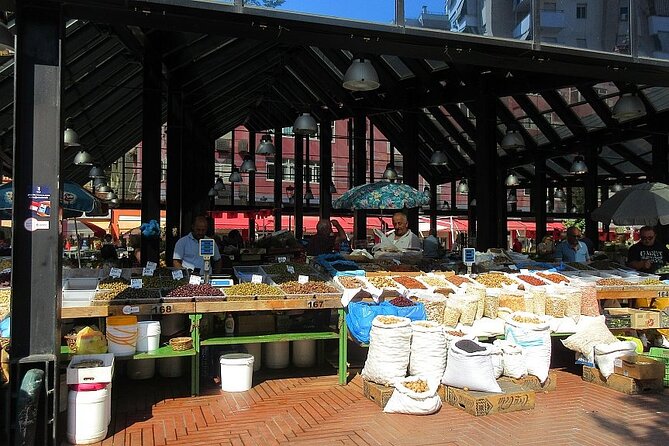
Let’s talk money the way it matters. At $6.02, you’re paying for:
- an English guide
- a route that links major Tirana sights
- short, efficient stop times across five highlights
- a guide-led “why this matters” thread for each location
The stops themselves list free admission, so you’re not hit with multiple ticket costs at each stop. That’s a major part of the value story. Many city walks are cheap but then stack entry fees at the museums. Here, you get the reverse: the tour structure is the main product.
The pacing is designed for overview. Each stop is timed, with blocks around 10 to 15 minutes depending on the site. That’s great for orientation, but it means you should expect to skim rather than study.
If you’re the kind of traveler who likes to linger, you’ll probably want to add extra time after the tour:
- for the museum topics that interest you most
- for the outdoor areas where you want more photos
- for Blloku to eat and people-watch
Group size is capped at 30 travelers. That size is large enough that you may not always feel like you’re having a private conversation, but it also keeps the walk from turning into a slow-moving crowd.
The tour also requires good weather, so check conditions. Tirana in mild conditions is ideal for a two-hour walk. If it’s raining hard, the experience is likely to be rescheduled or refunded.
Who should book this walking tour in Tirana
This tour makes sense if:
- you’re seeing Tirana for the first time and want context
- you want a budget-friendly English experience
- you like cultural landmarks but also want the political and memory side of the story
- you prefer a walk that ends back near where you started
It might not be perfect if:
- you want a museum deep dive with lots of time inside galleries
- you dislike walking when weather is less cooperative
- you prefer slower, longer stops with fewer locations
Still, even if you plan to do a longer museum day later, this gives you the map and the narrative so your later time feels more meaningful.
Should you book it?
I’d book this if your goal is clarity fast. It’s cheap enough that you can take it early in your trip, then use what you learn to guide your later choices. It’s also balanced: opera and culture, the national-hero square, then the museum, then Postbllok, then Blloku and its modern pulse. That mix helps you understand Tirana as more than just buildings and photos.
If you do book it, come with comfortable shoes and a flexible attitude. Take the short stops for what they are: introductions that help you decide where you want more time later.
FAQ
How long is the Tirana walking tour?
The tour lasts about 2 hours.
Where does the tour start and end?
It starts at Et’hem Bej Mosque on Sheshi Skënderbej 1, Tiranë 1001, Albania, and ends back at the same meeting point.
What language is the tour offered in?
The tour is offered in English.
Do I need admission tickets for the stops?
The stops listed for the tour show admission ticket free.
How much does the tour cost?
The price is $6.02 per person.
What if the weather is bad?
This experience requires good weather. If it’s canceled due to poor weather, you’ll be offered a different date or a full refund.
Added to Tirana lately
- Kosovo, Prizren Day Trip from Tirana★ 3.0 · 1 review
- Semi-Private Hiking Tour; Theth,Valbona&Koman Lake in 3 Days★ 5.0 · 1 review
- Private 1 Day Berat Tour from Tirana★ 5.0 · 1 review
- Private 3 Days Adventure in Albania and Gjirokaster County★ 5.0 · 1 review
- From Tirana: Ksamil Islands, Saranda, & Blue Eye Day Trip★ 5.0 · 1 review
- Tirana Airport Private Transfer To City★ 5.0 · 1 review
- Architectural Walking Tour Discovering Tirana’s Modern Identity★ 5.0 · 1 review
- From Shkoder: 3-Day Valbona to Theth Hike Tour All Inclusive★ 5.0 · 1 review
Walking Tours, compared.
Tirana Center: Magic Walking Tour French/Italian/English Etc
Read our review →
Blue Eye Kayak and walking tour & Lekursi Castle
Read our review →

Browse the lists this tour appears in