
Reviewed · GJIROKASTER STONE CITY & ZEKATE TRIPS
Gjirokaster Walk Tour: Old Bazaar, Cfake, Dunavat, AliPasha!
Cobblestones and water history in 3 hours. This Gjirokaster walk tour is interesting because it links everyday neighborhoods to the big story of Ali Pasha’s water system, starting with the Old Bazaar lanes and ending at the aqueduct remains. I like how the route mixes cobblestone streets with old houses, and I like the dramatic payoff at Ali Pasha Bridge, but you should expect a tough surface and some uphill walking.
You meet at the Çerçiz Topulli statue in the center of town at 09:30 am, and you get a live guide in English or Albanian. One guide I’m seeing named in feedback is Besi, and the common theme is that he talks with real specificity about what you’re seeing, not just general facts.
Most of the walking is done outside the castle walls, along older neighborhoods where the scenery does the explaining. The route includes Cfaka, nature viewpoints with sheep on the hills, and a tekke tied to the Bektashi Order, so it feels more lived-in than a stop-and-go photo loop. Just plan on wearing proper shoes, since the terrain is described as not so comfortable and even a bit climb-heavy.
In This Review
- Key things to know before you go
- A 3-hour Gjirokaster walk that feels like real neighborhoods
- Start at Çerçiz Topulli Square and walk the first ring outside the castle
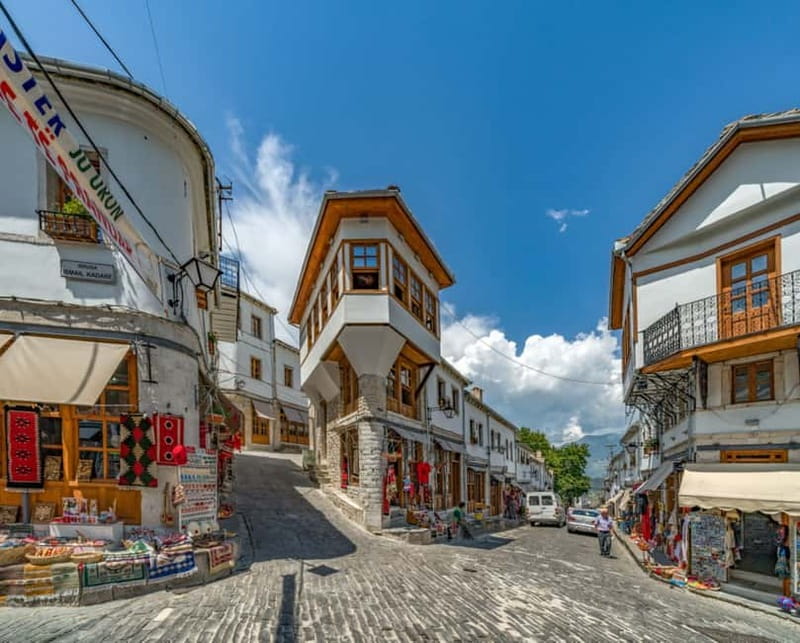
- Gjirokastra Old Bazaar area: cobblestones, old houses, and what’s left of the market
- Zerzebili Bridge to Cfaka: old streets, nature, and a Bektashi tekke
- Ali Pasha Bridge: the aqueduct remains and the payoff view
- Terrain reality check: what to wear and how to pace yourself
- Guide quality can make or break this tour
- Price and value: is $17 for 3 hours worth it?
- Who should book this Gjirokaster walk tour?
- Should you book this Gjirokaster Walk Tour?
- FAQ
- Where is the meeting point for the tour?
- What time does the tour start?
- How long is the Gjirokaster walk tour?
- How much does the tour cost?
- What’s included in the price?
- What languages is the guide available in?
- Can I get a refund if I cancel?
Key things to know before you go
- Old Bazaar lanes that are not a bazaar anymore: you’ll walk beneath the castle walls through older streets and houses.
- Cfaka neighborhood with a Bektashi tekke: you pass a religious site tied to the Bektashi Order.
- Zerzebili Bridge transfer: you cross this bridge before entering the next ancient area.
- Ali Pasha Bridge is the water story: it’s the surviving part of an aqueduct built to supply the castle.
- 3 hours total: guided time is about 30 minutes at the bazaar area and about 30 minutes at Ali Pasha Bridge.
A few more Gjirokaster stone city trips:

A 3-hour Gjirokaster walk that feels like real neighborhoods
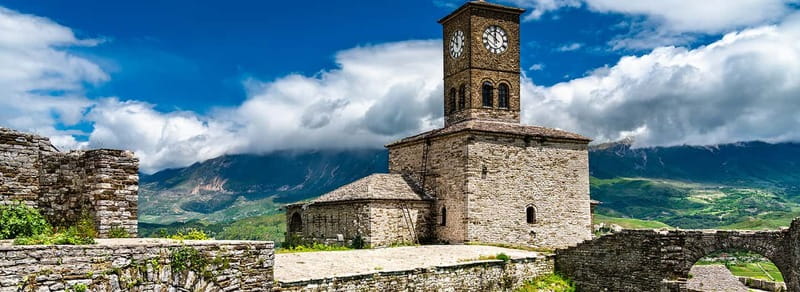
Gjirokaster can be a bit of a “big sights” town, with the fortress grabbing the attention. This tour helps you rebalance that by taking you through the older town fabric first, then earning the viewpoint at the end. It’s a good fit if you want history, but you also like your history tied to streets, stones, and daily life.
The route is built around three strong anchors: the area people still call the Old Bazaar, the Cfaka neighborhood, and Ali Pasha Bridge. Between them, you get the small textures that make the town memorable, like cobblestone footing, aged house facades, and hillside scenery with sheep.
Start at Çerçiz Topulli Square and walk the first ring outside the castle
Your meeting point is straightforward: the statue of Çerçiz Topulli at 09:30 am in the center of the old town. From there, you head toward the Old Bazaar area, which sits outside the castle walls and runs along beneath them.
That setting matters. The walk under the castle walls gives you a sense of how the town grew around the fortress, instead of treating the castle as a separate world. Expect narrow streets and cobbles right away, so your pace starts slower than you might plan for a “simple” stroll.
Gjirokastra Old Bazaar area: cobblestones, old houses, and what’s left of the market
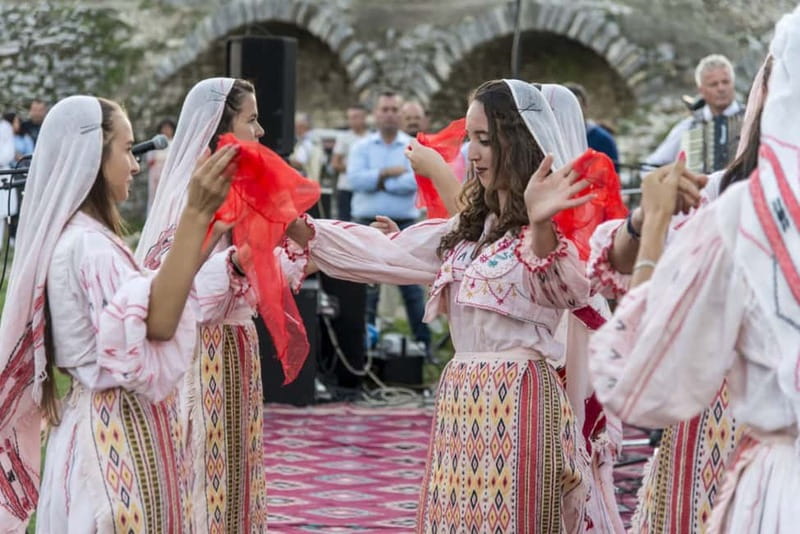
Even though it’s called the Old Bazaar, it’s not functioning as a bazaar anymore. What you get instead is the atmosphere of older neighborhood life, the kind that shows itself in street shape, stonework, and the age of the houses.
This is where the tour gives you a guided stop of about 30 minutes. You’ll learn what to notice as you walk, including how this area represents the first neighborhood layer outside the walls of the castle. For many visitors, that’s the best moment to get your bearings, because after this point you’ll be moving through more varied terrain and older pockets of the town.
What I like here: the cobblestone lane experience is immediate, and the older houses give the street a sense of time depth. If you’re the type who enjoys noticing small details, this stop rewards attention.
Possible drawback: if you dislike walking on uneven surfaces, this is where you’ll feel it first. One practical move is to avoid shoes that slip on rock, because the stones can be a little unforgiving.
Zerzebili Bridge to Cfaka: old streets, nature, and a Bektashi tekke
After the bazaar area, you cross the Zerzebili Bridge. It’s a small pivot in the walk, because it helps shift you from the first neighborhood ring toward another ancient area called Cfaka.
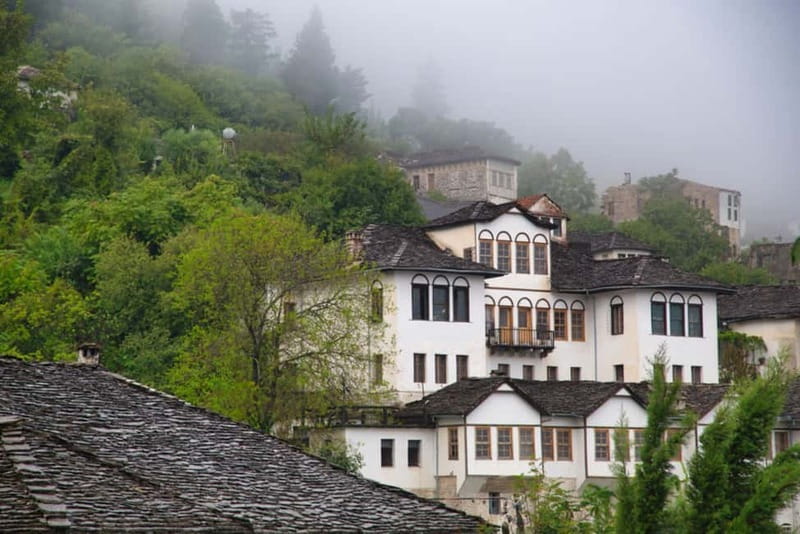
Cfaka is where the tour adds variety. You pass old houses that include first monument category homes, plus a tekke belonging to the Bektashi Order. Even if religious architecture isn’t your main interest, this stop adds context by showing how spiritual sites sit inside the everyday street pattern.
Then the route starts to open up visually. The walk continues through a setting described as a beautiful combination of nature, with many sheep visible on top of the hills. That change of scenery is more than pretty background. It helps you understand Gjirokaster as a town that’s tied to its surrounding slopes, not just its stone core.
More walking tours in Gjirokaster:
- Walking Tour “The Old Bazaar, Cfake, Dunavat, Ali Pasha Bridge”
★ 5.0 · 10 reviews - Gjirokaster: Old Bazaar and Castle Private Walking Tour
★ 5.0 · 6 reviews - Old Bazaar-Cfake-Dunavat-Ali Pasha Bridge Walking Tour
★ 4.6 · 5 reviews - Gjirokaster Walking Tour
★ 5.0 · 4 reviews
Ali Pasha Bridge: the aqueduct remains and the payoff view
The final destination is Ali Pasha Bridge. This bridge is described as a remaining of the aqueduct built more than 200 years ago by Ali Pasha Tepelena to bring water to the castle.
That detail changes how you see the structure. Instead of thinking of it as a random old bridge, you can picture the practical goal behind it: getting water up and into the fortress area. It’s a smart way to connect military power, city planning, and everyday infrastructure.
You’ll get another guided stop of about 30 minutes here. Expect the guide to explain what the aqueduct remains mean in the wider story of the town and why it still stands out in the landscape.
What I like most about this finish: it’s an ending point with meaning. Even after walking cobblestones and negotiating steep or uneven ground, you get a clear historical “reason” for the final stop.
Terrain reality check: what to wear and how to pace yourself
This is not a flat stroll. The route involves cobblestones and is described as not so comfortable terrain, with walking that can include climbing. If you’ve got a preference for long, smooth walks, you might find this one more demanding than expected.
A guide’s names keep showing up in feedback, especially Besi, and that often comes with a helpful kind of pacing. But you should still plan your own effort. Wear shoes with grip and support, and avoid thin soles.
A useful planning tip: give yourself breathing room at the start. If you start the walk on tight timing, the stones and slopes can make the experience feel stressful instead of rewarding.
Guide quality can make or break this tour
This tour lives and dies by the guide. The strongest feedback I’m seeing centers on a guide who goes beyond basic commentary and explains what you’re actually seeing in the town. Besi comes up repeatedly as a friendly and helpful guide who shares lots of information.
There’s also one especially memorable behavior described: a guide who went extra after the tour to help people get local food. That sort of bonus can turn a good walk into a great half-day, but don’t assume it will happen for every group. What you can count on is that the tour includes a live guide who speaks English or Albanian.
Now the balanced note. If you prefer a brisk pace with minimal pauses, there can be times when the guide spends extra moments wherever they stop. That can be great if you want conversation and context, but it can feel slow if you only want movement.
My advice: if you’re short on time, stay upbeat and let the guide do the storytelling. It’s the difference between seeing old streets and understanding why they’re here.
Price and value: is $17 for 3 hours worth it?
At $17 per person, you’re paying for a guided walk that totals about 3 hours, with guided portions of roughly 30 minutes at the Old Bazaar area and about 30 minutes at Ali Pasha Bridge. The listed inclusion is a guide, so you should treat this as a walking experience, not a transport-and-many-scheduled-stops package.
That pricing makes sense for three reasons:
- You’re buying interpretation, not just walking. The guide helps you notice what matters in Old Bazaar lanes, Cfaka, and the aqueduct remains.
- The route covers meaningful ground without needing extra tickets for major attractions at each stop.
- It’s short enough to fit into a busy Gjirokaster schedule, especially if you’re already planning castle time separately.
If you think of it as a pay-for-a-guide walking route, it’s good value. If you hate guided time and prefer to roam alone, you might feel the price more than you’d like, because the experience is built around the guide’s commentary and the designated walk.
Who should book this Gjirokaster walk tour?
Book it if you want an older, street-level side of Gjirokaster, where you walk beneath the castle walls and end at Ali Pasha Bridge for a water-infrastructure story. It also works well for travelers who enjoy small neighborhoods like Cfaka, where a tekke and old houses sit alongside nature views with sheep.
It may be a tougher fit if you have weak ankles or difficulty with uneven cobbles and climbing. This tour is described as not so comfortable terrain, so your comfort depends heavily on shoe choice and your willingness to take it slow.
Best match:
- You like guided context while still walking at street level
- You want to see more than the castle complex
- You’re okay with uneven ground
Should you book this Gjirokaster Walk Tour?
I think you should book this if you’re excited by old streets, neighborhood texture, and a clear ending at Ali Pasha Bridge that ties infrastructure to the town’s story. The $17 price for a 3-hour guided circuit feels fair, and the guide factor is strong, especially with names like Besi showing up in positive feedback.
If you’re hoping for a smooth, easy walk or you’re not into guided interpretation, consider how you usually enjoy sightseeing. This one is about walking and listening as much as it is about photos.
FAQ
Where is the meeting point for the tour?
The meeting point is at the Çerçiz Topulli statue.
What time does the tour start?
The tour meets at 09:30 am.
How long is the Gjirokaster walk tour?
The duration is about 3 hours.
How much does the tour cost?
The price is $17 per person.
What’s included in the price?
The tour includes a live guide.
What languages is the guide available in?
The live guide is available in Albanian and English.
Can I get a refund if I cancel?
Yes. You can cancel up to 24 hours in advance for a full refund.
A Few More Shopping Trips in Gjirokaster
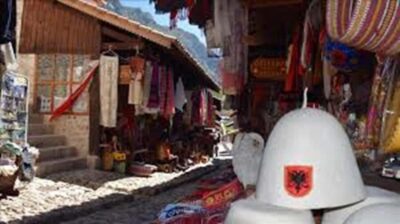
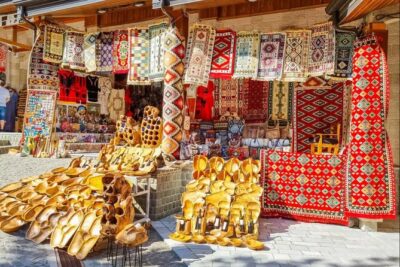
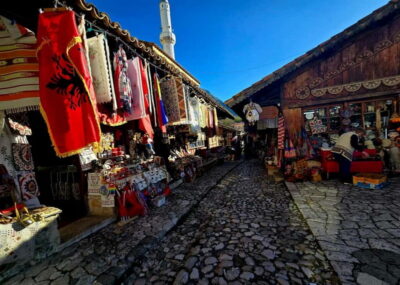
A Few More Market Walks in Gjirokaster
Added to Gjirokaster lately
- Vegetarian cooking class in Gjirokastër★ 5.0 · 1 review
- From Tirana: Gjirokastër Castle, Cold War Tunnel & Bazaar★ 5.0 · 1 review
- Dress as a Local in Gjirokaster★ 5.0 · 1 review
- South of Albania: 2-Day Adventure Tour★ 5.0 · 1 review
- Blue Eye & Gjirokaster: 4×4 Tour and Old Bazaar★ 5.0 · 3 reviews
- Gjirokastra Private Half-Day Walking Tour★ 5.0 · 3 reviews
- Gjirokaster Walking Tour★ 5.0 · 4 reviews
- Gjirokaster – The Stone City of UNESCO, Private Tour from Tirana★ 4.5 · 4 reviews
Gjirokaster Stone City & Zekate Trips, compared.
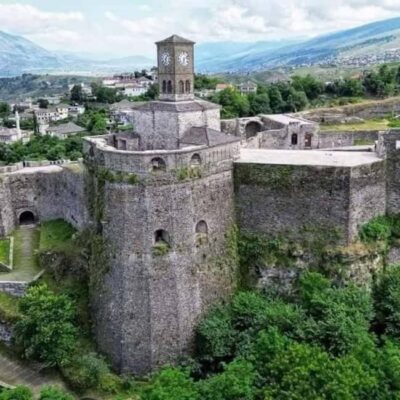
Lekursi Castle, Blue Eye, Gjirokaster, & More Tour
Read our review →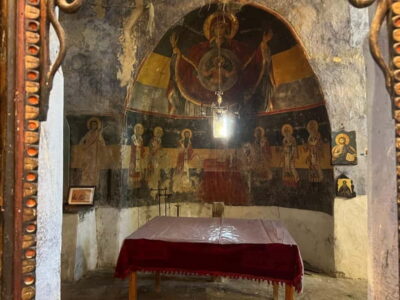
Daily Trip To:Blue Eye,Monastery,Gjirokaster&Lekursi Castle
Read our review →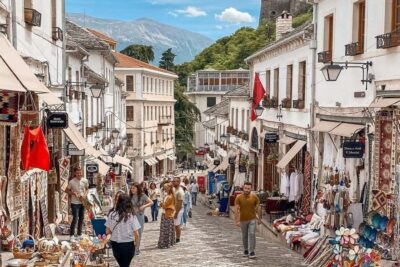
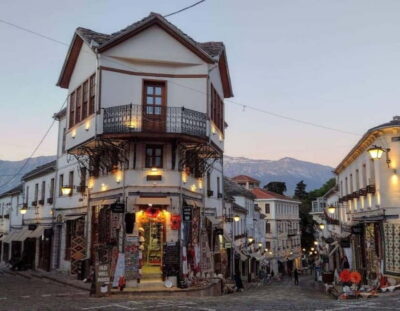
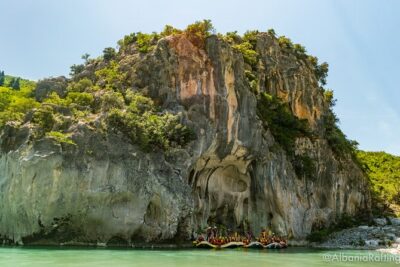
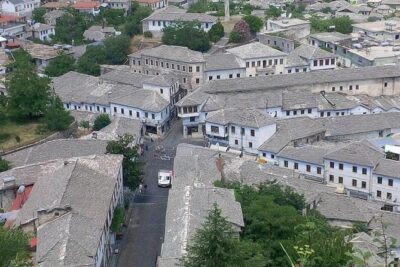
Gjirokastra- The Stone City & Blue Eye- The monument of Nature.
Read our review →
Day tour from Saranda/Ksamil:Gjirokaster +Blue Eye & Lekursi
Read our review →
Browse the lists this tour appears in