
Reviewed · SHOPPING TOURS
Old Bazaar-Cfake-Dunavat-Ali Pasha Bridge Walking Tour
Gjirokastër reveals itself fastest on foot. This 3-hour walk takes you beyond the usual castle views into the neighborhoods tucked along the walls, including Cfaka and Dunavat, before ending at Ali Pasha Bridge, a surviving piece of the old water system. I love how the route strings together cobblestones, old houses, and small religious landmarks in a way that feels lived-in, not staged. I also like that the guide keeps it practical with clear English and plenty of local detail. One thing to plan for is the terrain, it can be uneven and a bit rough underfoot, so plan on sneakers and take your time.
You start at the main square area, then move outward to places that are not really on most people’s radar. You’ll get a slow build to viewpoints, then reach quieter corners where you can see older architecture up close. And yes, Ali Pasha Bridge is the payoff, the aqueduct remnant built more than 200 years ago to carry water to the castle.
This tour suits you if you want an authentic walking experience and enjoy seeing everyday sides of a town. If you hate uneven ground or you want a mostly flat, photo-only stroll, you might find this one a little demanding for the time.
In This Review
- Key takeaways before you go
- Why this 3-hour walk feels like a time machine
- Meeting at the main square behind the Statue of Cerciz Topulli
- From Cerciz Topulli Square to the Old Bazaar under the castle walls
- Nanxa stream and the Cfaka neighborhood, where details matter
- Dunavat and the Bektashi tekke with hill views and sheep
- Ali Pasha Bridge: the aqueduct remnant that ties it all together
- Pace, footwear, and terrain on uneven streets and cobblestones
- Price and value: $17 for an English guided route to the quiet side of town
- Who should book, and who should consider something easier
- Should you book the Old Bazaar to Ali Pasha Bridge walking tour?
- FAQ
- Where does the tour start?
- How long is the Old Bazaar to Ali Pasha Bridge walking tour?
- What does the tour cost?
- Is it a guided tour?
- What language is the tour in?
- What are the main stops on the route?
- What should I wear or bring for this tour?
- Is cancellation refundable?
- Is there a pay later option?
- Is there a viewpoint during the tour?
Key takeaways before you go
- Cobblestones and oldest houses: The Old Bazaar area has a strong “walkable time capsule” feeling.
- Nanxa stream as a natural divider: It marks the shift from the first outer neighborhood to Cfaka.
- Cfaka’s monument-category houses and restored mosque: You get details that usually get skipped.
- Dunavat and the Bektashi tekke: A quiet religious stop in a more rural-feeling setting.
- Ali Pasha Bridge, aqueduct remnant: The tour ends with a historic structure tied to the castle’s water supply.
- A viewpoint stop after a 30-minute walk: You’re not just walking, you’re also pausing for perspective.
More walking tours in Gjirokaster:

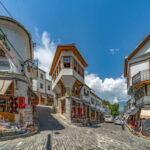
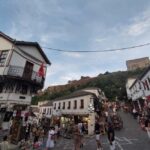
Why this 3-hour walk feels like a time machine
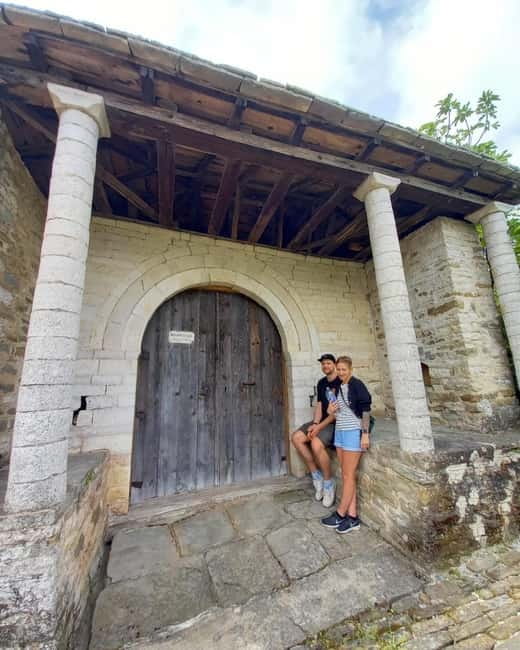
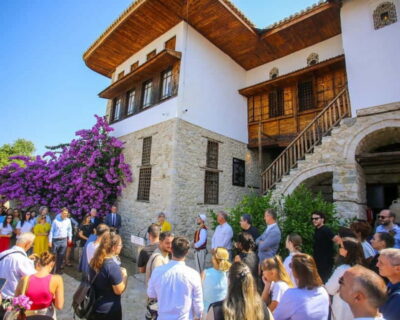
If you like the real texture of a place, this route does a good job of showing it. You are not bouncing from one museum sign to another. Instead, you walk through Gjirokastër’s outer neighborhoods, where the streets and houses look older and the pace feels more like local life.
Two parts make it click for me. First is the connection between neighborhoods, you move from the outer edge beneath the castle walls to Cfaka, then onward toward Dunavat. Second is the final structure. Ali Pasha Bridge is not just a pretty landmark. It is described as a remnant of an aqueduct built by Ali Pasha Tepelena more than 200 years ago to bring water to the castle. That single fact gives the whole walk extra meaning.
The only real drawback is comfort. The tour asks you to wear comfortable shoes because the terrain is not always friendly. If you show up in sandals, you will regret it. If you show up in decent sneakers and take a steady pace, it feels manageable for most people.
Meeting at the main square behind the Statue of Cerciz Topulli
You meet at the office of Experience Gjirokastra at the main square, behind the statue of Cerciz Topulli. This matters because it makes the start easy to find if you are already oriented to the town center. No complex back-and-forth meets, no mystery pickup point.
From the starting area, you begin in and around Cerciz Topulli Square, then you head out toward the older neighborhoods under the castle walls. The route is designed so you do not just leave the center and disappear into blank streets. You get a natural sequence of spaces that gradually feels more local and less touristy.
I also appreciate that the tour is listed as an English live guide experience. One guide can make a walk like this land, because you are moving through older areas that do not always come with clear self-explanations. When the guide connects the streets and landmarks into a story, it turns your photos into something you actually remember.
From Cerciz Topulli Square to the Old Bazaar under the castle walls
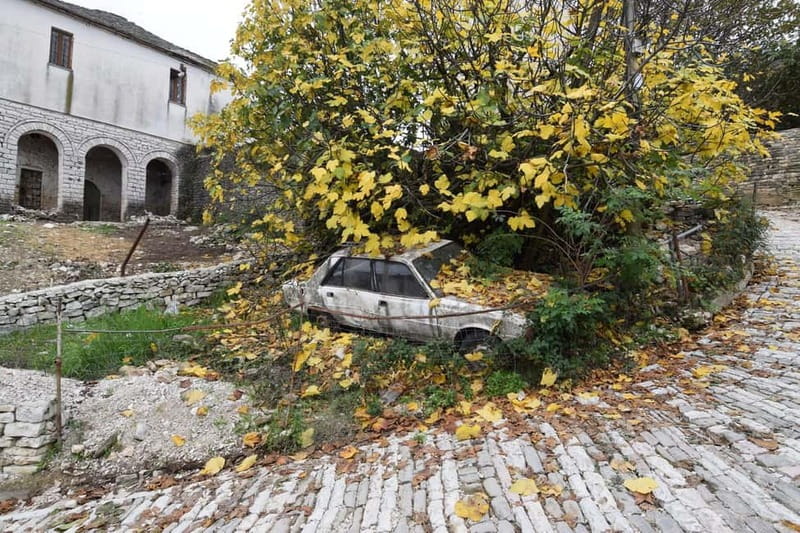
The first stretch takes you from the town center to the Old Bazaar area, and it is worth noting that it is not a bazaar in the active shopping sense anymore. Think of it more as a historical neighborhood space that sits just outside the castle walls.
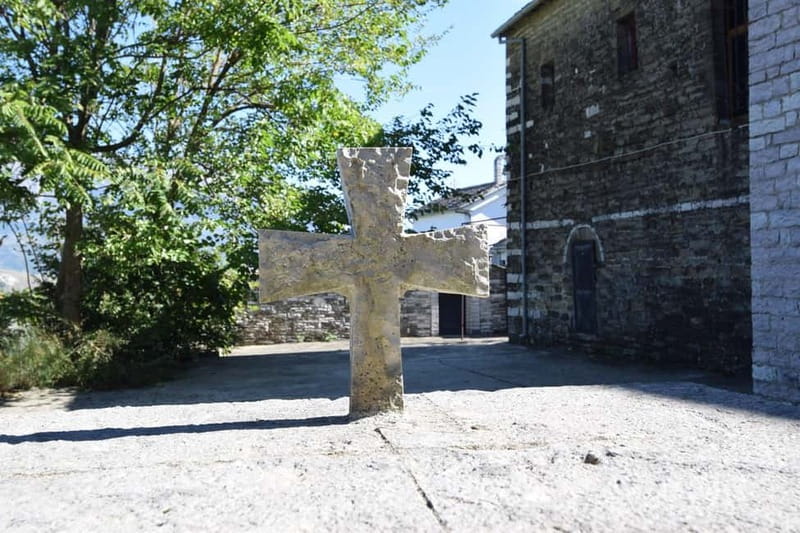
Here’s what you can expect to notice. The tour description highlights cobblestone streets, an Orthodox church, and some of the oldest houses. That combination is powerful because cobblestones change how you experience a street. Instead of rushing, you slow down. Your feet force you to look at the pavement pattern, the way buildings sit close to the lane, and the way the neighborhood hugs the slope.
There is also a feel of transition. This part is described as the first neighborhood outside the walls of the castle, along the base of the castle walls. That setting gives you a clear mental map of how the town was organized around the stronghold.
Practical tip: use the first portion to settle into pace. If you keep stopping for every shot right away, you will feel rushed later when the walk gets more physical. I prefer to let the first streets set the rhythm, then go back for photos at natural pauses.
Nanxa stream and the Cfaka neighborhood, where details matter
After the Old Bazaar, you pass the stream called Nanxa. It works like a boundary in the experience. You move from one older district feel to another, and the tour then reaches the ancient neighborhood called Cfaka.
Cfaka is where the tour leans into the kind of building details that are hard to spot when you only do the big sights. You’ll pass old houses described as first monument category, a rebuilt mosque, and the Orthodox church area from earlier becomes part of a larger pattern of how religious and civic life sat together.
This is also one of the best segments for curious walkers. The streets and homes here are not presented as just backdrops. They are framed as meaningful structures in the town’s story. If you like architecture in a real-world setting, this part delivers.
A small consideration: in a neighborhood like Cfaka, you might encounter tighter lanes or spots where it feels easy to pause and block others if you stop for photos. Keep your movements smooth, and step aside when you take pictures. It keeps the experience comfortable for you and respectful for people who live nearby.
A few more market walks in Gjirokaster:
- Blue Eye & Gjirokaster: 4×4 Tour and Old Bazaar
★ 5.0 · 3 reviews - From Tirana: Gjirokastër Castle, Cold War Tunnel & Bazaar
★ 5.0 · 1 review - From Tirana: Kruja Castle, Old Bazaar & Sari Salltik View
★ 4.8 · 2,171 reviews - From Durres/Golem: Kruja Castle & Old Bazaar Day Tour
★ 4.9 · 1,317 reviews
Dunavat and the Bektashi tekke with hill views and sheep
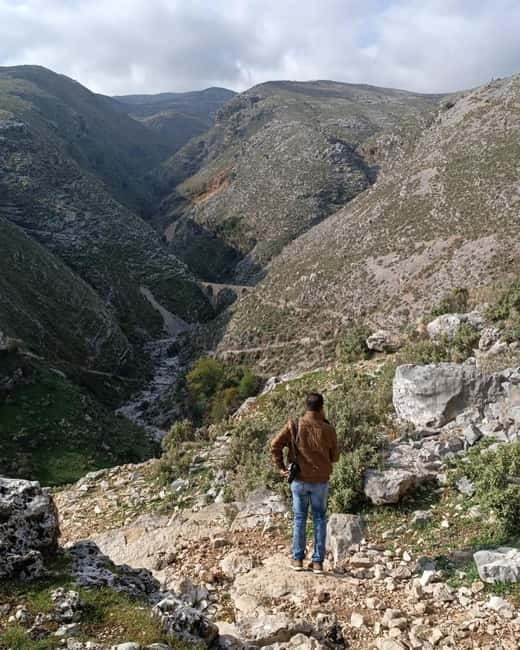
Next comes Dunavat, described as the last neighborhood before the final destination. This segment mixes older houses and nature. The route mentions sheep on top of hills, which signals that the walking experience is not all stone and walls. You get open visual space before the bridge.
The religious stop here is a tekke that belongs to the Bektashi Order. Even if you are not looking for religious context, having a specific landmark like this helps you orient what you are seeing. It turns the walk into a chain of identifiable points, not a continuous blur.
What I like about this phase is that it gives a breather from the densest-feeling streets. Your eyes can reset. Your legs too. You start to see how Gjirokastër connects built-up areas to surrounding slopes, and the town’s shape becomes clearer.
If you are someone who likes to understand a place by moving through it, this section helps you do that. You are not just viewing the town from high ground. You are moving along its edges, from older corridors toward a final water landmark.
Ali Pasha Bridge: the aqueduct remnant that ties it all together
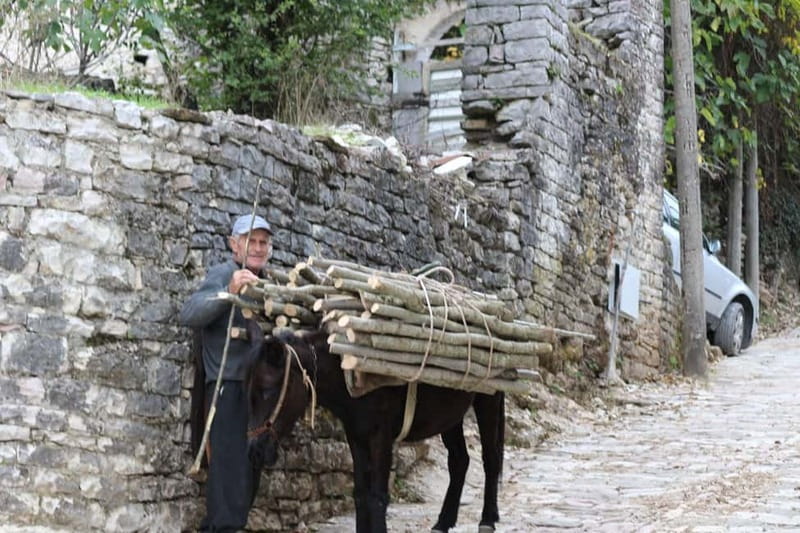
The tour ends at Ali Pasha Bridge, described as a remaining of the aqueduct. The key detail is why it was built: Ali Pasha Tepelena built the aqueduct more than 200 years ago to bring water to the castle.
That fact is more than trivia. It changes how you view the bridge. Instead of seeing it as an isolated photo spot, you understand it as a functional piece of infrastructure, part of the castle’s survival and daily operation. When you walk from neighborhood to neighborhood and then arrive at the aqueduct remnant, the walk feels like it has a point, not just a finish line.
This is also where a viewpoint stop earlier in the route makes sense. Even though the walking route totals about 3 hours, the experience is paced to include perspective changes. You are meant to notice how the town’s topography connects to the structures you visit.
Don’t rush your final stop. Ali Pasha Bridge is the highlight, and the value is in looking at it long enough to connect it to the walk you just did. Take a moment, then take your photos.
Pace, footwear, and terrain on uneven streets and cobblestones
The tour is about 3 hours, and the description is clear: you should be prepared for a not so comfortable terrain. In plain terms, you will likely spend time on cobblestone and uneven ground. That is normal for old town walking, but it affects how you should plan.
My practical advice:
- Wear sneakers or supportive walking shoes with grip.
- If you have knee or ankle issues, go slower than you think you need to. This is not the time for hero speed.
- Bring your water if you need it, since the walk is long enough that you will feel it.
One more thing: the route includes about 30 minutes of walking toward a viewpoint. It is a good pace, but if you prefer longer rests, you might want to grab breaks on your own whenever the route naturally allows it. The walk is designed to keep momentum.
Price and value: $17 for an English guided route to the quiet side of town
At $17 per person for roughly 3 hours, you are paying for three things: a route that reaches neighborhoods many people miss, a guide who explains what you’re seeing in English, and time spent walking through older town fabric.
It would be easy for this to become “just a stroll.” Instead, it is structured around specific places: the Old Bazaar area outside the castle walls, the Nanxa stream, Cfaka, Dunavat with a Bektashi tekke, and the Ali Pasha Bridge aqueduct remnant. Those are not random stops. They form a coherent route.
Also, guide quality matters a lot on walking tours. One English-speaking guide named Besi is noted for being personable and for making people feel welcome. He also shares interesting history alongside family stories and memories, and he offers help when needed. That combination, good storytelling plus real human warmth, is what turns a walk into a conversation you actually remember.
Bottom line on value: $17 feels fair for a guided walk that gets you into quieter areas and ends at a real historic structure with context, not just a landmark you pass by.
Who should book, and who should consider something easier
This tour fits you best if you want:
- A guided walk that explains the places you pass, in English.
- The neighborhoods beyond the busiest tourist spots, especially Cfaka and Dunavat.
- A finale with meaning at Ali Pasha Bridge, not just a quick photo stop.
I would think twice if:
- You have trouble with uneven terrain or cobblestones.
- You want a mostly flat, comfortable route with minimal walking effort.
- You tend to get frustrated when tours move at a steady pace, since this is a 3-hour circuit.
If you are the type who likes smaller, local-feeling streets and you enjoy looking at architecture up close, this is a strong match.
Should you book the Old Bazaar to Ali Pasha Bridge walking tour?
Yes, consider booking if you want a guided way to see the nonvisited sides of Gjirokastër, especially the progression from Old Bazaar to Cfaka, through Dunavat, and finally to Ali Pasha Bridge. The $17 price is reasonable for what you get: a 3-hour route, a live English guide, and a historic ending tied to the castle’s water supply.
Book with confidence if you are comfortable on cobblestones and uneven ground, and if you can enjoy the journey, not only the finish. Skip it or choose a lighter day if walking conditions would stress your body.
If you want Gjirokastër to feel like a place, not a checklist, this walk is a smart way to do it.
FAQ
Where does the tour start?
You meet at the office of Experience Gjirokastra at the main square of town, behind the statue of Cerciz Topulli.
How long is the Old Bazaar to Ali Pasha Bridge walking tour?
The tour lasts about 3 hours.
What does the tour cost?
The price is $17 per person.
Is it a guided tour?
Yes. It is a live tour with an English speaking guide.
What language is the tour in?
The tour is offered in English.
What are the main stops on the route?
The walk includes Cerciz Topulli Square, the Old Bazaar area, the Nanxa stream area, Cfaka, Dunavat, and ends at Ali Pasha Bridge.
What should I wear or bring for this tour?
Wear comfortable shoes, because the terrain is described as not so comfortable and you should expect uneven ground.
Is cancellation refundable?
Free cancellation is offered up to 24 hours in advance for a full refund.
Is there a pay later option?
Yes, you can reserve and pay later.
Is there a viewpoint during the tour?
Yes. The itinerary includes a viewpoint segment, with about 30 minutes of walking.
A Few More Shopping Trips in Gjirokaster
Added to Gjirokaster lately
- Vegetarian cooking class in Gjirokastër★ 5.0 · 1 review
- From Tirana: Gjirokastër Castle, Cold War Tunnel & Bazaar★ 5.0 · 1 review
- Dress as a Local in Gjirokaster★ 5.0 · 1 review
- South of Albania: 2-Day Adventure Tour★ 5.0 · 1 review
- Blue Eye & Gjirokaster: 4×4 Tour and Old Bazaar★ 5.0 · 3 reviews
- Gjirokastra Private Half-Day Walking Tour★ 5.0 · 3 reviews
- Gjirokaster Walking Tour★ 5.0 · 4 reviews
- Gjirokaster – The Stone City of UNESCO, Private Tour from Tirana★ 4.5 · 4 reviews
Shopping Tours, compared.
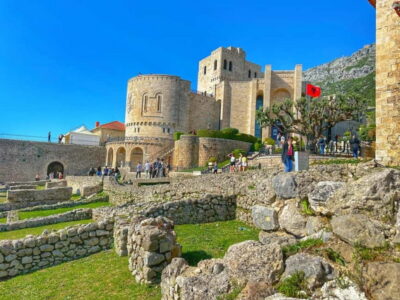
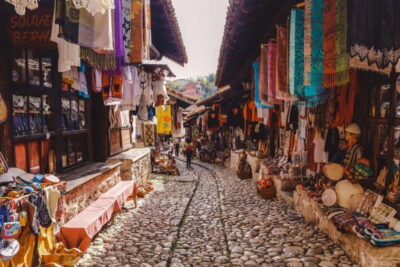
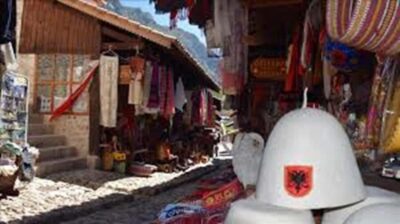
Kruja castle, the old Bazaar & Sarisalltik- Departure from Tirana
Read our review →
Browse the lists this tour appears in