
Reviewed · CITY TOURS
TIRANA Walking Tour: Discover the ever-changing capital city
Tirana changes fast, and this walk helps you see why. I like how the route strings together the Ottoman, Communist, and modern layers of the city in a way that actually connects the dots, not just the stops. I also like that you get expert storytelling plus included admission at major points, so you spend less time figuring things out. One consideration, though, is that some sights are outdoors or partially affected by construction and museum hours, so bring a flexible mindset for a few surprises.
This is a compact, small-group tour, capped at 15 people, and it runs in English. You start at Tirana International Hotel on Sheshi Skënderbej, then finish right back where you began, which makes the day easy to plan. If you want a first pass at Tirana that also gives you context for what you’ll see later on your own, this format is a solid fit.
In This Review
- Quick hits you’ll enjoy
- A smart half-day plan: 3 to 4 hours, English guide, small group
- Skanderbeg Square: Tirana’s big-name landmarks and 20th-century layers
- Clock Tower: 90 steps to 35 meters of city-center views
- Et’hem Bej Mosque: Ottoman-era Islam, restored details, and cultural context
- Rruga Murat Toptani and the Tirana Castle area: traces of old walls, living crafts
- Tanners’ Bridge (Ura e Tabakëve): Ottoman stonework and the Lana stream story
- National Gallery of Art and REJA The Cloud: what to see even when interiors are closed
- Blloku: the Communist inner circle that became Tirana’s nightlife zone
- When your timing is imperfect: how the tour handles real-world surprises
- Should you book this Tirana walking tour?
- FAQ
- How long is the Tirana walking tour?
- What time does the tour start, and where do I meet?
- How much does the tour cost?
- Is the tour offered in English?
- What is the maximum group size?
- What is included in the price?
- Are there any sites where admission is not included?
- Is hotel pickup and drop-off included?
- Can I cancel for a full refund?
- What happens if the weather is poor?
Quick hits you’ll enjoy
- Skanderbeg Square as your history anchor, with major landmarks all around.
- A short climb up the Clock Tower, 90 steps for panoramic city-center views.
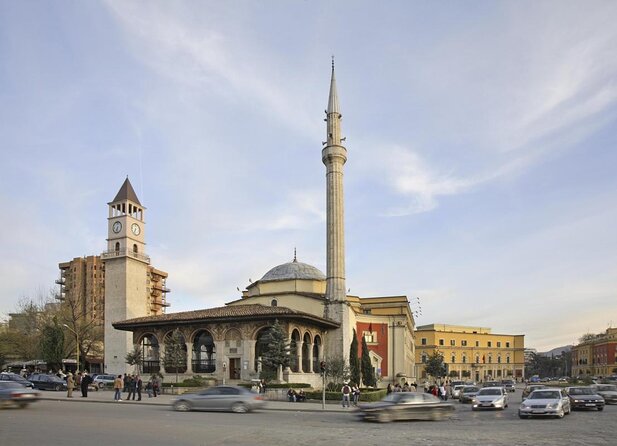
- Et’hem Bej Mosque, including restored floral details and fresco work on an old survivor of political upheaval.
- Tanners’ Bridge, a restored Ottoman stone footbridge with a recreated pond for pedestrians.
- Blloku after-hours energy, built on the story of Enver Hoxha’s inner precinct.
- Small group pace, so you can ask questions as you walk.
More City Tours in Tirana

A smart half-day plan: 3 to 4 hours, English guide, small group
This tour is built for a tight window, about 3 to 4 hours long, and it moves at walking pace between central sights. The group size is limited to a maximum of 15, which matters in Tirana, because you’re mostly in public spaces where a smaller group keeps things calmer. You’ll be with a qualified guide and the tour is offered in English, which is a big deal if you want the history explained clearly rather than translated on your own.
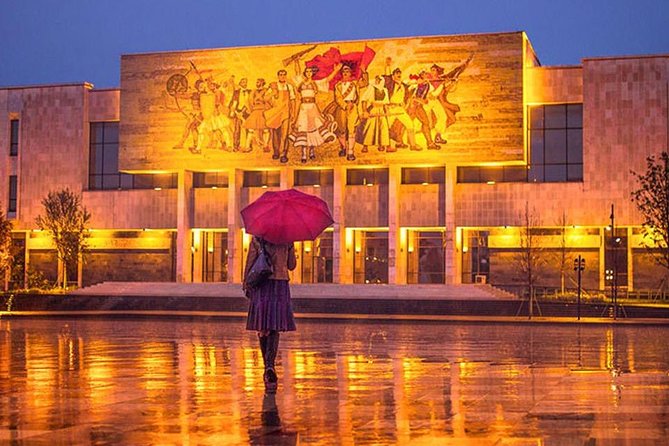
Pricing is $42.10 per person, and I think the value is strongest when you count the admissions that are included. Clock Tower entry and Et’hem Bej Mosque are included, plus you have the National Historical Museum ticket as part of the experience. Even if you’re not trying to do everything in one day, this kind of bundled access helps you avoid the guesswork that can slow you down.
Practical note: the route is centered in the middle of Tirana, with many stops outdoors. Wear comfortable shoes and plan for city heat in warmer months. Also, the tour depends on good weather, so keep an eye on the forecast if your schedule is tight.
Skanderbeg Square: Tirana’s big-name landmarks and 20th-century layers
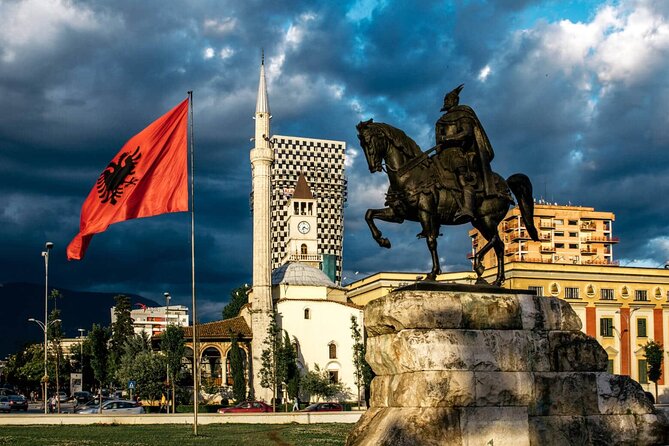
You kick off at Skanderbeg Square, the heart of Tirana and the place where the city’s identity keeps getting reshaped. The square’s story is tied to Albania’s national hero, Skanderbeg, and that theme becomes a shortcut to understanding how Tirana evolved through the 20th century. As you stand in the center, you’re surrounded by buildings that reflect different eras and different political moods.
This stop is about context and orientation. You’ll talk through the main buildings facing the square, including:
- the National Historical Museum
- the National Opera House
- the Old Clock Tower
- Et’hem Bej Mosque
What I like about starting here is that it helps you later connect what you see on side streets back to the center. The square is also a good place for quick questions, because you can look around instead of staring at a phone screen.
Clock Tower: 90 steps to 35 meters of city-center views
From Skanderbeg’s grand openness, you move to the Clock Tower, a working landmark with a real climb and a real payoff. It’s set up for visitors, and the route up is just 90 steps, so this is doable for most people who can handle stairs.
The tower itself is historically tied to the Ottoman period, built in 1840, and it’s about 35 meters tall. It used to be Tirana’s tallest building until 1970, so even now it feels like a measuring point for how the skyline has changed. A practical detail: you may notice construction around the area, which can limit some of the views. That doesn’t ruin the experience, but it does explain why the best value of the climb is the wide, central perspective rather than perfect postcard angles.
If you’re the type who likes to understand a city’s layout, this stop helps you “read” Tirana from above. You’ll see how the center is arranged, and then the walking stops feel more connected.
Et’hem Bej Mosque: Ottoman-era Islam, restored details, and cultural context
Next up is Xhamia Et’hem Bej, a major city-center mosque built in 1823. It’s described as the only religious monument to have survived the intense period of the Albanian Cultural Revolution, which makes this stop more than sightseeing. It’s a history lesson you can stand in front of.
I like this stop because you’re not only looking at architecture. The guide shares how Islam developed and how it fits into Albania’s wider story, so you leave understanding the context of the building, not just its date. And if you care about visual details, this mosque is worth it for the restored floral patterns and vivid fresco work. Restoration can sometimes be hit-or-miss in other places, but here it’s presented as a highlight of what you can appreciate during your visit.
Because this is an active religious space, you should expect to dress and behave with respect. The tour time here is short, about 15 minutes, so it’s best for first-timers who want the main significance without turning the day into a deep architectural study.
More Walking Tours in Tirana
- Walking Tour of Tirana
★ 5.0 · 646 reviews - Tirana: Express Walking Tour with a Guide
★ 4.8 · 503 reviews - Tirana Center: Magic Walking Tour French/Italian/English Etc
★ 4.9 · 402 reviews - Walking tour of Tirana
★ 4.8 · 285 reviews
Rruga Murat Toptani and the Tirana Castle area: traces of old walls, living crafts
You then walk the Rruga Murat Toptani area toward the Tirana Castle zone. This is one of those stops where the story matters as much as what’s visible on the ground.
Recent excavations uncovered traces of castle walls dating back to Emperor Justinian’s era, described as the 4th to 6th centuries. Still, the tour makes it clear that you won’t necessarily see much of the original walls today because of centuries of war and destruction. That can disappoint people who expect full ruins.
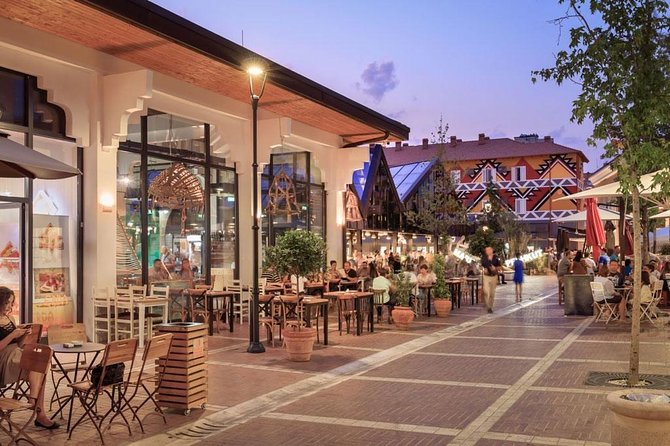
Here’s why it’s still worthwhile: the area has turned into a lively arts and artisan hub. You’ll find cafés, restaurants, and art galleries nearby, and it works as a pleasant walk even when you’re not focused on archaeology. The tour frames it as a place you can enjoy any time of day or night, which is a helpful suggestion for how to plan your evening in central Tirana.
Think of this stop as a bridge between past and present. You learn what was once there, then you enjoy what’s there now.
Tanners’ Bridge (Ura e Tabakëve): Ottoman stonework and the Lana stream story
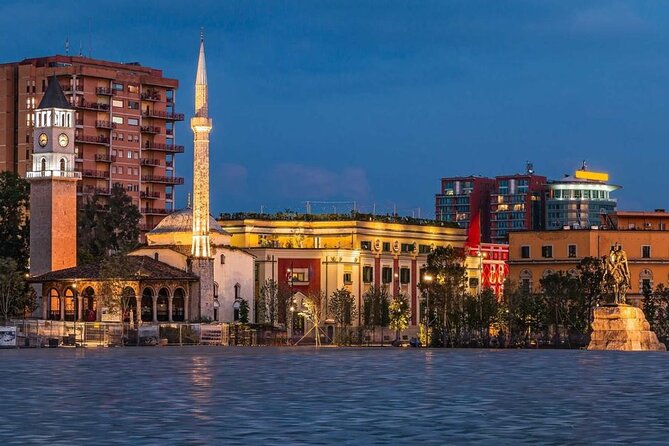
Tanners’ Bridge, or Ura e Tabakëve, is an 18th-century Ottoman-era stone footbridge near the Albanian Parliament. If you like smaller, more local-history stops, this one is often the kind you remember because it feels specific.
The name tabakë connects to the profession tied to tanning and related work, including butchering and tanning. The bridge was once a vital connection between Tirana and the eastern highlands, used by farmers bringing produce and livestock.
One of the most interesting parts of the story is environmental and urban change. The bridge crossed the Lana stream until the 1930s, when the river was diverted. After that, the bridge fell into disrepair. In the 1990s, it underwent serious restoration, including cleaning and restoring original stones, plus recreating an artificial pond on both sides. Today, that recreated water feature remains in use by pedestrians.
This stop is short, about 10 minutes, but it gives you a clear picture of how Tirana used to function, not just how it looks now. It also works well for photos because the bridge is right near major government buildings, so it’s easy to locate in your mind.
National Gallery of Art and REJA The Cloud: what to see even when interiors are closed
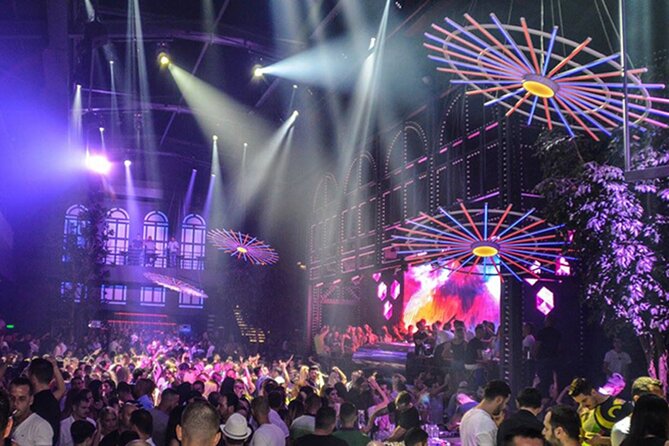
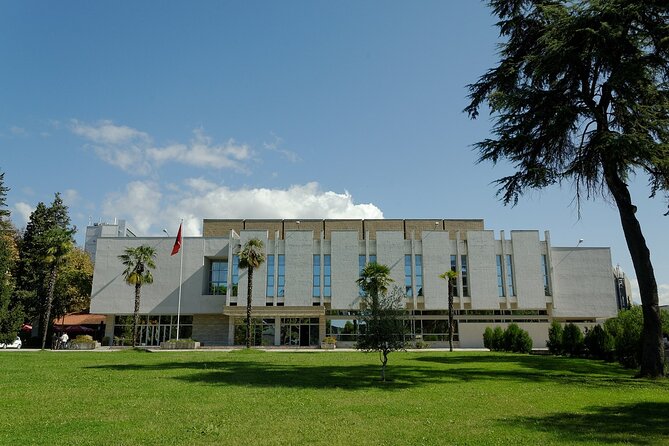
The Albanian National Gallery of Arts (GKA) is next, and this is where you get a good lesson in how to manage expectations. The gallery was established in 1954 and is known for social realism masterpieces and figurative art. The tour notes that it can be temporarily closed for expansion, and in that case you’ll still get something from the outside.
I like this approach. Even when you can’t go in, you can observe the minimalist exterior design and, especially, the well-hidden social realist statues of figures like Stalin and Lenin in the vicinity. You’re not being sent away empty-handed, and it keeps the stop honest.
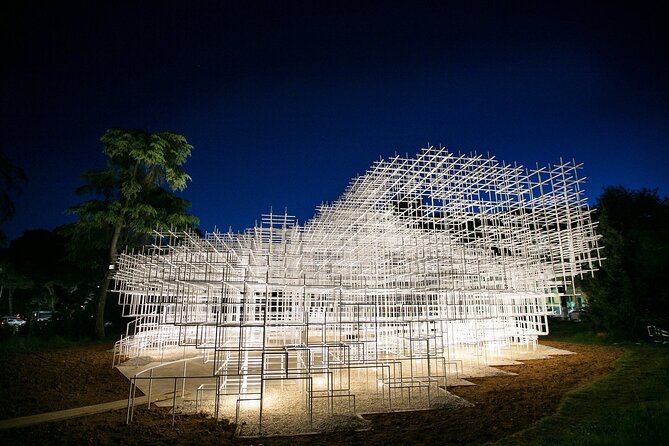
Right in front of the gallery is REJA, also called The Cloud, designed by Japanese architect Sou Fujimoto. This structure has become associated with late-night film screenings, performative arts festivals, and live concerts. So even if you’re not entering every building, the area gives you a sense of how modern Tirana uses culture as a public meeting point.
Important for planning: admission to the National Gallery of Art is not included. So if you want to enter the museum interior on your day, you should expect to pay separately.
Blloku: the Communist inner circle that became Tirana’s nightlife zone
Your final stretch is Blloku, Tirana’s famous nightlife district and one of the most recognizable “modern Tirana” experiences on the route. The tour explains that what you see now, hip bars and cafés, luxury boutiques, upscale residential units, and late nights, all sits on top of a very different past.
During Communist rule, Blloku was a closed-off precinct for the party elite. The guide points to Enver Hoxha’s modern villa in the center, a symbolic reminder of power and fear in that era. Nearby is the monumental Presidenca e Republikës, the office of the Albanian president, connecting the neighborhood’s old prestige to today’s political status.
I like how this stop lands. You finish the walk with a place that feels contemporary, then you realize it didn’t become trendy from nowhere. It’s layered, like much of Tirana. Even if you don’t go out that night, you’ll understand why Blloku is where people choose to spend time.
When your timing is imperfect: how the tour handles real-world surprises
In real travel, museums can close, hours can change, and construction can block the view. What helps here is that the experience is designed as a coherent walking story around the center, so even when one piece shifts, you still get the narrative flow.
There are also signs the guides are used to adjusting. For example, on a day when the National Historical Museum was unexpectedly closed, a guide offered a substitute break nearby, including cake and tea. On very hot days, guides have also helped make the break feel more local, like arranging a pause with a drink such as Korca beer. The key takeaway for you is this: ask questions, pace yourself, and use the guided time to learn how Tirana fits together, not just to tick off photos.
Should you book this Tirana walking tour?
Yes, I’d book it if you want a first-time, history-connected introduction to Tirana in just half a day. The biggest reason is that you get a structured walk with a real guide, plus included tickets at several major stops. Starting at Skanderbeg Square and ending in Blloku is also a smart arc, because it takes you from the city’s core identity to what Tirana feels like at night.
I’d hesitate if you dislike walking in heat or you want lots of time inside museums. Some interiors can be limited by closure or time, and the art gallery admission is not included. Also, construction can affect views around the Clock Tower area.
If you’re planning one main guided experience in Tirana, this is a strong pick. It helps you understand what you see next, and it gives you a map in your head that lasts longer than the photos on your camera.
FAQ
How long is the Tirana walking tour?
It lasts about 3 to 4 hours.
What time does the tour start, and where do I meet?
It starts at 9:30 am. You meet at Tirana International Hotel, Sheshi Skënderbej 8, Tiranë 1001, Albania.
How much does the tour cost?
The price is $42.10 per person.
Is the tour offered in English?
Yes, the tour is offered in English.
What is the maximum group size?
The tour has a maximum of 15 travelers.
What is included in the price?
The tour includes a qualified guide and a city tour. It also includes admission tickets for specific stops such as the Clock Tower and Et’hem Bej Mosque, and it includes a ticket for the National Historical Museum.
Are there any sites where admission is not included?
Yes. Admission to the National Gallery of Art is not included.
Is hotel pickup and drop-off included?
No. Hotel pickup and drop-off is not included, and the tour ends back at the meeting point.
Can I cancel for a full refund?
Yes, you can cancel for a full refund if you cancel at least 24 hours in advance. If you cancel less than 24 hours before the start time, the amount paid will not be refunded.
What happens if the weather is poor?
The tour requires good weather. If it’s canceled due to poor weather, you’ll be offered a different date or a full refund.
Added to Tirana lately
- Kosovo, Prizren Day Trip from Tirana★ 3.0 · 1 review
- Semi-Private Hiking Tour; Theth,Valbona&Koman Lake in 3 Days★ 5.0 · 1 review
- Private 1 Day Berat Tour from Tirana★ 5.0 · 1 review
- Private 3 Days Adventure in Albania and Gjirokaster County★ 5.0 · 1 review
- From Tirana: Ksamil Islands, Saranda, & Blue Eye Day Trip★ 5.0 · 1 review
- Tirana Airport Private Transfer To City★ 5.0 · 1 review
- Architectural Walking Tour Discovering Tirana’s Modern Identity★ 5.0 · 1 review
- From Shkoder: 3-Day Valbona to Theth Hike Tour All Inclusive★ 5.0 · 1 review
City Tours, compared.
Berat city UNESCO tour, the Castle & Belshi lake- From Tirana
Read our review →
Gjirokastra- The Stone City & Blue Eye- The monument of Nature.
Read our review →
Best of Local Food & City Tour of Tirana – Food & Drinks Included
Read our review →
Durres city & Golem beach, Sun & History Day Trip
Read our review →
Browse the lists this tour appears in