
Reviewed · HISTORICAL TOURS
“Tirana to Albania: Tracing a Historical Path Tour”
Tirana tells its story on foot, and this walk is a tight way to understand it. You start at Katedralja Ortodokse Ngjallja e Krishtit, then move through Skanderbeg Square, the Et’hem Bej Mosque, the Pyramid, and Cold War relics like Bunk’Art 2. I love the Klejdi-led explanations that keep history clear, and I love the mix of big monuments with small, meaningful stops like the mosque frescoes. The only real catch: 3 hours is quick, so you’ll be moving often and some places are more photo and quick look than long sit-down time.
If you want Tirana’s “why” behind the “what,” this tour gives it to you fast. You’ll connect Ottoman-era landmarks to communist-era power symbols, then finish in the New Bazaar where daily life takes over. If you’re hoping for lots of ticketed museum time, plan on doing more of that on your own afterward.
In This Review
- Key highlights that make this tour worth your time
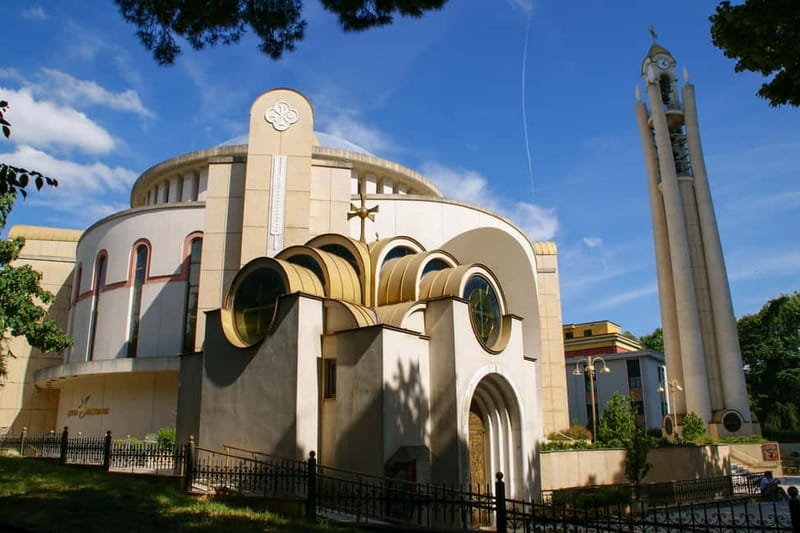
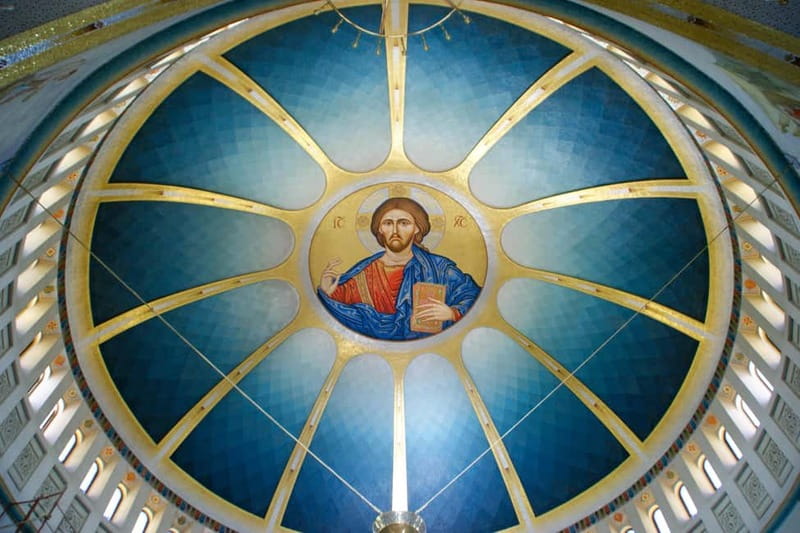
- Entering Tirana at Katedralja Ortodokse Ngjallja e Krishtit
- Skanderbeg Square, museums nearby, and the city’s official center
- Et’hem Bej Mosque and the Clock Tower viewpoints
- The Pyramid of Tirana: one building, many meanings
- Bunk’Art 2 and Cold War Tirana you can actually understand
- Pedonalja, Tirana Castle, and the pleasant in-between stretches
- Blloku and Postbllok: from communist privilege to modern hangouts
- Mother Teresa Square, Polytechnic University, and the mix of influences
- Namazgah Mosque and Ottoman footprints at Sulejman Pasha Square
- Ending at New Bazaar for lunch and real city browsing
- Worth $37? What the price buys you in a 3-hour walk
- Who this tour is best for
- Should you book this Tirana historical path tour?
- FAQ
- How long is the Tirana historical path walking tour?
- Where does the tour meet?
- What does the tour include?
- What languages are available?
- Is the tour wheelchair accessible?
- What should I bring for the walk?
Key highlights that make this tour worth your time
- Klejdi’s storytelling in multiple languages (Albanian, English, French, Italian), with answers that keep going when you ask.
- Skanderbeg Square and its surrounding institutions, a perfect starting point to orient you in Tirana.
- Et’hem Bej Mosque for Ottoman architecture and the chance to appreciate its interior fresco work.
- The Pyramid of Tirana, a single structure that explains how Albania’s political identity has shifted over time.
- Bunk’Art 2, a former bunker turned museum that frames life under communist rule and repression.
- Blloku and Postbllok reflections, where the city’s move from elite communist control to modern nightlife makes more sense.
A few more history tours in Tirana:


Entering Tirana at Katedralja Ortodokse Ngjallja e Krishtit
This tour begins at the entrance of the Orthodox Cathedral Katedralja Ortodokse Ngjallja e Krishtit (or just inside if weather is messy). That’s a smart opener, because it puts you in a real religious landmark before you jump into squares and political symbolism.
Right away, the walk sets a theme: Tirana is layered. You’re not just looking at sights, you’re learning how different eras left fingerprints on the same streets. And since the guide speaks Albanian, English, French, and Italian, the explanations can stay in your language instead of turning into a basic overview.
One practical note I’d follow: wear comfortable shoes. This route is built for steady walking, and Tirana’s sidewalks are a mix of wide open stretches and tighter pedestrian pockets.
Skanderbeg Square, museums nearby, and the city’s official center
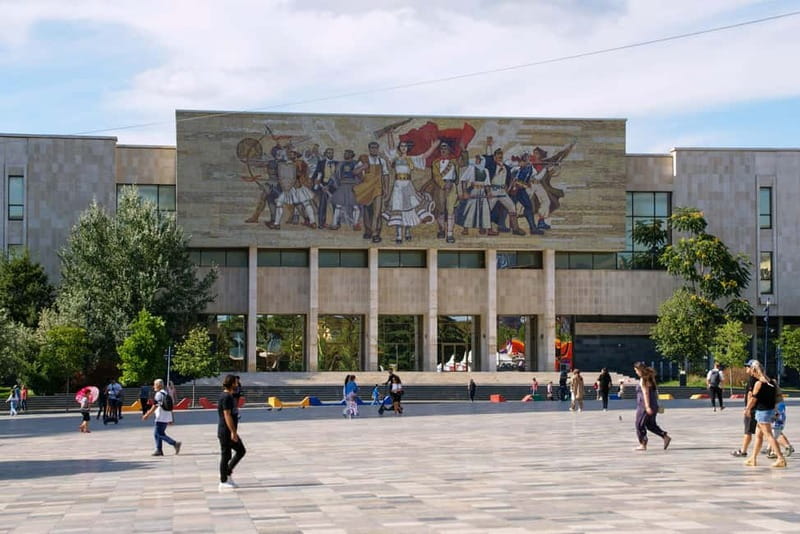
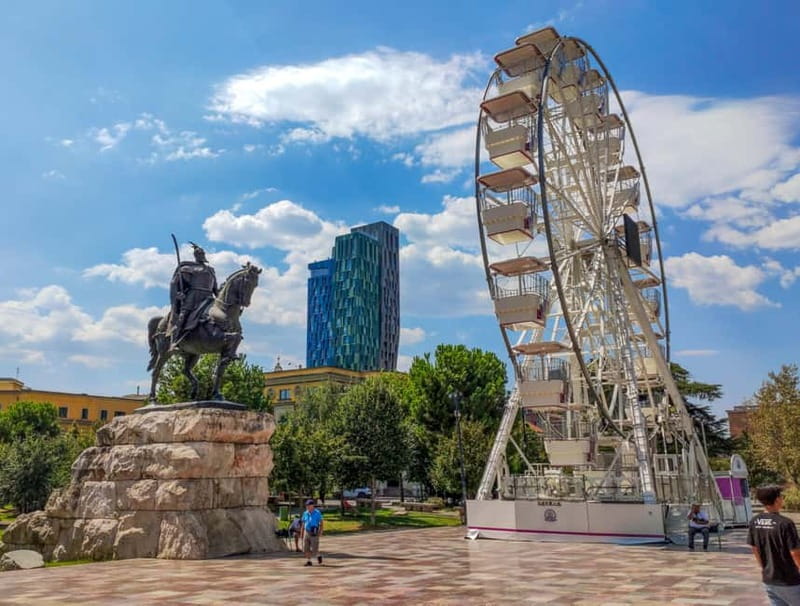
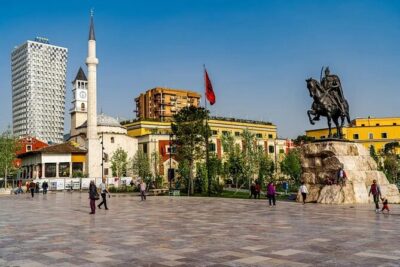
From the cathedral, the tour heads for Skanderbeg Square, the core public space of the city. The famous statue of Skanderbeg on horseback is your first major “anchor,” the kind of landmark that makes the rest of your orientation click into place.
Around the square, you’ll also see key cultural buildings including the National History Museum and the Palace of Culture. Even if you don’t go inside everything, the point is understanding the intent of the space: Tirana’s center is where the country likes to present identity, culture, and memory in public view.
I like that the tour keeps you moving but still slows down where it matters. Skanderbeg Square works because it’s not just a photo stop. It’s a reference point you can use later when you explore on your own.
Et’hem Bej Mosque and the Clock Tower viewpoints
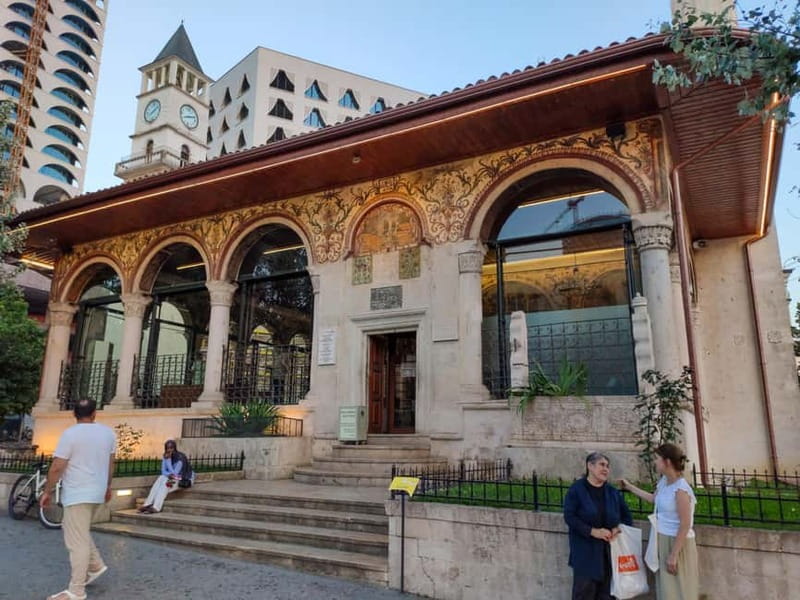
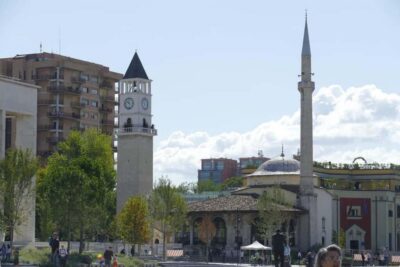
Next you reach Et’hem Bej Mosque, one of the standouts for Ottoman architecture in central Tirana. The mosque is known for intricate frescoes, and this is where the tour becomes more than monument tourism. The guide helps you notice details that you’d likely miss if you were just snapping pictures and walking on.
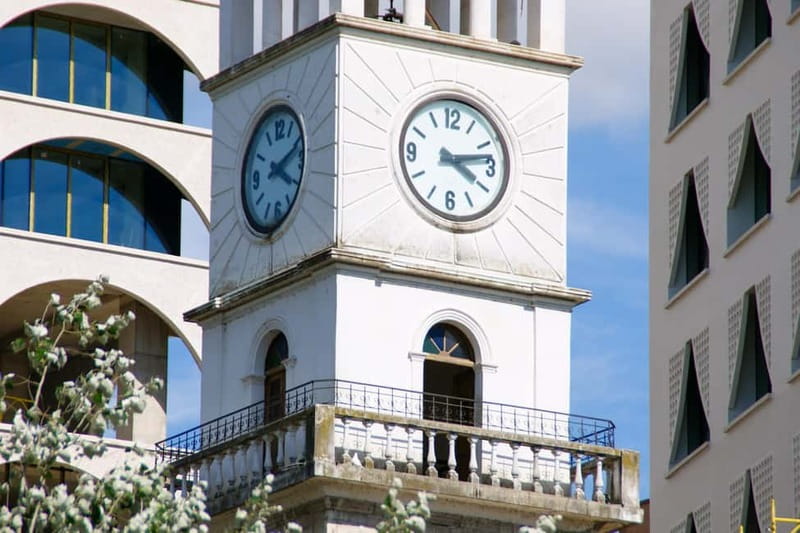
After that, you climb the adjacent Clock Tower for panoramic views. This is a classic travel trick, and it works: after seeing the historic buildings up close, you get a wider city scan. From above, Tirana’s mix of styles and eras becomes easier to untangle.
This part is also a good reminder to bring patience. Climbing a tower is straightforward, but it adds a little physical effort inside a short overall tour. If you’re traveling with anyone who gets tired quickly, pace yourself during the climb.
The Pyramid of Tirana: one building, many meanings
Then comes the Pyramid of Tirana, a striking structure with a complicated past. It once served as a museum dedicated to Enver Hoxha. Today, it stands as a symbol of Albania’s complex political story and its continuing transformation, and it can host cultural events.
This stop matters because it forces a rethink of how to read architecture. The Pyramid isn’t just weird shape and big photo. It’s a lesson in how regimes use symbolism, and how later generations repurpose that symbolism instead of erasing it.
You’ll spend time here for a break, sighting, and photos. Since this is on a walking route, I’d treat the Pyramid moment as your chance to slow down mentally, even if time is short. It’s one of those places where the guide’s context makes the structure click.
A few more Tirana tours and excursions:
- From Tirana: Bovilla Lake & Gamti Mountain Hiking Day Trip
★ 4.9 · 4,397 reviews - From Tirana: Bovilla Lake & Gamti Mountain Hiking Tour
★ 4.9 · 3,003 reviews - From Tirana: Bovilla Lake & Gamti Mountain Viewpoint Hike
★ 4.8 · 2,053 reviews - Tirana/Durres/Golem: Saranda, Ksamil, Blue Eye Day Trip
★ 4.8 · 1,584 reviews
Bunk’Art 2 and Cold War Tirana you can actually understand
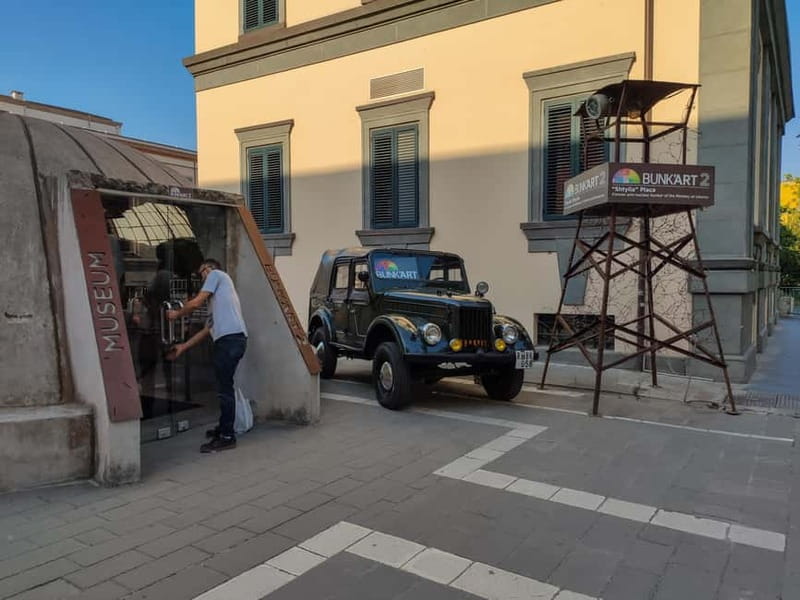
After the Pyramid, you jump into Cold War reality with Bunk’Art 2. This is housed in a former bunker, and it focuses on life under communist rule, including political repression, secret police operations, and what ordinary citizens experienced during the dictatorship.
I really like museums like this on city walks because they convert vague headlines into something human. Even if you only skim part of the exhibits, you leave with a sharper sense of why Tirana looks the way it does, and why some places feel heavy even when they’re in the middle of everyday streets.
The tradeoff is also clear: you can’t rush a place like this. The tour keeps moving through the day’s rhythm, but Bunk’Art 2 is not just decoration. If you’re sensitive to heavy topics, give yourself permission to take breaks and linger only as long as you can handle.
Pedonalja, Tirana Castle, and the pleasant in-between stretches
Between major history stops, the route includes Pedonalja, Tirana’s pedestrian area. This is a practical change of pace. You get a walk through the rhythm of central Tirana, where people actually move on foot instead of only passing between attractions.
The tour also includes Tirana Castle for a photo stop and shopping time, depending on how you choose to move through the area. Tirana Castle adds another layer to the city’s story: even with all the political drama from the 20th century, the city still has older physical roots worth noticing.
Then, you’ll also pass by Saint Paul Cathedral, with time allocated to visit and look around. This gives the walk a breath of spiritual and architectural variety before it swings back toward the political neighborhoods.
Blloku and Postbllok: from communist privilege to modern hangouts
One of the most memorable segments is Blloku. Under communism, it was an elite district, and now it’s one of the city’s trendier areas with bars, restaurants, and boutiques.
This is also where the tour becomes food-friendly. The route is designed to stop for breakfast at one of the stylish cafés in Blloku, where you can try fresh pastries and Albanian coffee. I like this pairing of history and breakfast, because it reminds you that the past exists inside normal life today, not in a separate museum world.
From there, you visit the Postbllok Memorial, which offers a powerful reflection on Albania’s authoritarian past. If Skanderbeg Square is about official identity, Postbllok is about what that identity cost people.
The key thing here is balance. The tour shows you the shift: privilege to openness, secrecy to memory, control to culture. It’s not just one storyline, it’s the contrast.
Mother Teresa Square, Polytechnic University, and the mix of influences
The walk continues to Mother Teresa Square, a central area that includes Polytechnic University and the Palace of Congresses. The architecture reflects multiple influences, including fascist and modernist styling, and this is where Tirana’s “layer cake” feeling becomes obvious.
This section can be visually confusing if you don’t have context. That’s exactly what a good guided route helps with. You see buildings, but you also start to recognize why they were built, and how political systems affected public design.
You also pass Arena Kombëtare (also known as Air Albania Stadium in modern usage during events) in this general stretch. This part ties Tirana back to the present, showing how the city uses large venues for sports, concerts, and public life.
Namazgah Mosque and Ottoman footprints at Sulejman Pasha Square
Then the route moves toward Ottoman-era landmarks again, stopping at Namazgah Mosque (also called the Grand Mosque). It’s a major spiritual and cultural center project, and you’ll have time for a photo stop, visit, and guided explanation.
After that, you pass through Sulejman Pasha Square, which is historically significant for its Ottoman heritage. Nearby you can visit Kapllan Pasha Tomb, one of the few remaining Ottoman structures in the area.
I like this segment because it balances the heavy Cold War parts. You get the chance to appreciate religious architecture and Ottoman-era survival in a way that feels grounded. It also makes the earlier mosque stop feel like part of a wider pattern, not a one-off stop.
Ending at New Bazaar for lunch and real city browsing
The tour finishes at the New Bazaar (Pazari i Ri), one of Tirana’s lively market areas. This is a strong closing move because it changes your mode from history to life.
You’ll have time to explore the market, sample fresh produce, and shop for souvenirs. And, importantly, the tour includes stopping for a traditional Albanian lunch in the bazaar area.
I think this ending works especially well if you want to keep traveling with purpose afterward. Once you’ve eaten and browsed, you’re more likely to choose nearby neighborhoods wisely, not just randomly.
Worth $37? What the price buys you in a 3-hour walk
At $37 per person for a 3-hour guided walking tour, the value comes from concentration. You’re not paying for a long bus ride or a full day package. You’re paying for a guide to connect a stack of central Tirana sites into a story you can actually remember.
Also, this route includes a lot of “types” of stops: squares and monuments, a mosque with frescoes, a Cold War museum in a bunker, plus neighborhood and market time at the end. That mix is hard to replicate if you’re self-guiding, because it’s not just location hopping, it’s interpretation.
One practical consideration: the tour lists the guide and the walking tour as included. Museum and attraction entry details are not spelled out here, so if you want to be 100 percent sure you’ll be able to go inside every space you care about, ask ahead. On a 3-hour route, knowing which stops are photo only versus deeper access helps you time your day.
Who this tour is best for
This is ideal if you want a first look at Tirana that goes beyond architecture photos. It suits you if you like history that explains the present, and you want context for what you’ll see later, including the contrasts between Ottoman-era forms, communist-era symbolism, and today’s everyday spaces.
It can also work well for mixed travel groups. The route is flexible enough for people who enjoy walking city centers, and the guide can handle questions in multiple languages. And it’s wheelchair accessible, which is a big plus if you need step-free navigation.
If your style is slow travel with lots of independent time inside museums, you might prefer pairing this with one or two self-directed follow-ups. Use the tour as your orientation and story spine, then choose what to return to.
Should you book this Tirana historical path tour?
Yes, I’d book it if you want a fast, well-explained introduction to central Tirana, especially if you care about how different regimes shaped the city you see today. I also think you’ll enjoy it if you appreciate a guide who answers questions patiently, takes time to explain, and can switch smoothly into French or English when needed.
Skip it or treat it as a taster if you’re looking for a slow, spend-hours-in-museums pace. This route is designed for motion and meaning in 3 hours, so it’s best as your opening chapter, not your whole book.
FAQ
How long is the Tirana historical path walking tour?
The tour lasts 3 hours.
Where does the tour meet?
You meet at the entrance of the Orthodox Cathedral Katedralja Ortodokse Ngjallja e Krishtit (or inside depending on the weather).
What does the tour include?
It includes a guide and a walking tour.
What languages are available?
The live guide offers Albanian, English, French, and Italian.
Is the tour wheelchair accessible?
Yes, it is wheelchair accessible.
What should I bring for the walk?
Bring comfortable shoes and weather-appropriate clothing.
Added to Tirana lately
- Kosovo, Prizren Day Trip from Tirana★ 3.0 · 1 review
- Semi-Private Hiking Tour; Theth,Valbona&Koman Lake in 3 Days★ 5.0 · 1 review
- Private 1 Day Berat Tour from Tirana★ 5.0 · 1 review
- Private 3 Days Adventure in Albania and Gjirokaster County★ 5.0 · 1 review
- From Tirana: Ksamil Islands, Saranda, & Blue Eye Day Trip★ 5.0 · 1 review
- Tirana Airport Private Transfer To City★ 5.0 · 1 review
- Architectural Walking Tour Discovering Tirana’s Modern Identity★ 5.0 · 1 review
- From Shkoder: 3-Day Valbona to Theth Hike Tour All Inclusive★ 5.0 · 1 review
Historical Tours, compared.
Guided tour in Tirana – discoveries, history, culture (in FRENCH)
Read our review →
Durres city & Golem beach, Sun & History Day Trip
Read our review →
Tirana Walking Tour: History, Culture &Gems by a Passionate Guide
Read our review →
Semi – Private Tour at Cape of Rodon; Hidden Beaches & History
Read our review →
Ancient City of Butrint, UNESCO World Heritage site – A Must
Read our review →Browse the lists this tour appears in