
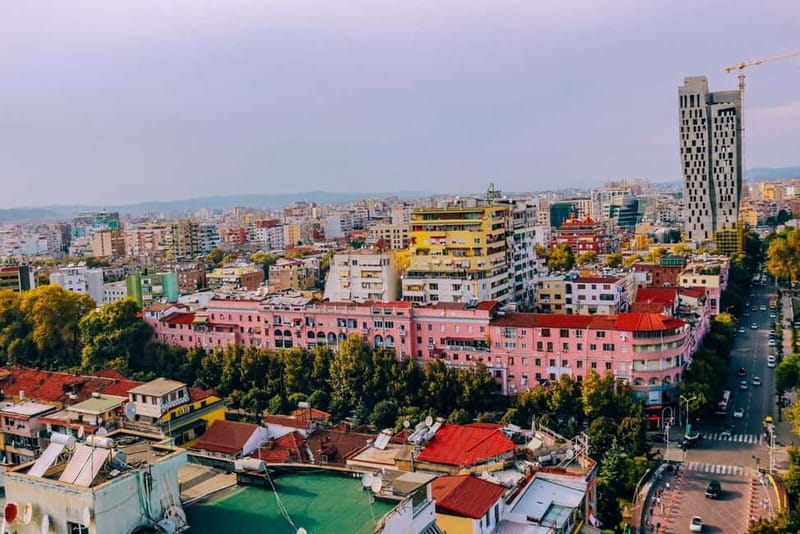
Reviewed · CITY TOURS
Tirana: Guided City Tour
Tirana looks ordinary until you learn what each corner meant. I loved how the guide connected sights to politics and everyday life, and I loved the mix of big names plus quick passes that help you get your bearings fast. One thing to plan for: it is a full, on-foot circuit, and museum stops may mean extra tickets since entrances are not included.
This is a private group tour designed for up to 2 people, and that smaller feel makes questions easier and pacing more relaxed. You start at Sheshi Skënderbej, then work outward through Tirana’s key layers, from older landmarks to Ottoman and communist-era symbols, finishing with a chance to refuel with traditional Albanian food.
If you want the best experience, wear comfortable shoes and bring water. You will spend real time walking and standing for photos, so a light camera-ready setup helps too.
In This Review
- Key things you’ll notice on this Tirana tour
- Skënderbej Square: the starting point that makes the rest click
- Clock Tower to nearby institutions: a quick lesson in city symbols
- Castle of Topani and the Prince Zogu residence: where political eras show up in stone
- Main Boulevard to the Pyramid: reading Tirana’s most talked-about symbol
- Bunk Art museum stop: a strong stop for history and conflict
- Fortress of Justinian, Tirana Castle: the best ending for skyline views
- Traditional Albanian cuisine: where to spend the last hour well
- Price and value: $180 per group up to 2 for a 5-hour private walk
- Who this Tirana guided walk suits best
- Should you book this Tirana City Tour?
- FAQ
- Where does the Tirana guided city tour start?
- How long is the tour?
- Is the tour private, and how many people is it for?
- What languages is the live tour guide available in?
- Are museum entrances included?
- What is included in the tour price?
- What should I bring for the walking tour?
- What are the cancellation and payment options?
Key things you’ll notice on this Tirana tour
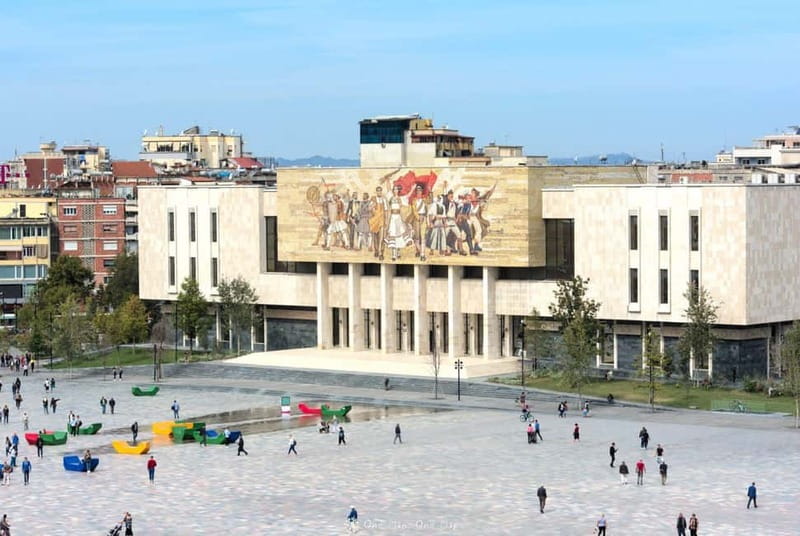
- Skanderbeg Square as the anchor for understanding modern Tirana’s layout and major institutions nearby
- Clock Tower storytelling, a small structure with a big role as a city symbol
- Topani and Prince Zogu territory, where royal residence and fortifications shape the skyline
- The Pyramid and Hoxha-era sites, which you’ll read like a map of political eras
- Tirana Castle and the Fortress of Justinian, a strong ending point for the city’s changing power
- Bunk Art timing, including a practical chance to step inside one major museum stop
More City Tours in Tirana

Skënderbej Square: the starting point that makes the rest click
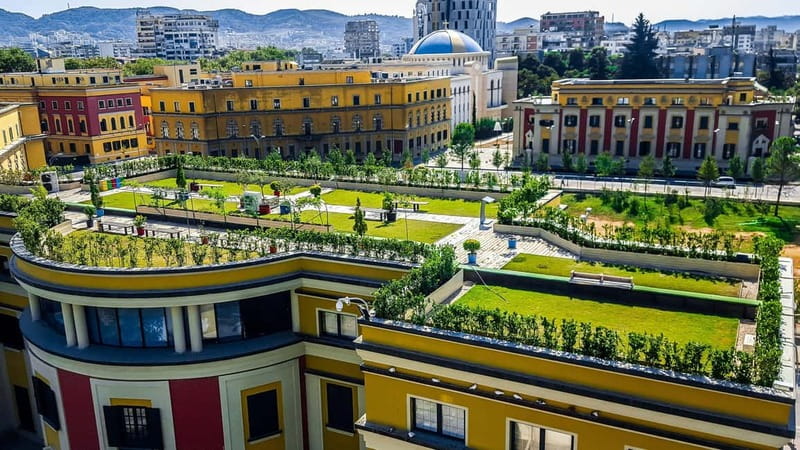
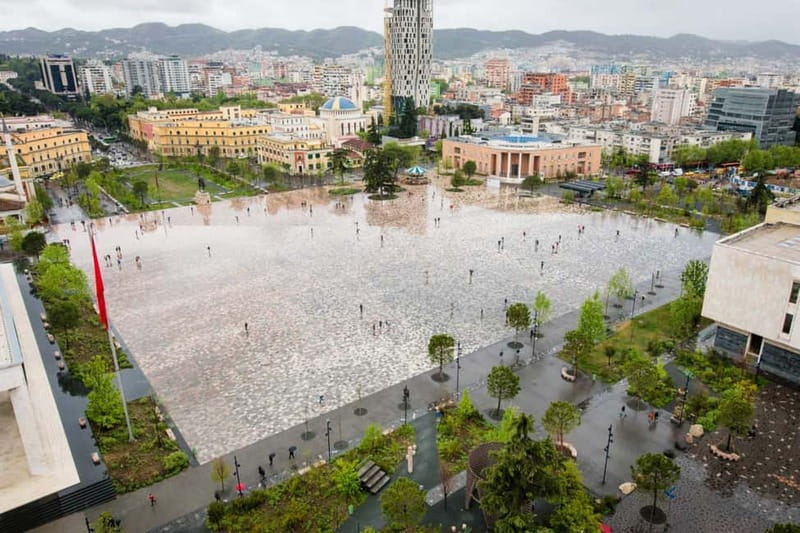
Your tour starts at Sheshi Skënderbej, the heartbeat of central Tirana. This square is not just a place to meet, it’s the easiest way to understand how the city organizes itself. Once you’re standing here, the rest of the route feels like a guided walk through layers, not random stops.
I like that you begin with the oldest building in Tirana. Seeing it first gives you an immediate baseline for scale and style, and it helps you notice what changed later. The guide’s job is to turn architecture into context, so you’re not just looking at stone. You’re also picking up why that area mattered, and how later power centers influenced the streets around it.
In the square area, you also get a strong run of nearby landmarks without having to “hop” across the city. The National Bank of Tirana, the National Museum, the Palace of Culture, and the Tirana Municipality are all in this orbit, and the guide helps you understand how they connect to Tirana’s more modern identity. Even if you skip museums during your day, the exterior views are useful for orientation.
Clock Tower to nearby institutions: a quick lesson in city symbols
From Sheshi Skënderbej, the route moves toward the Clock Tower, described as a symbol of Tirana’s history. This is one of those stops that works well for first-time visitors because it gives you a shorthand for what to look for next. You learn how people use icons, dates, and structures to express memory.
You’ll also pass major institutional buildings tied to culture, finance, and government. If you’ve ever wondered why some European capitals feel like they have “axes” and “centers,” this part helps explain that logic. Tirana’s central zone is easy to read once someone points out what sits where.
A practical note: this section is mostly walking and viewing from the street. If you want to linger, don’t fight the pace. The tour includes break time and photo stops, so use those pauses for the shots you’ll want later on your own.
Castle of Topani and the Prince Zogu residence: where political eras show up in stone
Next comes the Castle of Topani and the Prince Zogu residence area. Even if you know little about Albanian history, you’ll feel the difference between “monument as decoration” and “monument as evidence.” Fortifications and royal residences tend to be blunt that way, and the guide’s historical and political knowledge makes the sites easier to interpret.
This stretch also includes several pass-by landmarks that help you build a mental map:
- Bunk Art museum in the general area
- The House of Parliament
- The biggest mosque in the Balkans region
The mosque stop is especially useful for understanding scale. Tirana has a lot of political symbolism, but religion and community structures are part of the same story. Seeing it on foot helps you connect the architecture you notice later with the larger neighborhoods you’ll see across town.
Main Boulevard to the Pyramid: reading Tirana’s most talked-about symbol
Now you shift onto the Main Boulevard of Tirana. Boulevards matter, because they show how a city plans movement, power, and visibility. Here, the tour becomes a walk through iconic symbolism.
You’ll see the Pyramid, which is one of Tirana’s most recognizable shapes on the skyline. You’ll also pass other significant landmarks along the boulevard, including:
- Dictator Hoxha’s Museum
- Prime Minister Residence
- Tirana University
- National Stadium
The value of walking this corridor with a guide is the ability to connect the dots. Many visitors see the Pyramid once and move on. On this tour, you get enough context to understand why it sits where it does and why it carries such strong meaning. Even if you don’t go inside every site, you leave with a better sense of how the city expresses power visually.
One drawback to flag: the boulevard is long enough that your feet will feel it if you’re not used to steady walking. Bring water and use breaks early, not after you start feeling tired. Your brain works better when you’re not distracted by sore legs.
A few more Tirana tours and excursions:
- From Tirana: Bovilla Lake & Gamti Mountain Hiking Day Trip
★ 4.9 · 4,397 reviews - From Tirana: Bovilla Lake & Gamti Mountain Hiking Tour
★ 4.9 · 3,003 reviews - From Tirana: Bovilla Lake & Gamti Mountain Viewpoint Hike
★ 4.8 · 2,053 reviews - Tirana/Durres/Golem: Saranda, Ksamil, Blue Eye Day Trip
★ 4.8 · 1,584 reviews
Bunk Art museum stop: a strong stop for history and conflict
Bunk Art is one of those museum stops where context changes everything. The tour includes a chance to experience it as part of the route. Since museum entrances are not included in the tour price, plan on paying the ticket separately if you decide to go in.
What I like about this stop is the angle. The Bunk Art experience focuses on wars and disputes that shaped Albania. That kind of information can feel heavy if you’re tired, so it’s best when your energy is still decent. If you do go in, take your time. Look for the personal and practical details, not just the headlines.
In a small private group, this museum stop also becomes more flexible. If you want to ask more questions about what you see, you can. If you’re short on time, you can adjust your pace without the pressure of a large group.
Fortress of Justinian, Tirana Castle: the best ending for skyline views
The tour finishes by moving to the Fortress of Justinian, often called the Tirana Castle. This is a smart way to end because fortresses do something practical. They let you look back down on the city and see how everything connected.
The route also includes pass-by views related to the communist leadership era. You’ll walk by the former residence of communist leaders and the former dictator Hoxha’s house. Even without entering every site, these stops give you the human scale behind the era. You start to see that political systems don’t just exist in documents. They exist in buildings, neighborhoods, and daily routes people used.
If you like your tours to end with a payoff, this is it. From higher ground, the city feels clearer. The neighborhoods you walked through earlier start to line up into a coherent story.
Traditional Albanian cuisine: where to spend the last hour well
After the main sight sequence, you get a choice to experience flavors of traditional Albanian cuisine at a local restaurant. This is the part I always appreciate on walking tours, because it helps you translate what you saw into something more sensory.
You’re not locked into a specific menu here. The better move is to ask your guide what to order based on what you have already learned that day. For example, if you’ve been focusing on political history, you might enjoy dishes tied to everyday life and local rhythms rather than just tourist-style plates.
Also, if you’re planning to continue exploring after the tour, treat the meal as fuel, not a second sightseeing marathon. You still have your own time afterward, so keep the meal efficient and satisfying.
Price and value: $180 per group up to 2 for a 5-hour private walk
At $180 per group up to 2 people, this tour is priced like a small-group private experience rather than a per-person ticket deal. For couples or two friends, that can be strong value because you’re paying for guidance, not just entrance fees.
What you should think about is the “real cost” of the experience:
- You get a professional tour guide who explains history and politics, not just points at landmarks.
- You get a full 5-hour circuit with structured stops, which saves you time figuring out routing on your own.
- You do not get museum entrances included, so you may add tickets if you want to go inside places like Bunk Art.
If you prefer to travel with flexibility, the private group format matters. With up to 2 people, you can linger for photos, ask follow-ups, or move a bit faster depending on what you care about.
Who this Tirana guided walk suits best
This tour is ideal if you:
- Want a first introduction to Tirana’s major landmarks in one afternoon
- Like guided context, especially around political change over time
- Prefer a smaller group for questions and a less crowded feel
- Are comfortable walking for about 5 hours with breaks and photo stops
It may not be ideal if you:
- Want to maximize museum time, since museum entrances are not included and you might need to budget for tickets
- Have mobility limits that make long walking days difficult, even though the tour is wheelchair accessible
Should you book this Tirana City Tour?
Yes, book it if you want a guided, on-foot “map in your head” for Tirana. The route is built around the city’s most recognizable symbols, like Skënderbej Square and the Pyramid, plus the less obvious power markers around Topani, parliament-area landmarks, and the Tirana Castle viewpoint.
You’ll feel the most benefit if you like understanding why buildings and monuments exist, not just collecting photos. If you want a smooth, informative day with a guide who can connect history to what you see on the street, this private tour for up to 2 people is a smart way to spend your time in Tirana.
FAQ
Where does the Tirana guided city tour start?
It starts at Sheshi Skënderbej.
How long is the tour?
The duration is 5 hours.
Is the tour private, and how many people is it for?
It is a private group, up to 2 people per group.
What languages is the live tour guide available in?
The guide is available in English and Italian.
Are museum entrances included?
No. Entrance to museums is not included.
What is included in the tour price?
You get a half-day walking tour, a professional tour guide, and the tour starts from Skënderbeg Square.
What should I bring for the walking tour?
Bring comfortable shoes, a camera, and water.
What are the cancellation and payment options?
You have free cancellation up to 24 hours in advance for a full refund, and there is an option to reserve now and pay later.
Added to Tirana lately
- Communist Winery: Tour, Tasting and Lunch★ 5.0 · 1 review
- N. Macedonia, Kosovo & Albania; Semi – Private Tour★ 5.0 · 1 review
- Bike Tour Tirana with Local Guide in English or Czech★ 5.0 · 1 review
- Pellumbas Cave Tour and Petrela Castle from Tirana★ 4.0 · 1 review
- From Tirana Krujë and Durrës Day Trip with Guide★ 5.0 · 1 review
- Blue Eye Spring, Ksamil and Gjirokaster Tour from Durres★ 5.0 · 1 review
- Private Day Trip to Berat from Tirana or Durres★ 5.0 · 1 review
- Tirana Walking Tour★ 5.0 · 1 review
City Tours, compared.
Berat city UNESCO tour, the Castle & Belshi lake- From Tirana
Read our review →
Gjirokastra- The Stone City & Blue Eye- The monument of Nature.
Read our review →
Best of Local Food & City Tour of Tirana – Food & Drinks Included
Read our review →
Durres city & Golem beach, Sun & History Day Trip
Read our review →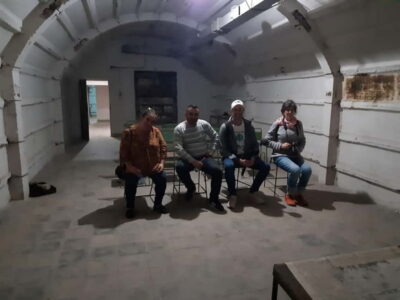

Browse the lists this tour appears in