
Reviewed · DURRES BEACH & AMPHITHEATRE DAYS
Private Walking Tour Visit to Durrës with Licensed Guide
Durrës tells its story one street at a time. This private walking tour turns the city into a timeline, from the Venetian Tower of Durrës to Freedom Square, with stops that connect Byzantine, Venetian, Ottoman, Italian, and communist-era changes you can still see in stone and street layout.
What I like most is the way the guide connects the dots. In recent bookings, Artan was praised for his clear, friendly explanations and love for Durrës, and one group also highlighted Joana as especially clear and competent. The second big win is how efficiently the route works in 2 to 3 hours, with quick visits to major landmarks plus optional extras like the tower’s multimedia projection.
One drawback to plan around: a key part of the Venetian Tower experience can cost extra. The projection and an elevated balcony require an additional fee that is not included, even though access to view the interior is included. The pace also hits a lot of sites, so you will want to be comfortable walking between them.
In This Review
- Key highlights to look forward to
- What you pay, and what that covers in Durrës
- Venetian Tower of Durrës, where one tower carries many eras
- Church corners, hidden traces, and the Ottoman hammam
- Bulevardi Epidamn and 1928 urban planning, plus a real-world refresh break
- Aleksandër Moisiu Museum and Fatih Mosque, two different kinds of “layering”
- Durres Amphitheatre: excavation, what was found, and what restoration aims to do
- Saint Lucy, Freedom Square, and the civic spine of Durrës
- Xhamia e Madhe e Durresit and the story of faith under shifting regimes
- Aleksandër Moisiu Theatre and the 1960s architecture thread
- Forumi Bizantin (Rotonda): Byzantine forum at street level
- Why the private format feels different here
- Should you book this Durrës private walking tour?
- FAQ
- Is this tour private or shared?
- How long is the walking tour in Durrës?
- What language is the tour offered in?
- Are admission tickets included?
- Where does the tour start and end?
- Can I cancel for free?
Key highlights to look forward to
- A private route with a licensed guide and explanations in English, built for your group only
- Venetian Tower plus European Commission renovations, tied to centuries of fortification and regime shifts
- Fort, bathhouse, churches, mosques, and civic buildings in one compact old-city loop
- Amphitheatre excavation story and restoration plans, with archaeology name-dropped (Vangjel Toci)
- Short stops that still give context, plus brief refreshment pauses along Bulevardi Epidamn
- Moisiu landmarks that connect architecture, consular history, and Albanian theater heritage
More Private Tours in Tirana
What you pay, and what that covers in Durrës
At $24.10 per person for a 2 to 3 hour private walking tour, you are not just buying “a walk with a map.” You are paying for a licensed guide to connect many different sites into a single story, in English. The tour also uses a mobile ticket, which makes the whole thing simpler once you are in town.
Another value point that matters: admission is listed as free for every stop. That means you are not constantly paying small add-ons as you move from monument to monument. Do note one exception, the Venetian Tower projection and elevated balcony extra fee, which is specifically mentioned as not included.
Because it is private, you also get something most group tours cannot provide: a chance to ask follow-up questions without crowd noise. This one is also offered in English, and most travelers can participate, so it is a good fit if you want structure but not an exhausting full-day program.
Venetian Tower of Durrës, where one tower carries many eras
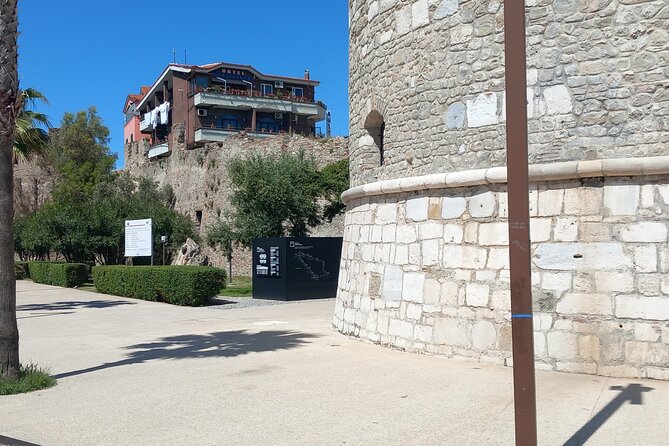
The tour begins at the Venetian Tower of Durrës, and you get two distinct layers of it. First, you learn how the neighborhood was shaped through old maps, photographs, and key locations, including the idea that Durrës has been fortified and re-fortified over time. Expect discussion of a 2nd-century amphitheater, and fortifications linked to Byzantine, Norman, Venetian, and Ottoman periods, plus how the industrial city era changed urban planning and architecture. You are told, too, how the city is transitioning in more recent times.
Then the tour shifts to the tower itself: its construction history, building techniques, and how it resembles other towers along the Adriatic coast and beyond. You will also hear why it mattered during Ottoman rule, including demilitarization in the early stages of World War II, and how it was used through the communist regime up to more recent decades.
The renovation story is a modern payoff. The tower has recent work financed by the European Commission, and it is being transformed into a multimedia center projecting the city’s history. Here is your practical decision point: to access the projection and the elevated balcony, you must pay an additional fee. Entrance to view the interior is included, so you are not locked out, but if you care about the multimedia element, budget for it.
Church corners, hidden traces, and the Ottoman hammam
Stops 3 and 4 keep the walk intimate by focusing on what you can learn from less obvious places.
The Church of Apostle Paul and Saint Astius (with Saint Asti in the tour description) sits among busy streets, but the message is quiet reverence. You spend about 10 minutes learning the saints’ history in Durrës, and you also hear about hidden traces of the former Church of Saint Spiridon. That earlier church was demolished during the communist regime, and the remnants help you understand how policy can erase religious life while still leaving physical clues.
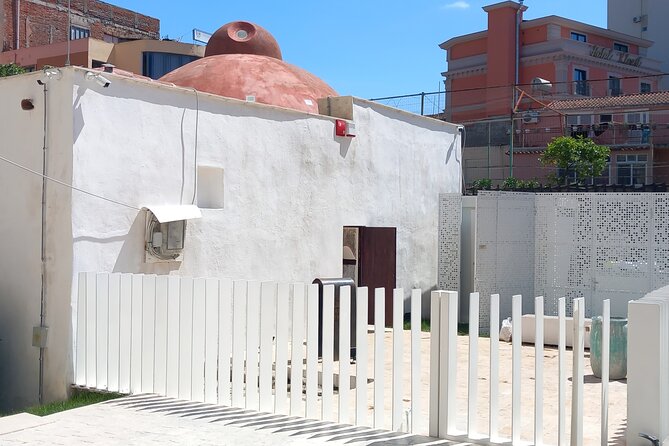
Next comes the Ottoman-era Hammam, the Medieval Bath built in the 17th century. The tour explanation covers whether it was privately owned or tied to government buildings along the seaside promenade, and it connects it to the nearby White Mosque, described as about 5 meters west. You also learn how the building’s traces can show remnants of an old road to Durres Castle, turning a simple stop into a mini lesson in how roads and walls survive even when functions change.
The technical detail is the fun part here. You get a sense of the steam and heating techniques used inside the structure. Even if you are not an architecture nerd, this kind of explanation makes the stone feel practical, not just decorative.
Bulevardi Epidamn and 1928 urban planning, plus a real-world refresh break
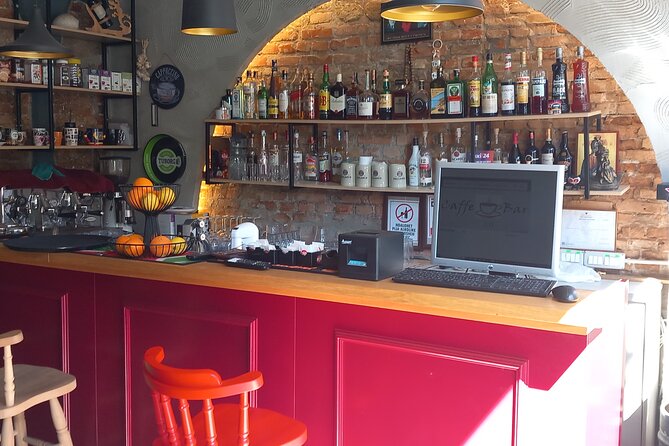
Bulevardi Epidamn is stop 5, and it is short on purpose, about 10 minutes. The payoff is big: you walk along a road where early residential buildings were shaped by investment decisions, and those decisions were guided by the first Urban regulatory Plan of 1928. In other words, you see a street where architecture and planning policy made the city look the way it does.
This stop also works as a simple recharge break. The tour includes pauses at 2 to 3 local spots for refreshments, such as coffee, water, burek, ice cream, or orange juice. That means you can plan your energy without trying to hunt for food between monuments.
One consideration: these refreshments are brief. If you want a full meal, you will likely need to handle that outside the tour window, but for most people, the snack-style timing is exactly right.
More Walking Tours in Tirana
- Walking Tour of Tirana
★ 5.0 · 646 reviews - Tirana: Express Walking Tour with a Guide
★ 4.8 · 503 reviews - Tirana Center: Magic Walking Tour French/Italian/English Etc
★ 4.9 · 402 reviews - Walking tour of Tirana
★ 4.8 · 285 reviews
Aleksandër Moisiu Museum and Fatih Mosque, two different kinds of “layering”
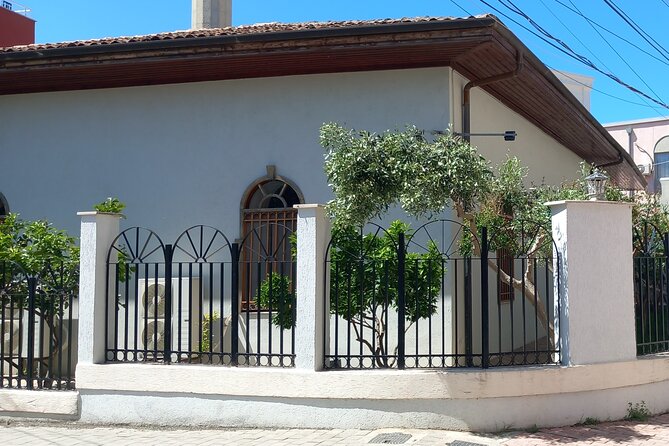
Stop 6 brings in culture through a building with surprising diplomatic history. The Aleksandër Moisiu Museum area is described as blending traditional Albanian architecture with Durres architecture. The house once served as the consulate of England in Durres, when Durres became the capital after national independence. The tour also flags damage from the 2019 earthquake to a Byzantine tower adjacent to the house, and notes that the site is waiting for necessary investments. On top of that, the residence ties to one of Durres’s international theater artists, Aleksander Moisiu.
What I like about this stop is that it links global connections with local identity. It is not just an old house, it is a reminder that Durres has been shaped by outside relationships and by the people who gave it cultural visibility.
Fatih Mosque is stop 7, built in 1501. This is one of the three oldest mosques in the Republic of Albania, and the tour explanation highlights something clever in its design. The mosque stands at the base of the Byzantine wall between two outer towers, and the structure shields its minaret from seaside views and potential sea attacks. It also uses the same building materials as the Byzantine walls, including supportive sections of the wall that open up a broad ground floor base for the mosque.
If you like when religion, defense, and engineering overlap, this is a strong stop. You get a visual explanation for why the building looks the way it does, not just when it was built.
Durres Amphitheatre: excavation, what was found, and what restoration aims to do
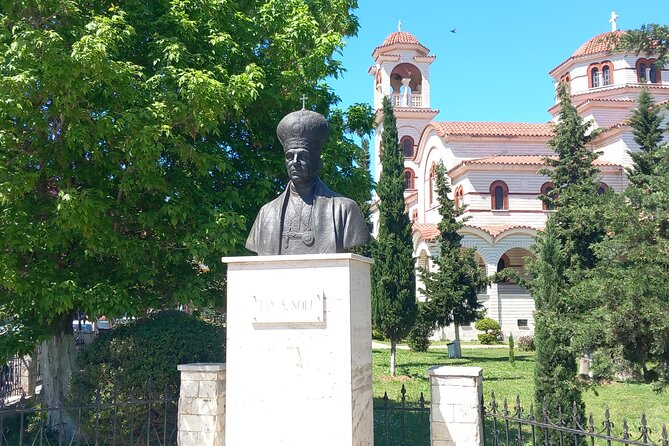
Stop 8 is the Durres Amphitheatre, where the guide gives you the big storyline in a short amount of time.
You will look at how the amphitheater coexists with the city above it. That relationship is the point, because it explains how archaeology does not sit in a museum box here. It is part of a working city layout.
Then comes the name you will remember: the amphitheater was excavated in 1966 by archaeologist Vangjel Toci. You also hear about the intriguing secrets the excavation revealed, and the guide connects it to a government project aimed at restoring the entire amphitheater. The goal is preservation while highlighting the amphitheater’s rich historical layers.
This stop is a good reminder that the “present” in Durrës is still being built around what was uncovered. If you are the type who likes to see how decisions are made about restoration and access, this is worth your attention.
Saint Lucy, Freedom Square, and the civic spine of Durrës
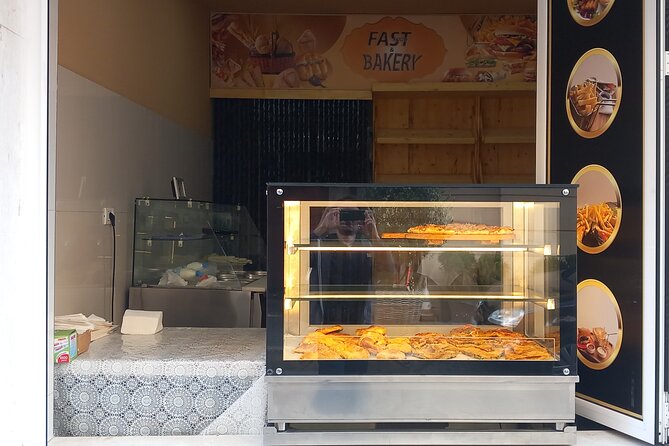
Stop 9 takes you to Kisha Katolike Shën Dominiku, described as the Church of Saint Lucy. The church is tucked away in winding streets, and the tour frames it as timeless grace. You learn about construction history and key figures in city governance tied to the church. Then you compare the present condition with the past, including a specific communist-era detail: during that period, all religious activities were legally banned.
This is where the walk becomes more than architecture. It becomes about how laws and governments shape what survives, what changes, and what people are allowed to practice.
Then stop 10 shifts you to Sheshi Liria, also called Freedom Square. The tour says it is one of the city’s earliest squares, and originally it was designed as a floral garden in the 1928 First Urban Regulatory Plan. Freedom Square holds the Municipality and the Grand Mosque, and you get the development story from Ottoman era roots to pre-World War II and today.
The guide also explains how this area relates to the broader urban shape, including how it extended into directions of once-called Varosh neighborhoods. If you want to understand why Durrës feels like it has a plan behind the older streets, this is your stop.
Stop 11 is the Municipality of Durrës, built in 1931. The tour highlights Italian aesthetic preferences of the time, and especially the large central balcony that was used for public speeches in the square. After a 1926 earthquake destroyed the clock tower, a new public clock was installed on top of the city hall building. Today, the tour explains it as the hub of local governance, so you get a living civic thread rather than a dead monument.
Xhamia e Madhe e Durresit and the story of faith under shifting regimes
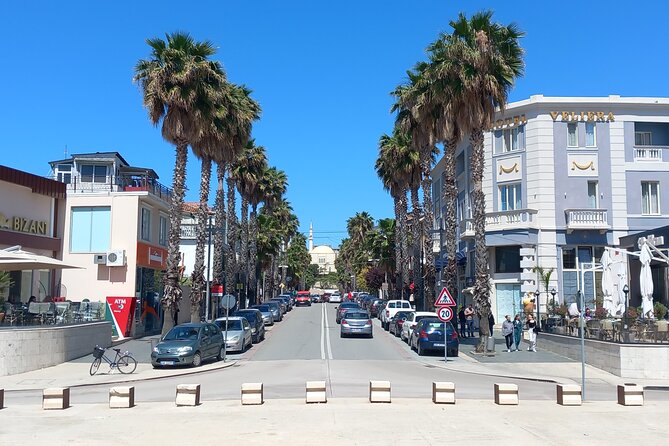
Stop 12 is the Grand Mosque, Xhamia E Madhe e Durresit. The tour description ties its construction to local merchants during Italy’s economic dominance before World War II. It also notes a major disruption: in 1939, the mosque was closed and altered under the communist regime, and later restored after the 1990s.
The practical meaning for residents comes through in the tour: it remains a sign of resistance and integration in Islam, and it is frequently visited. Even in a short walk, this stop helps you understand that religious buildings are not only about worship, they are also about identity under pressure.
If you are trying to understand Durrës as a city of continuity and interruption, this mosque is a key anchor.
Aleksandër Moisiu Theatre and the 1960s architecture thread
Stop 13 focuses on the Aleksandër Moisiu Theatre. The tour description says this is the starting point of the Downtown thematic tour named after Aleksander Moisiu, the native artist. The Palace of Culture in Durres was built in 1960, and it is described as the first structure of its kind in the Republic of Albania.
You will hear about characteristics of Albanian architecture from the 1960s and how those ideas influenced architecture beyond the city. This is a useful counterpoint after the older religious and fortification stops, because it brings you into the way Durrës wanted to represent itself in modern decades.
Forumi Bizantin (Rotonda): Byzantine forum at street level
Stop 14 is Rotonda, Forumi Bizantin, tied again to archaeologist Vangjel Toci. This Byzantine forum is described as a priceless link in interpreting the city’s developmental transition from Late Antiquity to the Middle Ages.
The tour also points out the open forum setting and the artifacts shown within it. That matters because you are not just hearing dates, you are seeing how public space worked in Byzantine times, and how those spaces can sit within the modern city footprint.
If you enjoy archaeology that feels close to street life, this end stretch is a strong finish. It gives you a mental map for the rest of Durrës, even after the walk ends around Sheshi Liria.
Why the private format feels different here
Because this is private, you are not stuck with the pace of a large group. You get a guided loop through 14 stops that are mostly short, 10 minutes each, plus a longer first segment. In a private setting, that structure is easier to handle, because you can ask questions as they come up instead of waiting your turn.
The tour is also offered in English, and recent feedback highlighted how clear the explanations were, with Artan praised for both knowledge and friendly delivery, and Joana noted as clear and competent. That matters because Durrës history can feel like a mix of names and dates unless someone organizes it for you as you walk.
One more practical note: it is near public transportation, and the starting point is at the Venetian Tower area. The end is at Sheshi Liria, so you finish in an active central area.
Should you book this Durrës private walking tour?
Yes, if you want a structured, high-context introduction to Durrës in just 2 to 3 hours. The value is strong for a private guide, especially because admissions are listed as free at the stops, and the route mixes major monuments with explanations that connect regimes, planning, and architecture. It is also a good pick for couples, solo travelers, and families who like history but do not want a slow museum day.
Skip it if you want long, quiet time inside one site or you prefer a plan with fewer stops and more time per stop. The tour is designed to cover a lot of ground fast, which is great for first-timers, but less ideal if you want to linger.
FAQ
Is this tour private or shared?
It is a private tour/activity, meaning only your group will participate.
How long is the walking tour in Durrës?
The duration is listed as 2 to 3 hours approximately.
What language is the tour offered in?
The tour is offered in English.
Are admission tickets included?
Admission is listed as free for the tour stops. There is one exception noted at the Venetian Tower, where access to the projection and the elevated balcony requires an additional fee not included in the tour.
Where does the tour start and end?
It starts at the Venetian Tower of Durrës (near 8C5W+VQC, Durrës) and ends at Sheshi Liria (Freedom Square), Durrës.
Can I cancel for free?
Yes, there is free cancellation. You can cancel up to 24 hours in advance for a full refund.
A Few More Durres Beach & Amphitheatre Days
Added to Tirana lately
- Semi-Private Hiking Tour; Theth,Valbona&Koman Lake in 3 Days★ 5.0 · 1 review
- Kosovo, Prizren Day Trip from Tirana★ 3.0 · 1 review
- Private 1 Day Berat Tour from Tirana★ 5.0 · 1 review
- Private 3 Days Adventure in Albania and Gjirokaster County★ 5.0 · 1 review
- From Tirana: Ksamil Islands, Saranda, & Blue Eye Day Trip★ 5.0 · 1 review
- Tirana Airport Private Transfer To City★ 5.0 · 1 review
- Architectural Walking Tour Discovering Tirana’s Modern Identity★ 5.0 · 1 review
- From Shkoder: 3-Day Valbona to Theth Hike Tour All Inclusive★ 5.0 · 1 review
Durres Beach & Amphitheatre Days, compared.

Bovilla Lake Serenity:Day Tour from Durres/Golem
Read our review →Browse the lists this tour appears in