
Reviewed · BLUE EYE SPRING DAY TRIPS
Gjirokastra and Blue Eye Tour from Saranda
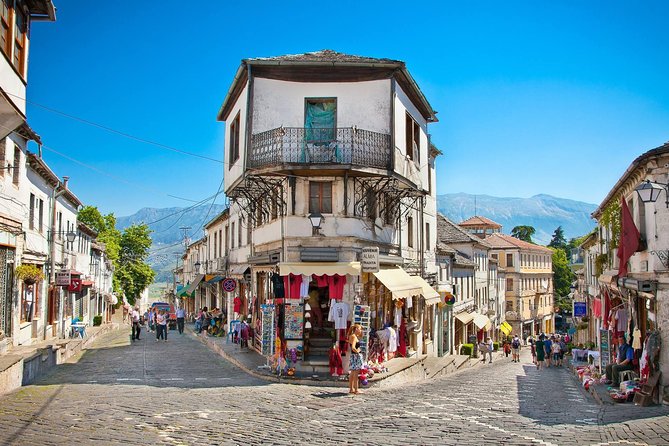
Blue Eye, meet Ottoman stone towns. This half day tour strings together Gjirokastra’s steep stone streets, Ismail Kadare’s home, and the famous Blue Eye spring, all with round-trip transfers from Saranda. The big upside is comfort, so you spend less time wrestling local buses and more time actually looking at the place. The main drawback to keep in mind is timing, especially if you are connecting from a cruise and your pickup needs a little chasing.
I also like that the plan feels smart and paced. You get the bazaar, the castle, Skenduli House, then the ride up to the Blue Eye, with enough time at each stop to see what matters. One thing to watch: Skenduli House or the exact inclusions can vary by day, and you may want to confirm day-of details if you have tight plans.
In This Review
- Key highlights I’d bookmark before you go
- Gjirokastra and Blue Eye: why this combo works
- Getting from Saranda to Gjirokastra, without the headache
- Stop 1: Gjirokastra Bazaar, where wood, stone, and fabric feel real
- Stop 2: Gjirokaster Castle, a museum route plus fortress drama
- Stop 3: Skenduli House, 19th-century Ottoman architecture in lived-in form
- Kadare’s home: the author connection that adds real meaning
- Stop 4: The Blue Eye, a deep-source spring with that electric blue tone
- Price and value: what you are paying for
- What to expect on the day: language, pacing, and small surprises
- Who this private tour is best for
- Should you book this Gjirokastra and Blue Eye tour?
- FAQ
- How long is the Gjirokastra and Blue Eye tour from Saranda?
- What pickup options are available in Saranda?
- Is this tour private?
- What’s included for entry tickets at the stops?
- Do you need a minimum number of travelers?
- What is the cancellation policy?
Key highlights I’d bookmark before you go
- Private group feel, with just your party, so the guide can answer questions without rushing
- Ismail Kadare focus during the Gjirokastra portion, not just generic sightseeing
- Gjirokaster Castle museum route, from prehistoric weaponry to World War II exhibits
- Skenduli House stop for 19th-century Ottoman architecture, woodwork, and frescoes
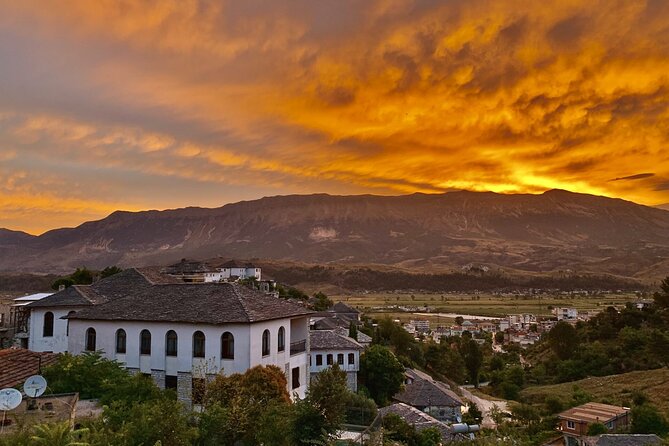
- Blue Eye spring visit after a scenic uphill drive through shifting scenery
- Entry fees are handled for most major stops, so you are not scrambling for tickets
A few more Blue Eye Spring day trips:
Gjirokastra and Blue Eye: why this combo works
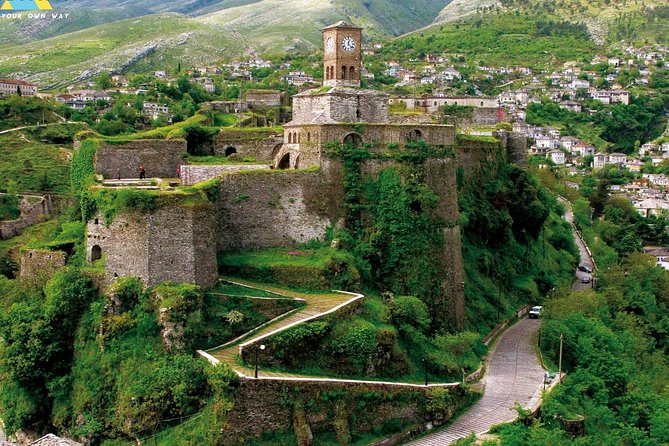
If you only visit one place in southern Albania, you would miss the contrast that makes this area fun. Gjirokastra is all stone, slopes, and layered history. The Blue Eye is the opposite mood, a cool natural spring that bubbles up from a deep source, with that startling clear blue color.
What makes this tour especially practical is the order and the structure. You start in Gjirokastra while your energy is fresh, then you tackle the drive and walk around the Blue Eye after you have already had your city hits. You also get a route that mixes culture and views. The castle gives you museums, a church, and even a prison setting, then the courtyard and ruins look down over the Drino River valley.
And yes, the name “museum city” fits here. Gjirokastra feels like it is showing you something at every turn, from handcrafts in the bazaar to exhibits behind castle walls.
Getting from Saranda to Gjirokastra, without the headache
The tour is set up around round-trip transfers from your meeting or pickup point in Saranda, and it is one of the reasons this option is worth paying for. The pickup options include Saranda City Center, hotel pickup, and even port pickup if you are arriving on a cruise, with the operator’s office very near the port.
That matters because getting to Gjirokastra can mean figuring out timing, transfers, and parking. Here, you avoid the stress of coordinating vehicles and you get dropped off close to entrances. The experience is designed to feel like a guided day, not a self-guided scramble.
Timing-wise, the activity runs during a window that starts at 7:00 AM and goes until 12:00 PM (daily). If you are sensitive to crowds, earlier tends to be better. If you are on a cruise, I’d build in extra patience, because delays can happen when ship schedules and local pickup timing collide.
Private tour means your group stays together. It also means the guide can adapt the pacing to your questions, and you can generally ask for slower drives if you want more time to look at the view outside the vehicle.
Stop 1: Gjirokastra Bazaar, where wood, stone, and fabric feel real
The bazaar stop is short, about one hour, but it is a good “reset” after travel. This is where you can spot handcrafted souvenirs made with real materials like wood, stone, and fabric. The point is not shopping for the sake of it. It is watching craft in motion, and figuring out what kind of products actually represent the region.
If you are the type who likes buying something you can picture in someone’s workshop, this is the place to do it. Think smaller items you can pack safely. Also, go in with the mindset that the bazaar is part of the cultural experience, not just a souvenir market.
Because the bazaar admission is listed as free for this stop, you do not lose time paying extra entry fees. You use the hour to browse, ask questions, and get your bearings in Gjirokastra.
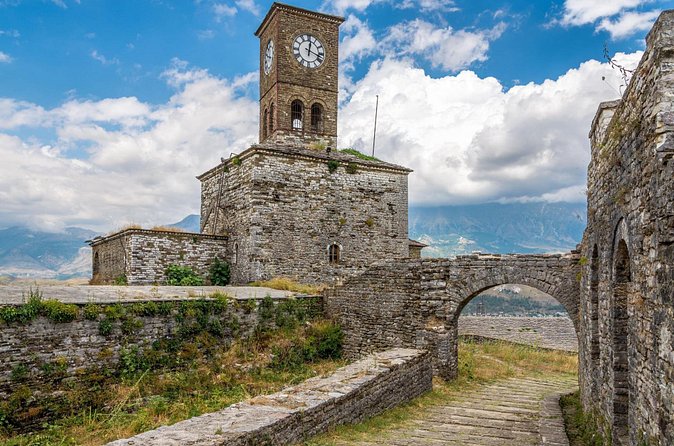
Stop 2: Gjirokaster Castle, a museum route plus fortress drama
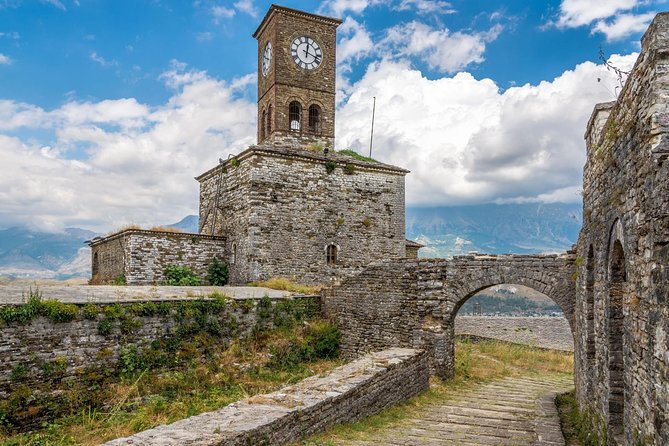
This is the main “wow” stop. You spend about one hour at Gjirokaster Castle, with admission included.
Inside the castle, the Museum of Weapons is the star. It opened in 1971, and it covers weaponry from prehistoric times through World War II. Even if weapons history is not your main interest, the bigger value is context. The displays explain how conflict shaped the area over centuries, and how the castle itself functioned as protection.
There is more than one layer here:
- A small church on site
- A prison tied to the communist regime
- The fortified courtyard and castle ruins at the exit
Then you get the views. The castle overlooks the Drino River valley, and because the fortress sits high, you can feel the strong wind while you look out. It is one of those places where your photos turn out better when you pause, stop moving, and let the scene settle in your head. The stone houses clustered below complete the picture.
Practical note: the castle has uneven stone and steps. Wear shoes that can handle it without slipping, especially if you are visiting in warmer months when stones can feel slippery after a dry spell.
A few more Gjirokaster stone city trips:
- Gjirokastra- The Stone City & Blue Eye- The monument of Nature.
★ 4.5 · 180 reviews - Day tour from Saranda/Ksamil:Gjirokaster +Blue Eye & Lekursi
★ 4.8 · 150 reviews - From Saranda: Gjirokastra Stone City & Blue Eye Day Trip
★ 4.9 · 121 reviews - 1-Day Tour in Blue Eye, Monastery, Gjirokaster and Lekursi Castle
★ 5.0 · 76 reviews
Stop 3: Skenduli House, 19th-century Ottoman architecture in lived-in form
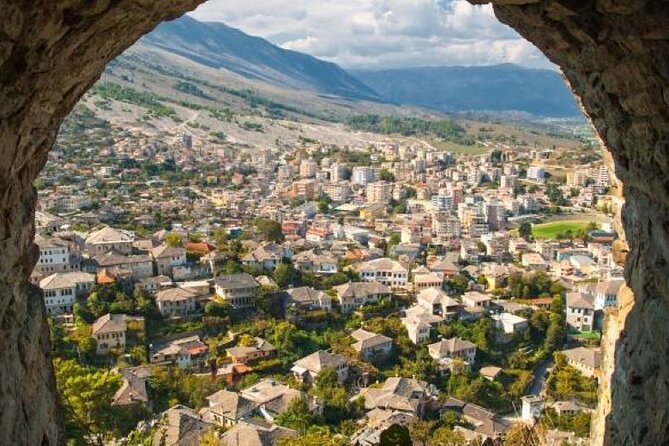
After the castle, you move into a smaller, calmer setting at Skenduli House, with about 40 minutes on the property. Admission is included.
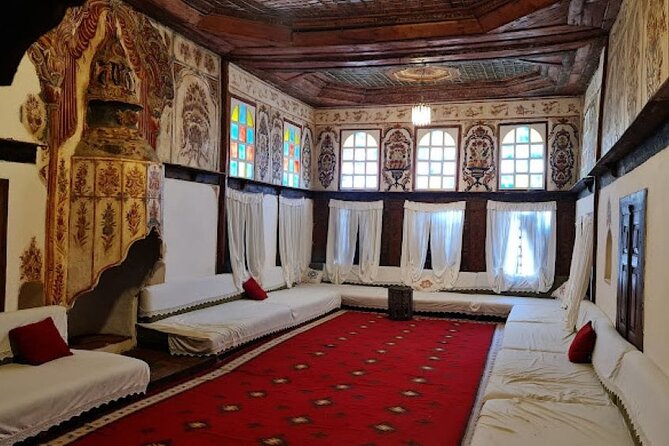
This stop focuses on traditional Ottoman architecture and Albanian cultural heritage through the lens of a preserved 19th-century mansion. What stands out from the description is the attention to original details, including intricate wood carvings and frescoes. Instead of just “here is a building,” the guide component matters, because you are walking room to room to understand how the Skenduli family lived.
You are meant to see period furniture and authentic artifacts, and you get insights into daily customs and the feel of historic Gjirokastra life. For many people, this is the stop that makes the city feel human. The castle can feel like big walls and exhibits. Skenduli House feels like someone owned a life here, not just a ticket.
One caution: some tours can find a house closed depending on day-of conditions. If Skenduli House is a top priority for you, it is worth confirming just before departure if possible, so you are not disappointed when you arrive.
Kadare’s home: the author connection that adds real meaning
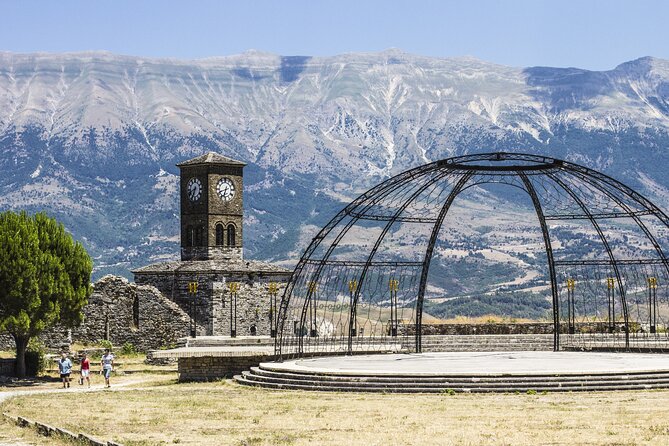
One highlight built into this tour is time connected to Ismail Kadare while visiting his home in Gjirokastra. This is a strong detail because it shifts your experience from architecture and general history into personal cultural identity.
Kadare is one of Albania’s best-known literary figures. When a tour includes a home visit connected to him, you get a different kind of understanding: how place can shape voice, themes, and memory. Even if literature is not your usual travel topic, the personal angle tends to make the stops more memorable.
Because the exact timing of the Kadare visit is not spelled out as a separate clocked itinerary segment, I suggest you treat it as part of your Gjirokastra block. That also means you may not want to schedule anything else tightly right after the Gjirokastra portion ends.
Stop 4: The Blue Eye, a deep-source spring with that electric blue tone
Then you shift gears for the Blue Eye. The ride is part of the show. You travel via winding, steep, uphill roads, and the scenery changes as you go. You pass palm trees near the shore, then you work into greener, denser areas that feel almost mountainous.
The Blue Eye is a water spring and natural phenomenon. The clear blue water bubbles up from a depth of more than fifty metres. In practical terms, it is a place where you can look at the water, feel the damp cool air, and understand why people treat it like a “must see” stop rather than just another roadside viewpoint.
You usually get about one hour at the Blue Eye, with admission included. That is enough time to walk around, get your photo, and take a slow moment. If you run fast, you will miss the point. If you linger, you will notice details, like how the water movement behaves around the source.
Also, plan for cold water vibes even in warm weather. This is not a beach stop. Dress like you might want a light layer.
Price and value: what you are paying for
At $123.35 per person for about 5 hours 30 minutes, the value mostly comes from three things: the transport, the structured stops, and the guide-led context.
If you tried to do this on your own, you would still pay for transport somehow, and you would still end up paying entry fees at the castle area and likely at the Blue Eye. The tour’s price packages the day so you do not lose time figuring out timing and routes.
It is also private, and that changes the equation. When your group is smaller, the guide can answer questions and adjust pace. You can even request slower driving so you can enjoy the roadside views without the guide needing to stick to a strict, rushed checklist.
That said, any private tour carries variability. Language and small inclusions can differ by day. Snacks are mentioned as a possible onboard extra in some cases, but the tour materials do not guarantee it in a strict way. If food is important for you, I would bring a small personal snack just in case.
What to expect on the day: language, pacing, and small surprises
This tour is offered in English, and you receive a mobile ticket. Confirmation comes at booking, and service animals are allowed.
From a visitor comfort standpoint, the best version of this tour is guided, not just driven. When the guide is fully engaged, you get historical and natural explanations that connect the stops instead of treating them like separate postcards. A strong guide also helps with questions you might have while you are walking through the castle and museum exhibits.
Now, the consideration. Some days do not match expectations perfectly. Pickup can be delayed if you arrive via cruise and the timing system is off. Also, some days may feel more driver-led than guide-led, which changes the experience. If you care a lot about deep explanations, I’d ask early about guide language and guide coverage for all stops.
Skenduli House is another watch item. If it is closed on a given day, the time may be affected. The best approach is to keep your flexibility high and your expectations realistic for a small country with real-world timing.
Who this private tour is best for
This fits well if you want:
- A private day trip that feels comfortable and guided
- A mix of city history and natural wonder
- A structured route that does not require planning the logistics yourself
It is also a good match for couples and small groups who want minimal parking stress. If you are traveling with family or friends and you want the guide to manage timing, this is the kind of trip where that convenience adds up fast.
It is less ideal if you dislike hills or stepping around historic stone buildings, because Gjirokaster Castle and the walking areas involve uneven ground. If you have mobility constraints, you should think carefully before booking since the tour includes castle and house visits.
If you are traveling solo, there is an extra charge, and the booking minimum is 2 travelers per booking. So solo travelers should expect that the tour is not priced like a solo seat on a big bus.
Should you book this Gjirokastra and Blue Eye tour?
Book it if you want an easy, guided route that covers the essentials: Gjirokastra’s museum-style castle, the Ottoman-era Skenduli House, and the Blue Eye spring, all from Saranda with transfers done for you.
Skip it or at least adjust expectations if you are extremely time-sensitive, such as a tight cruise schedule with little buffer. In that case, build cushion time and be ready to contact the provider quickly if pickup timing slips. Also, if you are visiting on a day when Skenduli House access is limited, you should be comfortable with the idea that the day may shift.
My final take: this tour is strong when the guide is lively and the pace stays human. You get real place context, not just a checklist, and the Blue Eye payoff is the kind of natural stop you remember long after you leave Albania.
FAQ
How long is the Gjirokastra and Blue Eye tour from Saranda?
It runs for about 5 hours 30 minutes.
What pickup options are available in Saranda?
You can be picked up in Saranda City Center, at a hotel, or at the Saranda port. The tour also starts from Rruga Mitat Hoxha, Saranda, Albania, and it ends back at the meeting point.
Is this tour private?
Yes. It is a private tour/activity, and only your group participates.
What’s included for entry tickets at the stops?
Gjirokastra Bazaar has free admission. Gjirokaster Castle, Skenduli House, and the Blue Eye have admission included.
Do you need a minimum number of travelers?
Yes. The minimum number of travelers per booking is 2. Solo travelers can book, but there is an extra charge.
What is the cancellation policy?
You can cancel for a full refund up to 24 hours before the experience starts. If you cancel less than 24 hours before, the amount paid is not refunded.
Added to Saranda lately
- Visit the city of Konispol★ 5.0 · 1 review
- Visit the Mosque of Gjin Aleksi and the Islamic Complex of Xhermehalla★ 5.0 · 1 review
- Sarandë: Destinations of North of Saranda Boat Trip★ 1.0 · 1 review
- Lekuresi Castle,Blue Eye,Ancient City of Butrint and Ksamil★ 5.0 · 1 review
- Half-Day Sightseeing Tour to Gjirokastra and Blue Eye★ 5.0 · 1 review
- Visit The Ancient City of Butrint★ 5.0 · 1 review
- Ancient Butrint and Gjirokaster Ottoman City★ 5.0 · 1 review
- Private Albanian Riviera Highlights Tour★ 5.0 · 1 review
Blue Eye Spring Day Trips, compared.
Lekursi Castle, Blue Eye, Gjirokaster, & More Tour
Read our review →
Daily Trip To:Blue Eye,Monastery,Gjirokaster&Lekursi Castle
Read our review →
Best of Saranda: Blue Eye, Butrint, Ksamil & Lekuresi Castle
Read our review →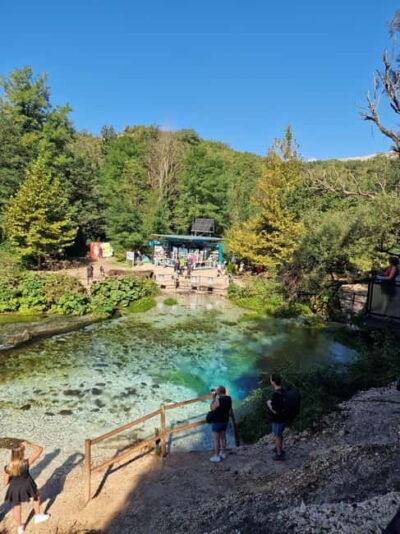
Blue Eye Kayak and walking tour & Lekursi Castle
Read our review →
Browse the lists this tour appears in