
Reviewed · BLUE EYE SPRING DAY TRIPS
Tour and guide Blue Eye – Butrint
Two sights, one long day. This trip links UNESCO Butrint ruins with the clear-water magic of the Blue Eye, all in one smooth route. You get morning nature time, then an archaeology afternoon where you can still picture what daily life looked like thousands of years ago.
What I like most is how the day gives you both Blue Eye atmosphere and a focused look at Roman-era Butrint. You’ll spend real time exploring key sites like the theater and baths, not just passing by. I also love that one verified booking praised the day as perfect and shared unforgettable moments with Denis, which hints at a friendly, human touch to the experience.
The main consideration: this is not a laid-back stroll only. The trip includes standing and walking, and it’s not suitable for people with several health conditions or mobility limits.
In This Review
- Key points that make this day trip work
- From Sarandë in the morning, then straight to the water
- The Blue Eye: 1.5 hours to see, photograph, and reset
- The drive to Butrint: a short transfer that keeps the day tight
- Butrint National Park: UNESCO ruins that explain centuries of change
- Key sites you will not want to rush at Butrint
- Sanctuary Of Asclepius
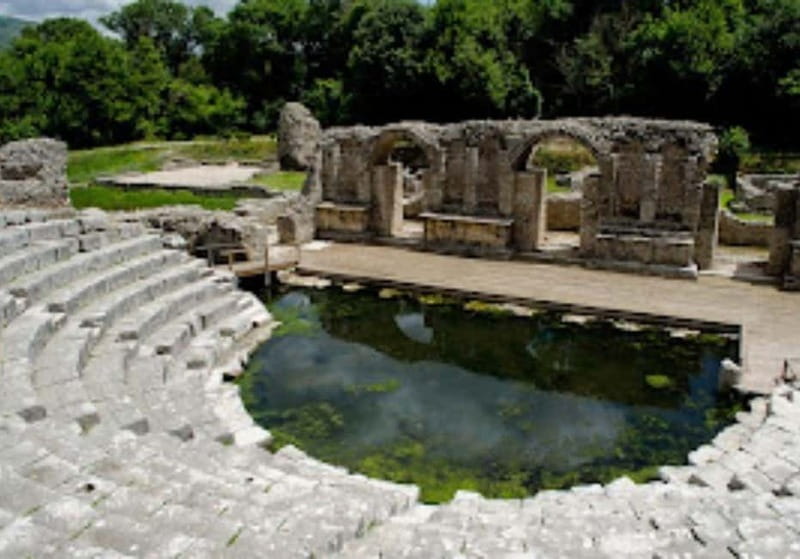
- Roman Theater
- Roman Baths
- Gymnasium
- Roman Civic House, also known as Triconch Palace
- Baptistery and additional areas
- What that guide time feels like (and what Denis adds)
- Price and value: is $93 per person fair for a full-day plan?
- Who this Blue Eye and Butrint day fits best
- A quick reality check on timing and stamina
- Should you book this Blue Eye to Butrint tour?
- FAQ
- How long is the Blue Eye and Butrint tour?
- Where is the pickup location?
- What time does the tour depart?
- What time do you arrive at the Blue Eye?
- How much time is spent at the Blue Eye?
- Is the Blue Eye entry ticket included?
- How long is the Butrint visit?
- How long is the van ride back to Sarandë?
- Is a dedicated tour guide provided?
- What type of cancellations are allowed?
Key points that make this day trip work
- Blue Eye stop with guided time plus free time so you can take photos and slow down
- Butrint National Park visit with a structured guided tour plus time to wander
- Roman ruins you can map in your head, especially the theater, baths, and civic spaces
- A long-but-manageable schedule built around a morning flow from Sarandë to the spring
- Value-focused price for a full-day transport-and-entry plan at $93 per person
A few more Butrint ancient city tours:

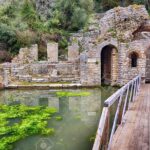
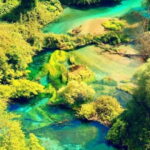
From Sarandë in the morning, then straight to the water
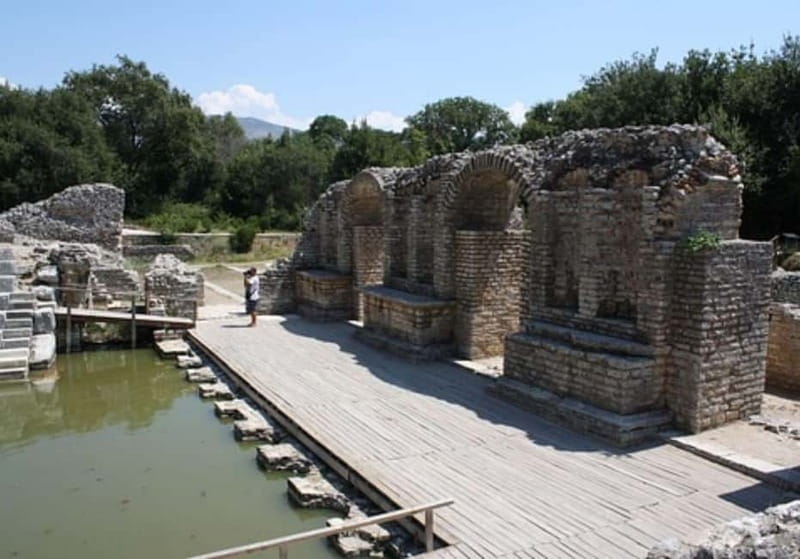
This day starts early, 08:30 departure, with pickup from Sarandë. You’ll hop into a van for about 30 minutes and then you’re on the doorstep of the Blue Eye scene.
Why that matters: starting in the morning usually means better light for photos and fewer timing stress points later in the day. After all, Butrint is the kind of place where you want your brain switched on, not running on fumes.
Expect a plan that moves steadily, not a slow crawl. You’ll arrive around 09:00, stand until 10:30, and then shift gears toward the archaeological park at 10:30.
The Blue Eye: 1.5 hours to see, photograph, and reset
Your Blue Eye block is nicely timed: you’re there from about 09:00, with breaks for photos and a visit that includes guided time plus free time. That’s roughly 1.5 hours total on site, ending when the group departs at 10:30.
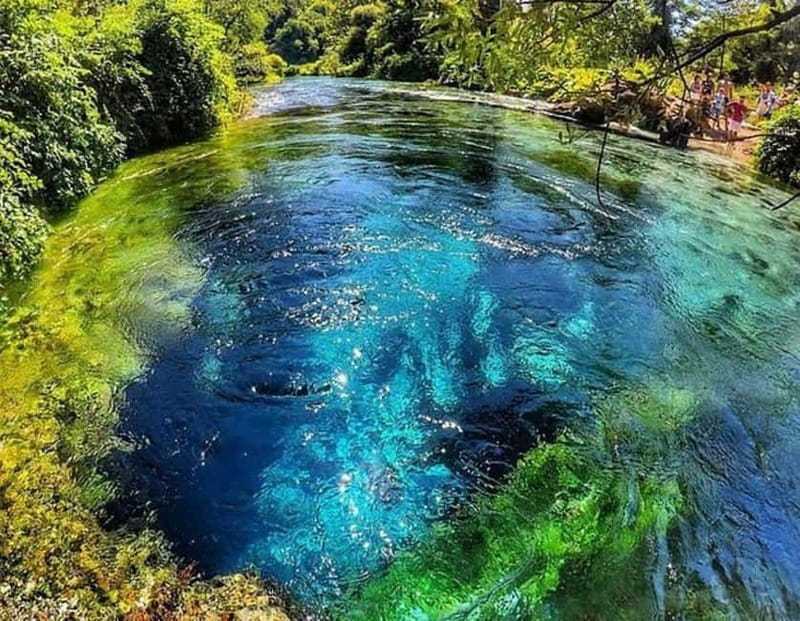
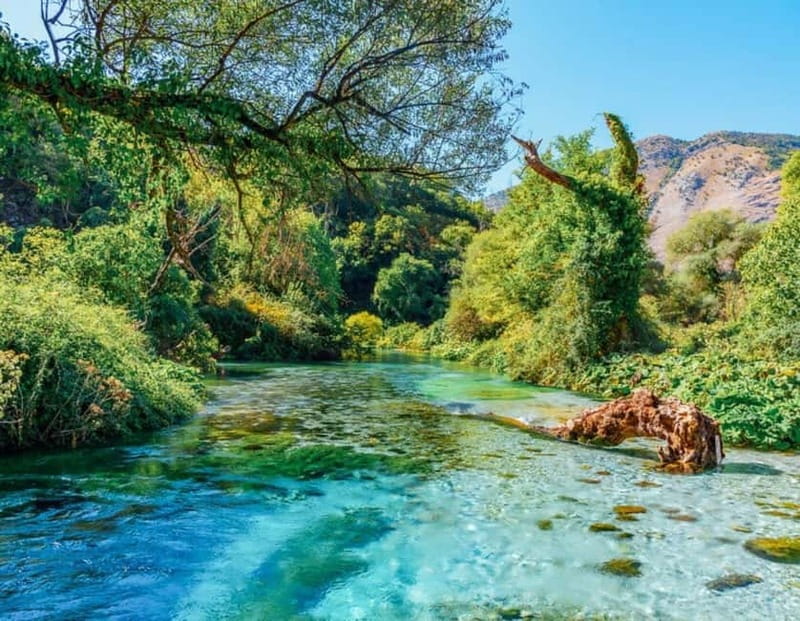
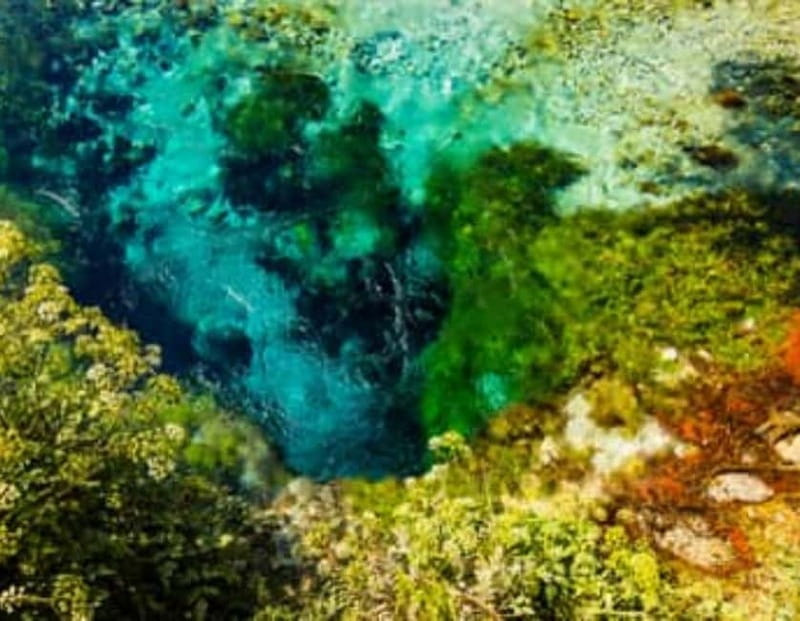
So what should you focus on? The headline is the water itself, deep and transparent, with a bright sparkle in sunlight. Even if you’re not trying to plan a swim, the sight is the point, and the photo stops are worth leaning into.
Practical notes so you enjoy it more:
- Wear shoes you can trust on uneven ground.
- Bring a light layer if the weather shifts, since your day is long and outdoors time is real.
- Use your free time for a calm lap around and not just one quick snapshot.
Also, the Blue Eye entry ticket is included. That’s one less thing to figure out when you’re already thinking about history later.
The drive to Butrint: a short transfer that keeps the day tight
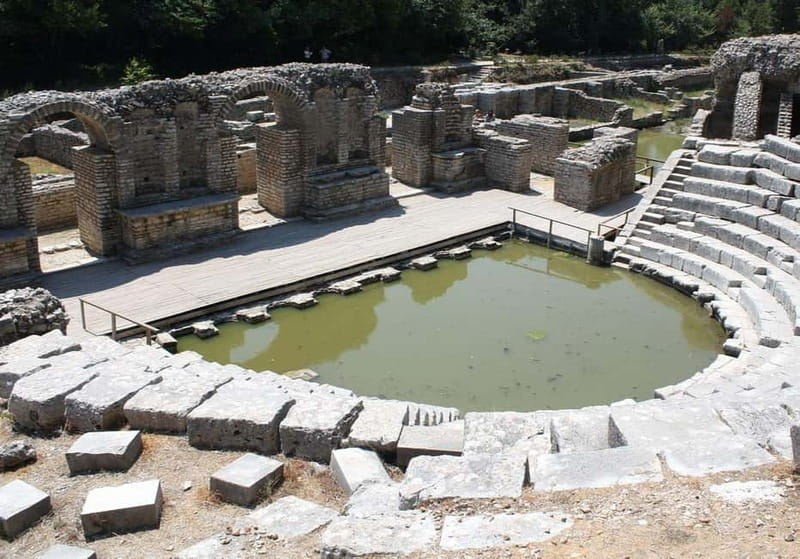
After leaving the Blue Eye at 10:30, you’ll reach Butrint around 11:10. The transfer is about 40 minutes, and then the schedule gives you a clear window to explore until about 14:00.
This is where you should pace yourself. Butrint is not one single ruin view. It’s a park with multiple layers, and you’ll want your energy to last through the big Roman highlights.
If you tend to get tired easily in midday heat, plan to take shade breaks. If you’re the type who loves reading stones and imagining stories, you’ll have plenty of time for that here.
Butrint National Park: UNESCO ruins that explain centuries of change
Butrint is one of those places where the name alone feels like a story. The name is linked to the word buthrotos, meaning wounded bull, tied to a Greek myth. The myth goes back to an offering that failed on the island of Corfu, which is a fun extra detail to keep in mind as you walk through the site.
Then the real timeline hits. Early settled occupation dates back between the 10th and 8th centuries BC. Later, in 228 BC, Butrint became a Roman protectorate, and the next century it was part of Macedonia. By 44 BC, Julius Ceasar made it a Roman colony, and soldiers who had fought against Pompey were allowed to settle there as a reward.
Why that Roman layer matters for you: Butrint isn’t just ruins with vibes. You can still see how the city was organized, from civic life to public buildings where people gathered, exercised, and watched performances.
You’ll also hear the end of an era. An earthquake destroyed large parts of the town, and it was finally abandoned. Under Ottoman occupation, the town was deserted for centuries, before it became part of independent Albania in 1913.
That long arc is the secret sauce of this tour. The day moves from nature wonder to a place where you can trace power, religion, disaster, and reinvention.
A few more Blue Eye Spring day trips:
- Saranda: Lekursi Castle, Blue Eye, Gjirokaster, & More Tour
★ 4.9 · 884 reviews - Sarande: Blue Eye Spring and Lekursi Castle Sunset Tour
★ 4.8 · 798 reviews - Daily Trip To:Blue Eye,Monastery,Gjirokaster&Lekursi Castle
★ 4.9 · 665 reviews - From Tirana, Durrës & Golem: Saranda, Blue Eye & Ksamil Tour
★ 4.9 · 652 reviews
Key sites you will not want to rush at Butrint
Your Butrint visit includes a guided tour for about 3 hours, with time to explore the areas included in the program. The stops listed for the park read like a guided blueprint of Roman and related life.
Here are the highlights that usually make the biggest impression, and how to think about them while you’re there.
Sanctuary Of Asclepius
This is the religious and healing thread of the site. If you enjoy history with a human angle, focus on what it means that a place could be both sacred and practical. A sanctuary like this turns the park from “ancient buildings” into something closer to what people needed day-to-day.
Roman Theater
The theater is a must because it’s about more than architecture. It’s about community. Even without perfect sound, you can picture gatherings, performances, and public events happening in the open air.
If you want to make the most of the theater, look around for the way the space is shaped. You’ll start to understand how Romans used public space to bring people together.
Roman Baths
The baths connect you to daily routines. Food, work, and politics might happen elsewhere, but bathing was part of an organized social world.
When you look at the baths, don’t treat them like a museum exhibit. Try to imagine water, heat, and the idea that people showed up here to talk as much as to clean.
Gymnasium
A gymnasium signals education and exercise, which adds another layer to the Roman story at Butrint. This is where youth and adults could follow structured physical and intellectual culture.
If you like how sports and schooling appear in history, this is one of the stops that makes Butrint feel less distant.
Roman Civic House, also known as Triconch Palace
This is where you get a glimpse of how wealth and domestic design looked in Roman territory. A civic house ties everyday life to power structures, because it reflects how the elite lived inside a broader city system.
Baptistery and additional areas
You’ll also cover the baptistery and other listed parts of the park. These religious-focused spaces help show that Butrint didn’t stay frozen in one era. It changed, adapted, and layered new meanings onto old bones.
What that guide time feels like (and what Denis adds)
The schedule includes guided time at both the Blue Eye and Butrint. At the same time, the activity info says there is not a dedicated tour guide for the tour.
So here’s how I’d think about it when you book: you should expect some guidance during the visits, but the depth and style may vary. One verified booking highlighted Denis and called the whole day perfect and full of unforgettable moments. That’s a strong sign that the people running the experience can add warmth and context, even if it’s not a traditional, always-on guide setup.
If you like learning as you walk, you can get more out of the day by asking simple questions on the spot. Things like what to focus on in each building or what period each area belongs to help you avoid just moving through.
Price and value: is $93 per person fair for a full-day plan?
At $93 per person for a 9-hour day, you’re paying for a lot more than sightseeing alone. You’re getting:
- Transport in a van from Sarandë and back
- A Blue Eye entry ticket included
- Guided time at both Blue Eye and Butrint
- A structured schedule that holds you on site at both locations
From a value angle, the smart part is that you’re not spending energy figuring out logistics across two separate destinations in different rhythms. A full-day format also helps you cover a lot without needing an additional overnight plan.
Could it be expensive for some budgets? Sure, especially if you’re used to self-guided travel. But if you prefer a set route, want someone to handle timing, and like guided context at key moments, $93 feels like the kind of price you pay to reduce friction.
Who this Blue Eye and Butrint day fits best
This trip is ideal if you want one day that covers both nature and history, without needing separate transportation planning.
You’ll likely enjoy it most if you:
- Like UNESCO sites and want a structured overview
- Enjoy Roman history and public buildings like theaters and baths
- Want a clear timetable so you don’t lose the day to indecision
It’s not a fit if you face the listed health or mobility limits. The tour is not suitable for people with heart problems, respiratory issues, epilepsy, high blood pressure, wheelchair users, people over 70, and people over 220 lbs (100 kg). The schedule includes standing and walking, so the physical demand matters.
Also, this is the sort of day where your curiosity should be flexible. You’ll go from the calm visual drama of clear water to the concentrated, detail-heavy feel of an archaeological park.
A quick reality check on timing and stamina
Your day runs like this in plain terms:
- 08:30 depart Sarandë
- 09:00 arrive Blue Eye
- 10:30 leave Blue Eye
- 11:10 arrive Butrint
- 14:00 finish time in Butrint
- About 2 hours back by van to return to Sarandë
That means you’ll have a compact window for photos and wandering, then a more sustained time at Butrint. If you know you like to linger, plan to prioritize what you care about most at each stop.
One good approach: at Blue Eye, get your must-have photos quickly, then use your free time to slow down. At Butrint, lean into the guided time, then use your remaining time to revisit the areas that clicked for you.
Should you book this Blue Eye to Butrint tour?
Book it if you want a smooth full-day route that combines Blue Eye nature with Butrint UNESCO ruins, and you like the idea of guided time at both stops. The itinerary is built to keep the flow logical, and the included Blue Eye entry ticket helps the day feel complete.
Skip it if your health or mobility needs make standing and walking difficult, since the tour is explicitly not suitable for several conditions and for wheelchair users. Also, if you hate structured schedules and prefer to wander freely with no set timing, you might find the day moves a bit faster than you want.
If you’re deciding right now, I’d say this is a strong choice for first-timers to the area who want big “wow” moments plus real historical context in one go.
FAQ
How long is the Blue Eye and Butrint tour?
The tour is 9 hours.
Where is the pickup location?
Pickup is available from Sarandë.
What time does the tour depart?
Departure is at 08:30.
What time do you arrive at the Blue Eye?
You arrive at the Blue Eye at 09:00.
How much time is spent at the Blue Eye?
You stay until 10:30, including break time, photo stop, guided visit, and free time.
Is the Blue Eye entry ticket included?
Yes, entry tickets to Blue Eye are included.
How long is the Butrint visit?
You arrive in Butrint at 11:10 and stay until 14:00. The schedule includes a guided tour for about 3 hours.
How long is the van ride back to Sarandë?
The return includes a van ride of about 2 hours after leaving Butrint.
Is a dedicated tour guide provided?
The activity info says there is no dedicated tour guide available for the tour, even though guided tour time is listed at both stops.
What type of cancellations are allowed?
You can cancel up to 24 hours in advance for a full refund.
Added to Saranda lately
- Ksamil: Jet Car Experience and High-Speed Thrills★ 5.0 · 1 review
- Ksamil: Speedboat Tour Twin Islands With Group with Stop★ 5.0 · 1 review
- Ksamil: Jet Ski For Rent★ 1.0 · 1 review
- Hidden Gems Tour: Saranda, Blue Eye, Ksamil & Lekursi Castle★ 5.0 · 1 review
- From Tirana/Durres: Tour to Saranda, the Maldives of Europe★ 5.0 · 1 review
- Visit the city of Konispol★ 5.0 · 1 review
- Visit the Mosque of Gjin Aleksi and the Islamic Complex of Xhermehalla★ 5.0 · 1 review
- Sarandë: Destinations of North of Saranda Boat Trip★ 1.0 · 1 review
Blue Eye Spring Day Trips, compared.
Lekursi Castle, Blue Eye, Gjirokaster, & More Tour
Read our review →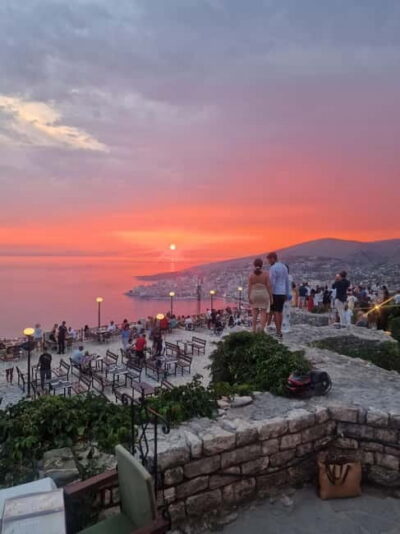
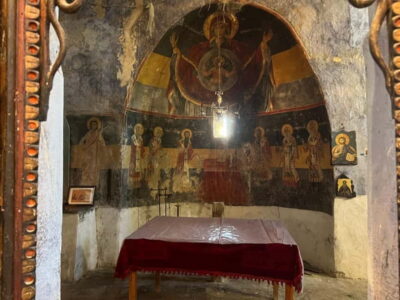
Daily Trip To:Blue Eye,Monastery,Gjirokaster&Lekursi Castle
Read our review →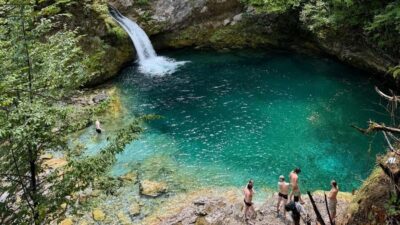

Best of Saranda: Blue Eye, Butrint, Ksamil & Lekuresi Castle
Read our review →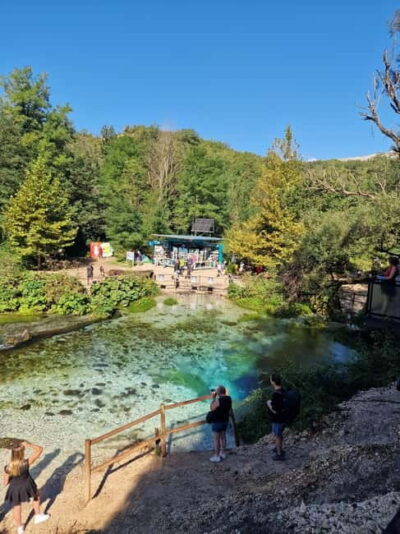
Blue Eye Kayak and walking tour & Lekursi Castle
Read our review →
Browse the lists this tour appears in