
Reviewed · GJIROKASTER STONE CITY & ZEKATE TRIPS
Cook Like a Local – Authentic Cooking Class in Gjirokastra
Cooking in Gjirokastra tastes like family.
This hands-on class pairs serious local food skills with the Old Bazaar setting, a UNESCO World Heritage area full of Ottoman-era character and cobblestone charm. I like that you cook with a local expert, not just watch, and you learn the steps for two classic Gjirokastrian dishes as you go.
I also love the way the host connects each dish to everyday life, using family secrets, folklore, and the logic behind ingredients and spice mixes. The big plus for me is that you leave with recipe cards, so the experience is not a one-off memory. One drawback to plan for: it is not suitable for mobility impairments or wheelchair users.
In This Review
- Qifqi, Lamb Pasta, and a UNESCO Bazaar Kitchen in 2 Hours
- Entering the Old Bazaar, a UNESCO World Heritage Setting
- The Lesson Plan: Qifqi and Osa me Mish Qengji
- Qifqi, Herb-Flecked Rice Balls Fried in a Cast-Iron Mold
- Osa me mish qengji, Hand-Rolled Pasta with Slow Lamb
- Herbs, Spices, and the Local Way of Preserving Flavor
- Seasonal Salad and Dessert, What Changes With the Season
- Eating Together With Tea or Raki, Not Just “Tasting”
- What You Take Home: Recipe Cards That Actually Help
- Price and Value at $73 Per Person
- Languages, Comfort, and Who This Class Fits Best
- My Take: Should You Book This Gjirokastra Cooking Class?
- FAQ
- How long is the cooking class in Gjirokastra?
- Where does the cooking class take place?
- What dishes will I learn to cook?
- Are drinks included with lunch?
- Will I get recipe cards to take home?
- What languages are available for the instructor?
- Is the experience suitable for wheelchair users or mobility impairments?
- Can I cancel and get a full refund?
Qifqi, Lamb Pasta, and a UNESCO Bazaar Kitchen in 2 Hours
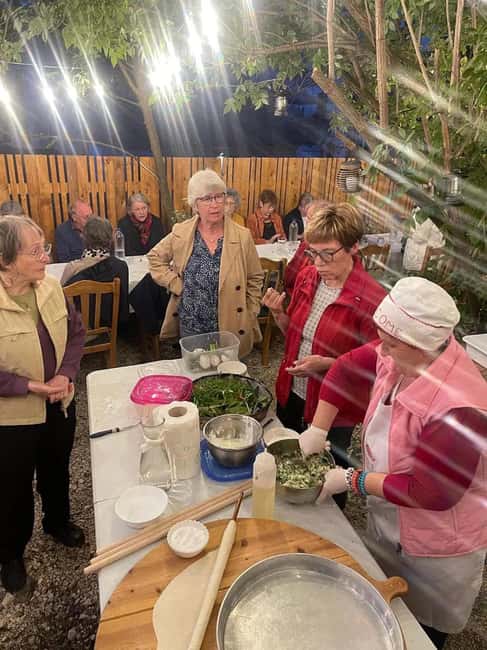
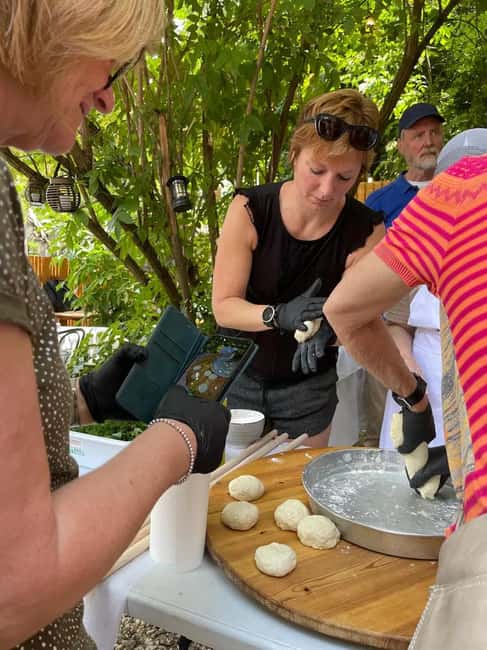
You can come to Gjirokastra for the views and the architecture, sure. But if you want a stronger souvenir, this cooking class turns the town itself into an edible experience. You start in the Old Bazaar area, where the streets and historic buildings set the tone, and then you jump straight into prep, cooking, and tasting like a house guest who actually gets to help.
The total time is about two hours, which keeps it energetic and doable. You are not signing up for a long food marathon, but you do get a full lunch out of it, with drinks. The class is offered by Kalemi Travel & Tours, with an instructor who can work in English, Italian, Greek, or Albanian, depending on your group.
The format is hands-on from the first moment, with you working alongside the host. You will be making qifqi and a slow lamb pasta dish called osa me mish qengji, plus a seasonal dessert. Because it is a small, focused class, the lesson feels personal, not like a factory line.
A few more Gjirokaster stone city trips:

Entering the Old Bazaar, a UNESCO World Heritage Setting
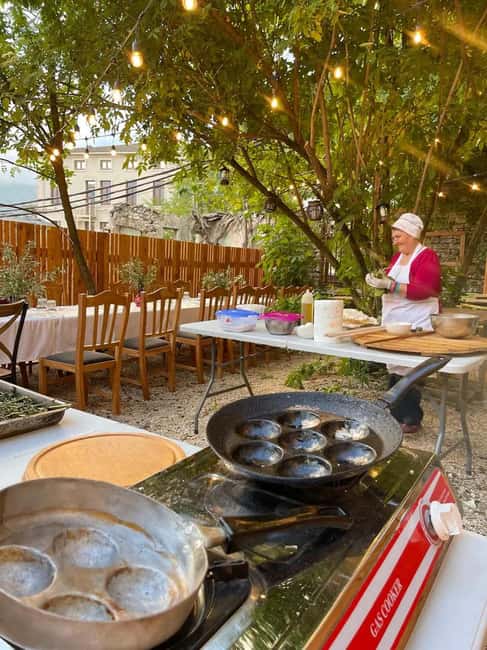
The location is a major part of why this feels special. You meet and cook in the Gjirokaster Old Bazaar area, described as a UNESCO World Heritage site, with the kind of stone-and-street atmosphere that makes you slow down and pay attention.
Why it matters: in a cooking class, the environment shapes your attention. When you are in a historic bazaar setting, you naturally look at smells, textures, and ingredients. You also feel less like you are “consuming an activity” and more like you are joining an ongoing local tradition.
You may cook in an old stone house or a family-run guesthouse within the bazaar area. That detail matters too. It is not a generic classroom. It is the kind of place where people have cooked for decades, and where food is part of hospitality, not just entertainment.
The Lesson Plan: Qifqi and Osa me Mish Qengji
This class is built around two iconic dishes, plus dessert. That is the smart way to learn, because you get repeat practice in different skills: shaping, seasoning, frying, and building a hearty main that uses slow-cooked lamb.
Qifqi, Herb-Flecked Rice Balls Fried in a Cast-Iron Mold
You learn to make qifqi, savory rice balls flavored with fresh herbs like mint and oregano, then fried using a traditional cast-iron mold that is tied to the region.
What you do:
- Mix and shape the rice into the familiar qifqi form
- Work with herb flavor so it tastes fresh, not flat
- Fry the qifqi so you get that satisfying outside texture
What you take away: qifqi teaches how southern Albanian cooking balances aroma and structure. The herbs do not just add smell, they build flavor through the whole bite. And the cast-iron mold matters because it shapes the final texture, not just the look.
Osa me mish qengji, Hand-Rolled Pasta with Slow Lamb
Next comes osa me mish qengji, a comforting, hearty dish of hand-rolled pasta topped with slow-cooked lamb and seasoned with local spices that reflect Albania’s mountainous terroir.
What you do:
- Roll and prepare the pasta
- Work with the lamb and spices so the flavors feel layered
- Understand the slow-cook idea, even if you are working faster in a class setting
Why this dish is such good teaching material: it shows you how people create depth without complicated steps. Slow cooking helps the lamb become tender, and the spices keep it from tasting heavy. For a home cook, it is a practical template you can recreate later.
A few more cooking classes in Gjirokaster:
- Cooking Class
★ 4.5 · 12 reviews - Vegetarian Cooking Class @Teta Marjeta
★ 5.0 · 11 reviews - Vegetarian cooking class in Gjirokastër
★ 5.0 · 1 review - Tirana: Traditional Cooking Class with Wine & Raki Tasting
★ 5.0 · 284 reviews
Herbs, Spices, and the Local Way of Preserving Flavor
The class does not treat spices like a random sprinkle. You will learn how local herbs and spices are used in ways connected to seasonality and preservation.
You might hear how herbs are dried, how blends are kept, and how that changes what ends up on the plate. In other words, you are not only learning a recipe. You are learning why the recipe makes sense in the real world.
This is especially relevant in Gjirokastra’s climate and food culture, where fresh ingredients and preserved pantry flavors often work together. Even if you cook at home where ingredients are easier to find, this knowledge helps you stop relying on one single flavor shortcut.
And yes, you get hands-on experience using locally sourced herbs and spices as part of your cooking process.
Seasonal Salad and Dessert, What Changes With the Season
The included meal includes more than just the mains. Along with the pasta with lamb and qifqi, you also prepare a season salad and then a seasonal Albanian dessert.
Dessert choice can vary by time of year and ingredient availability. It might be:
- Fruit compote with local honey and nuts
- Or a traditional sweet like sheqerpare
I like this approach because it mirrors how cooking works at home. When ingredients change, the menu changes. You are not locked into one dish no matter what the season is doing. That flexibility is useful for you if you want to recreate the meal later.
Also, dessert is where you see the contrast. Savory herb-forward qifqi and slow lamb pasta give you depth. Then the dessert brings sweetness and warmth, which makes the whole lunch feel balanced.
Eating Together With Tea or Raki, Not Just “Tasting”
Once your dishes are ready, you gather for a communal meal in a cozy, rustic setting, described as either an old stone house or a family-run guesthouse tucked within the bazaar. This is not a quick bite-and-run. It is built for conversation and for you to taste your work while things are still fresh.
You will enjoy your creations alongside drinks, with options like tea or raki. You might also have local wine, depending on what is set up with your host.
Why this part is valuable: food classes can turn into a “look what I made” performance. Here, the meal is structured around eating together. That gives you context for the cooking, how people talk while eating, and how hospitality works in practice.
It also helps you learn the dishes beyond instructions. When you taste qifqi right after frying, you understand what you were trying to achieve. When you taste the pasta with slow lamb, you understand what “seasoned with local spices” means on the tongue.
What You Take Home: Recipe Cards That Actually Help
The class includes written recipe cards for everything you prepared. For me, that is one of the best parts, because it turns the class into something you can repeat.
You will likely use them right away if you want to cook for friends later. Even if you do not cook everything exactly the same, the cards help you remember key steps, ingredient proportions, and how the dish is supposed to feel when done.
If you are the type who forgets details after a trip, this is a big advantage. Many experiences end when the meal ends. These cards give you a clear link from Gjirokastra back to your home kitchen.
Price and Value at $73 Per Person
At $73 per person for a two-hour experience, the value depends on what you want from the trip.
Here is the honest breakdown:
- You get a hands-on cooking class with a local expert
- You cook two main dishes (qifqi and osa me mish qengji)
- You also prepare and eat seasonal salad and dessert
- Drinks are included, with tea or raki
- You leave with recipe cards
If you compare that to eating out plus paying for a cooking workshop, it usually pencils out more evenly. You are paying for both the lesson and the full meal. And because the setting is the Old Bazaar area, you also get a sense of place that you would not get from a standard restaurant cooking demo.
Also, the duration is tight. Two hours means you are not losing a half day to logistics. For many visitors, that is part of the value.
Languages, Comfort, and Who This Class Fits Best
The instructor can offer instruction in English, Italian, Greek, or Albanian. That is a practical bonus in a region where not everyone has Albanian basics, and it also means you are more likely to understand the “why” behind techniques, not only the steps.
Now, a clear note: the class is not suitable for people with mobility impairments and it is not for wheelchair users. If mobility is an issue for you, this is one you should skip.
Who tends to love this class:
- You want real local cooking skills, not just tasting
- You like food with herbs and bold seasoning, not bland comfort food
- You want a cultural story with your lunch
- You want a small, more personal feel rather than a large group show
Who might not love it:
- If you only care about sightseeing and do not want to spend two hours cooking
- If you have limited mobility needs
My Take: Should You Book This Gjirokastra Cooking Class?
Yes, if you want a hands-on meal lesson that matches Gjirokastra’s food culture. The two-dish focus is smart, and the pairing of qifqi and osa me mish qengji gives you a good snapshot of southern Albanian flavors. I also like that you get recipe cards, because it makes the experience travel-ready in a practical way.
Book it especially if you enjoy cooking, or if you want to feel confident trying one or two dishes back home. The included lunch and drinks make the price feel less like a separate “activity fee” and more like a full experience.
Skip it if mobility is a concern, since the class is not designed for wheelchair access. And if you are looking for a long, slow tour with lots of stops, this is more focused and food-centered.
FAQ
How long is the cooking class in Gjirokastra?
The experience lasts about 2 hours.
Where does the cooking class take place?
It is in the Gjirokaster District, in the Old Bazaar area of Gjirokastra, described as a UNESCO World Heritage site.
What dishes will I learn to cook?
You will learn to prepare qifqi (savory rice balls with herbs) and osa me mish qengji (hand-rolled pasta with slow-cooked lamb). You also prepare a seasonal salad and a seasonal Albanian dessert.
Are drinks included with lunch?
Yes. Drinks are included, listed as tea or raki.
Will I get recipe cards to take home?
Yes. You receive written recipes for everything you prepared.
What languages are available for the instructor?
The instructor can teach in English, Italian, Greek, and Albanian.
Is the experience suitable for wheelchair users or mobility impairments?
No, it is not suitable for people with mobility impairments, and it is not for wheelchair users.
Can I cancel and get a full refund?
Yes. You can cancel up to 24 hours in advance for a full refund.
Added to Gjirokaster lately
- Vegetarian cooking class in Gjirokastër★ 5.0 · 1 review
- From Tirana: Gjirokastër Castle, Cold War Tunnel & Bazaar★ 5.0 · 1 review
- Dress as a Local in Gjirokaster★ 5.0 · 1 review
- South of Albania: 2-Day Adventure Tour★ 5.0 · 1 review
- Blue Eye & Gjirokaster: 4×4 Tour and Old Bazaar★ 5.0 · 3 reviews
- Gjirokastra Private Half-Day Walking Tour★ 5.0 · 3 reviews
- Gjirokaster Walking Tour★ 5.0 · 4 reviews
- Gjirokaster – The Stone City of UNESCO, Private Tour from Tirana★ 4.5 · 4 reviews
Gjirokaster Stone City & Zekate Trips, compared.
Lekursi Castle, Blue Eye, Gjirokaster, & More Tour
Read our review →
Daily Trip To:Blue Eye,Monastery,Gjirokaster&Lekursi Castle
Read our review →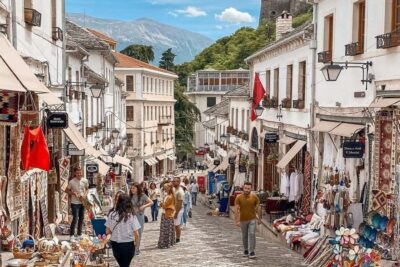

Gjirokastra- The Stone City & Blue Eye- The monument of Nature.
Read our review →
Day tour from Saranda/Ksamil:Gjirokaster +Blue Eye & Lekursi
Read our review →
Browse the lists this tour appears in