
Reviewed · BUNKERS & COMMUNIST-ERA TIRANA
Communism Dictatorship in Albania
Tirana has quiet lessons in fear. This 2-hour experience gives you a clear, on-the-ground look at Albania’s communist dictatorship, starting with a focused introduction in the National History Museum and then turning into a guided walking tour around Tirana. I especially liked how the story is laid out step by step, from the years around World War II through the harsh realities of prisons and political trials, and onward to the first democratic protests.
I also appreciated the human touch, especially the host Albert, who lived through the communist era and shared practical context as you go. He even points out where to eat afterward, which is handy when you want something filling and local without guesswork.
The main drawback is timing and weather. You need good conditions for a mostly outdoor walk, and the whole thing is short, so it is not meant to replace a longer, deeper study of Albania’s 20th century.
In This Review
- Key things to know before you go
- Albania’s communist years explained in plain, visual terms
- National History Museum first, because context comes before streets
- Walking through Tirana with a guide who brings real perspective
- The role of Albert and why it changes the tone
- Optional stop: Bunkart 2 and what a bunker teaches
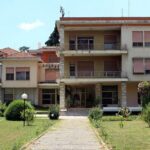
- Optional stop: Shtepia e Gjetheve and the logic of surveillance
- Price and value: what you get for $35.92
- Meeting point at Kulla e Sahatit: start smart, not stressed
- Time, language, and group logistics that actually affect your comfort
- Who should book this communism-focused Tirana tour
- Practical tips for a smooth 9:00 am start
- Should you book this Tirana communism dictatorship experience?
Key things to know before you go
- National History Museum orientation: You start with a large hall dedicated to Albania’s communist dictatorship, with themes from WWII-era origins to the democratic shift in the 1990s.
- Small group size (max 15): More room for questions, and less chaos than big group tours.
- Walking tour plus major Tirana sights: You get your bearings fast while you learn, then you move on at a sensible pace.
- Optional add-ons you may be able to visit: Bunkart 2 and the Museum of Secret Services Shtepia e Gjetheve can be part of the day.
- Good weather helps: The schedule assumes you will be able to walk comfortably outdoors.
A few more bunker and communist-era tours:


Albania’s communist years explained in plain, visual terms
Albania’s communist period can feel like a blur if you only read about it online. What makes this experience work is that it starts with a physical introduction in the National History Museum’s dedicated hall. You’re not left guessing about what to pay attention to, because the display content is organized around the country’s timeline and the machinery of control.
The overview covers how communism took shape after World War II, how the system fully installed itself, and what that meant for everyday life. You get clear themes like prisons, political judgments, and death penalties, plus the presence of bunkers. That matters because it shows communism not just as an ideology, but as a security system that shaped spaces, fear, and movement.
Then the story reaches the first democratic protests and the eventual installation of democracy in the 1990s. For me, that ending step is key. It keeps the tour from feeling like only a catalogue of misery. You also see how change actually begins, not just how it ends.
National History Museum first, because context comes before streets
Starting at the museum is smart. Tirana’s streets can look ordinary at first, so you need context before you start walking. The museum hall sets that context quickly, so your eyes start noticing the right things outside: government power, secrecy, and how the regime tried to control narratives.
One practical benefit is pace. You spend the early part learning the big picture, so the rest of the experience becomes easier. Instead of trying to connect dots later, you connect them as you go.
Also, the museum portion includes admission (it is listed as free as part of the itinerary). That is good value for a short, ticketed orientation, because museum time can otherwise get expensive in Europe when you start adding separate entries.
Walking through Tirana with a guide who brings real perspective
After the museum intro, you shift to a walking tour of Tirana’s main attractions. The exact stops can vary with the flow of the day and what is possible, but the goal is consistent: you get oriented in the city while your guide keeps tying what you see back to the communist-era story.
For me, the best part of a walking format is that you learn the city’s layout. You pick up reference points, you understand where areas connect, and you stop feeling like every street is a new puzzle. That’s especially helpful in Tirana, where a bit of orientation goes a long way.
The group stays small, with a maximum of 15 people. That size is ideal for a tour with heavy material, because you can ask questions without waiting forever. It also helps the guide manage pacing, so you do not get pushed through too fast.
The role of Albert and why it changes the tone
One review highlighted Albert as a host who lived through the communist era, and that detail makes a difference. When a guide has personal memory, the atmosphere changes from textbook to lived experience.
You can feel it in how explanations land. Even when the facts are historical, the guide’s choices about what to emphasize can be different. Instead of only describing policies, Albert can add the human scale, the everyday fear, and the reasoning behind why certain systems were built the way they were.
He also recommends places for lunch. That is not just a nice-to-have. After a topic like this, you often want a meal that is simple and satisfying, not a tourist gamble. Having a local recommendation can save time and money.
A few more Tirana tours and excursions:
- From Tirana: Bovilla Lake & Gamti Mountain Hiking Day Trip
★ 4.9 · 4,397 reviews - From Tirana: Bovilla Lake & Gamti Mountain Hiking Tour
★ 4.9 · 3,003 reviews - From Tirana: Bovilla Lake & Gamti Mountain Viewpoint Hike
★ 4.8 · 2,053 reviews - Tirana/Durres/Golem: Saranda, Ksamil, Blue Eye Day Trip
★ 4.8 · 1,584 reviews
Optional stop: Bunkart 2 and what a bunker teaches
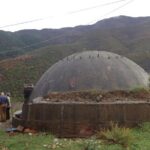
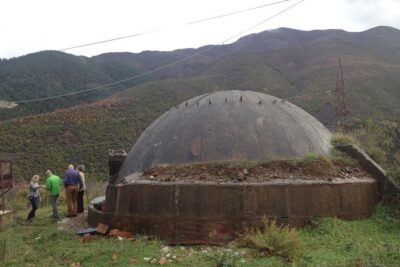
Bunkart 2 is one of the optional additions, and it fits the tour theme perfectly. Bunkers are not just architecture trivia. In a dictatorship setting, they represent planning for survival under siege, secrecy, and the belief that leaders could not trust the world they controlled.
If you can add Bunkart 2 on the day, plan for a more intense, closed-in feeling than the museum hall. Even if you are not into war history, the purpose here is interpretation. You learn how power adapts to fear, and how spaces can be designed for control and protection.
The main caution is time. Since the core experience is about 2 hours total, the optional parts depend on what fits comfortably. If you arrive with strong interest in bunkers and command spaces, I would treat the optional site as the priority add-on, and let the rest be secondary.
Optional stop: Shtepia e Gjetheve and the logic of surveillance
Another optional add-on is the Museum of Secret Services, called Shtepia e Gjetheve. This name alone hints at the kind of atmosphere you can expect: secrecy, cover, and the machinery of information.
What makes it valuable in the context of this tour is that it connects the museum’s themes to a more specific slice of the regime. If prisons and political judgments explain the consequences, secret services explain the cause: how the state gathered information, pressured people, and tried to stay ahead of resistance.
You might not see the entire picture in one visit, but you will likely leave with a sharper idea of how surveillance works as a system. It is not only about watching. It is also about shaping behavior, silencing disagreement, and making people self-censor.
Again, keep your eye on the time. Optional sites can be powerful, so you want enough energy left to absorb them without rushing.
Price and value: what you get for $35.92
The price is listed at $35.92 per person for around 2 hours, with a mobile ticket. For a short tour in Tirana that includes a local guide and museum admission being listed as free, it is not a bad deal.
Here is how I judge value for experiences like this:
- You are paying for a guided framework, not just movement around the city.
- You get a small-group setting, which usually means better interaction.
- The subject matter benefits from interpretation, because dates alone can turn into noise.
At the same time, it is worth setting expectations. This is not a full-day deep dive, and it does not replace longer museum time if you want to read everything slowly. It is a strong orientation and storytelling session, especially if you want to understand Albania’s communist years without taking a crash course on your own first.
Also note that this is booked about 58 days in advance on average. That suggests demand is real, and earlier planning helps you lock in a slot instead of hoping.
Meeting point at Kulla e Sahatit: start smart, not stressed
The tour meets at Kulla e Sahatit e Tiranës, Tirana, Albania. That starting point matters because it gives you a clear arrival target in the center area, and it makes it easier to plan transit.
Since it ends back at the meeting point, you can also build your day around it. You do not have to figure out a new location for the next activity. You can simply return, refuel, and continue exploring Tirana.
The start time is 9:00 am. Morning tours can be a gift for a topic like this, because you think better early and you often get comfortable walking conditions before the day warms up.
Time, language, and group logistics that actually affect your comfort
This tour includes a local guide in one of the major foreign languages, and it runs for about 2 hours. If you are deciding between options in Tirana, language fit is a big deal for heavy historical topics. You want clarity on terms like political judgments, death penalties, and the timeline through the 1990s.
The small group size, max 15 people, also changes your experience. You can ask questions. You can follow along without constantly turning to catch up. In short, it feels more human.
The good news is that it is near public transportation. That is practical, because Tirana is easiest when you can combine walking with quick connections.
You should also note the weather requirement. The experience requires good weather. That can affect whether optional walking portions feel comfortable, so I would dress with breathable layers and plan for sun or light rain, depending on the season.
Who should book this communism-focused Tirana tour
I think this tour is a good match if you want:
- A clear, guided entry into Albania’s communist dictatorship era.
- A walking orientation in Tirana that comes with context.
- A small-group format where you can ask questions.
It is also a smart pick if you like history that ties to real spaces. The museum hall gives you the framework, and the optional bunker or secret services museum can show how the system used buildings, secrecy, and fear.
You might want to look for another option if you need a very relaxed, light city stroll. This is not a casual “look and laugh” kind of tour. The content covers prisons, trials, death penalties, and dictatorship-era repression. It can be heavy even when the tour is well paced.
Practical tips for a smooth 9:00 am start
Here are a few things that help you enjoy this type of tour without friction:
- Arrive early enough to orient yourself at Kulla e Sahatit. A quick arrival buffer prevents stress before you start learning.
- Wear shoes you can walk in for a city center route. The itinerary includes walking, and you want comfort for the full 2 hours.
- Bring water. Even if it is not a long trek, museum time and walking add up.
- If you are interested in the optional Bunkart 2 or Shtepia e Gjetheve, be ready to decide on the day. Time constraints can limit what fits.
- Ask the guide about lunch after. Albert’s recommendations are the kind that save you time and help you eat like a local.
Also, confirmation happens within 48 hours of booking, depending on availability. If you are traveling with fixed plans, book early so you are not adjusting your schedule last minute.
Should you book this Tirana communism dictatorship experience?
Yes, if you want a compact, guided introduction to Albania’s communist years and you care about context while you move around Tirana. The museum start gives you a strong baseline, and the small-group walking format keeps it manageable. The potential add-ons, Bunkart 2 and Shtepia e Gjetheve, are especially worthwhile if you want more of the physical side of secrecy and control.
If you hate weather-dependent outdoor walking, or if you prefer very long museum sessions, you may find the 2-hour structure limiting. But for many visitors, this is a smart, well-priced way to understand a complicated era and get oriented in Tirana at the same time.
Added to Tirana lately
- Bike Tour Tirana with Local Guide in English or Czech★ 5.0 · 1 review
- Communist Winery: Tour, Tasting and Lunch★ 5.0 · 1 review
- N. Macedonia, Kosovo & Albania; Semi – Private Tour★ 5.0 · 1 review
- Pellumbas Cave Tour and Petrela Castle from Tirana★ 4.0 · 1 review
- From Tirana Krujë and Durrës Day Trip with Guide★ 5.0 · 1 review
- Blue Eye Spring, Ksamil and Gjirokaster Tour from Durres★ 5.0 · 1 review
- Private Day Trip to Berat from Tirana or Durres★ 5.0 · 1 review
- Private Tour in Albanian Riviera★ 5.0 · 1 review
Bunkers & Communist-Era Tirana, compared.
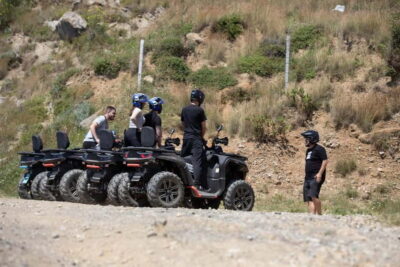
ATV Guided Tour in Kallm with Secret Bunker Visit
Read our review →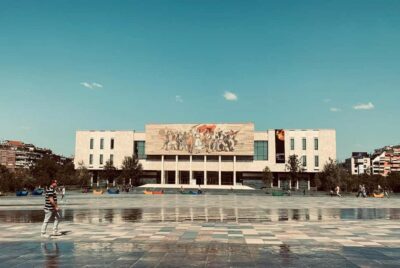
Tirana’s Communist Past; Small Group Walking Tour
Read our review →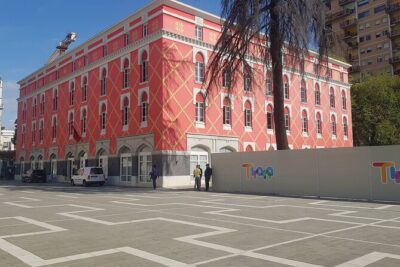
From Albania: Permet /Thermal Baths with Bunker Food Tasting
Read our review →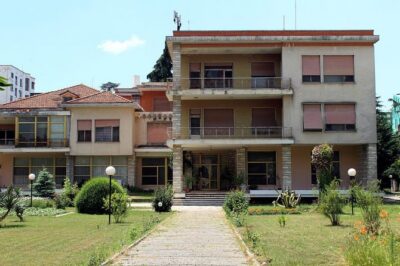
Full-Day Tour of Albania’s Bunkers and Beaches, from Tirana
Read our review →
Browse the lists this tour appears in