
Reviewed · BUTRINT ANCIENT CITY TOURS
Butrint-3000 Years of History Between the Lagoon and the Sea
Butrint grabs your attention fast. In a small-group 3-hour visit, I liked how the UNESCO park lets you walk from one era to the next without wasting time, and I loved having a professional guide explain what you are seeing, from the ancient theater to the Venetian fortifications.
One thing to know up front: the tour stays strictly inside Butrint, so if you want extra stops beyond the park, you will likely need to plan that separately. It also involves uneven ground, so comfortable shoes are not optional.
In This Review
- Key things I’d plan around
- Butrint’s main draw: clear ruins in a tight, 3-hour flow
- Getting from Vlorë County logistics to UNESCO walking comfort
- Ancient Greek theater: how to spot “performance” in stone
- Fortifications: defense, control, and changing priorities
- Roman Forum: why “civic space” feels different
- Byzantine Baptistery and the mosaic clues you can actually use
- Great Basilica: a major church site with visible layers
- Venetian towers: later defenses with different priorities
- Butrint Archaeological Museum: where broken pieces become meaningful
- Traditional Albanian food tasting: an included break that feels local
- Price and value: what $29 really buys you
- Who should book this Butrint tour, and who should skip it
- Guides and on-the-ground feel: punctual, clear, and easy to ask questions
- Should you book this Butrint tour?
Key things I’d plan around
- A tour focused only on Butrint: no detours, just a tight route through the main monuments
- Greek theater to Roman forum to Byzantine church elements: you see multiple civilizations in one walk
- The Archaeological Museum visit: artifacts help you connect the dots when the ruins are incomplete
- Small group size (up to 8): easier questions, less standing around, and a calmer pace
- Pickup in an air-conditioned minivan plus food tasting: the comfort and the taste come bundled in
A few more Butrint ancient city tours:

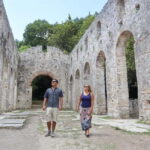
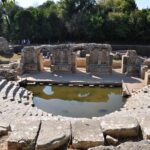
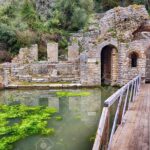

Butrint’s main draw: clear ruins in a tight, 3-hour flow
Butrint is one of those places where the setting does half the job for you. You’re between the lagoon and the sea, and that change in air, light, and background makes the ruins feel real, not just photographed. When you only have a short time in southern Albania, this tour is designed for that reality: you get a focused route, not a vague “see what you see” day.
What I like most is how the experience is built around reading the site. The guide doesn’t just point at stone and move on. You learn what each part used to do, who used it, and how later builders reused, reshaped, or fortified earlier structures. That structure matters, because Butrint is large, and without context it’s easy to leave with a lot of photos and not much understanding.
The other big plus is the sense that you are in good hands from start to finish. The tour is handled by a specialized operator and run for a small group (limited to 8). That usually means fewer bottlenecks at the main sights and more time to ask questions while you are standing where the history happened.
Getting from Vlorë County logistics to UNESCO walking comfort
The tour starts with pickup from your hotel and transport in an air-conditioned minivan. For a 3-hour experience, that matters. You spend less time coordinating rides and more time actually inside the park, where the walking is the real work.
Timing is also simple. The duration is listed as 3 hours, and starting times depend on availability. If you are pairing this with other stops in the Sarandë area, treat it like a half-day anchor. It’s short enough to fit, but long enough that the guide can connect the different layers of Butrint without rushing.
Small-group touring is a hidden quality upgrade here. With fewer people, the guide can keep everyone oriented and adjust the pace when the ground turns uneven or the path bottlenecks near major sights. (But yes, the park involves walking on uneven surfaces, so plan for that.)
Ancient Greek theater: how to spot “performance” in stone
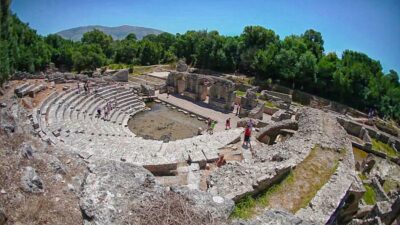
The route usually begins with Butrint’s most recognizable Greek landmark, the ancient theater. Even if you know nothing about Greek architecture, you can still learn how to “read” a theater quickly: seating tiers, the shape of the space, and the way the site uses its slope.
What makes the theater stop valuable is the way the guide explains function. You’re not only looking at an old building. You’re understanding what the space was for and why it was placed where it was. When you connect geometry to human use, the ruins stop being abstract.
You will also want to slow down for photos, because the theater has great sightlines back toward the surrounding waters and grounds. The guide’s explanation helps you get your bearings fast, so your pictures feel like part of a story instead of a random checklist.
Fortifications: defense, control, and changing priorities
From the theater, you move into the fortifications area. This is where Butrint becomes more than “ancient Greece.” Fortifications tell you about insecurity, trade routes, power shifts, and the need to control who can enter and exit.
The value of a guide here is practical. Fort walls can look similar at first glance, especially when the stones are worn and angles are awkward. With the guide’s architectural explanations, you start noticing details that help you understand how protection was planned and where movement would have been possible.
Also, the walking between points is part of the experience. The ground can be uneven, and you may step over stones and roots. Keep your shoe choice comfortable. If you try to do this in fashion sneakers, you’ll regret it by the second stop.
A few more history tours in Saranda:
- Ancient City of Butrint, UNESCO World Heritage site – A Must
★ 4.5 · 27 reviews - Blue Eye And Lekuresi Castle, 4 Hour Nature and Historical Tour
★ 5.0 · 12 reviews - Blue Eye and Gjirokaster, Half Day Nature & Historical Tour
★ 5.0 · 12 reviews - Butrint – 3,000 Years of History Between the Lagoon and the Sea
★ 5.0 · 1 review
Roman Forum: why “civic space” feels different
Next up is the Roman Forum. This shift matters because it changes the vibe from entertainment to administration and public life. You can think of the forum as the city’s stage for civic order: people, commerce, and decision-making.
I like how a guided explanation turns forum ruins into something understandable, especially when you see what parts are still aligned and what parts are missing. Roman urban planning is often about symmetry and sightlines, and the guide helps you spot what is still legible.
Even when columns and walls are partial, the forum area helps you imagine the rhythms of daily life. It’s a reminder that Butrint wasn’t frozen in time, it kept evolving as authorities and needs changed.
Byzantine Baptistery and the mosaic clues you can actually use
One of the most rewarding stops on the route is the Byzantine Baptistery, known for its mosaic decoration. Mosaics are not just pretty patterns. They are visual communication. They can signal religious meaning, artistic style, and who had the resources to build or restore these spaces.
The guide’s architectural and historical explanations help you notice things that you might miss on your own, like how mosaic surfaces were used and why this type of decoration mattered in a religious context. When you stand there with the explanation, you can better appreciate the effort it took to create and maintain such details.
This stop also works well for photos, but don’t treat it like a quick glance. Mosaics reward time, because patterns and stonework often show variation up close. Bring a camera if you care about detail, since the structures are designed to be looked at from multiple angles.
Great Basilica: a major church site with visible layers
After the baptistery, the Great Basilica is the next key monument. This is where Butrint’s Christian era takes center stage in physical form. Basilicas are large and functional, built to gather crowds, conduct ceremonies, and project religious authority.
What makes the basilica stop especially good on a 3-hour schedule is that it helps you connect earlier stops to later use. If the theater felt like public life and the forum felt like civic life, the basilica helps explain the spiritual center of the city as it developed.
Even if parts are damaged or incomplete, you can still understand the big picture: this was a central institution. The guide’s interpretation helps you see not just the structure, but its place in the city’s evolution.
Venetian towers: later defenses with different priorities
The Venetian towers add another layer to the story, and they also change the mood. Venice is often associated with trade and maritime power, so seeing a fortified element here helps you connect Butrint to the wider influence of sea-connected empires.
This stop is a great reality check. It confirms that Butrint was never a single moment in time. It was repeatedly used, strengthened, and reworked based on what was happening regionally.
If you like architecture, pay attention to how these structures relate to the surrounding walkways and defensive layout. A good guide will point out what those connections mean for movement, control, and visibility across the area.
Butrint Archaeological Museum: where broken pieces become meaningful
The tour includes the Butrint Archaeological Museum, and I think this is the smart move that many short visits skip. Ruins are powerful, but they are also incomplete. A museum helps you see artifacts that give scale and clarity to what you’re standing beside.
Even with limited time, this museum visit is useful because it helps you match what the guide is saying to physical objects. It’s also where you can get a sense of the people behind the stone, even if only through what survives.
For many visitors, this is the point where the day clicks. You stop just sightseeing and start understanding how archaeologists interpret layers of occupation. If you like to bring your visit home in your head, not just on your phone, the museum is a big part of the payoff.
Traditional Albanian food tasting: an included break that feels local
An included traditional Albanian food tasting rounds out the experience. It’s not a huge meal, but it serves a purpose: it gives you a pause after walking and helps you shift from ruins mode to everyday life mode.
I like the fact that it is included. When a tour tries to separate culture into “history only,” you end up leaving feeling educated but not really connected. A small food tasting is an easy way to round out the day without stretching it to another half day.
Keep in mind this tasting is part of the planned 3-hour rhythm. So if you have big lunch plans right after, allow a little room in your schedule.
Price and value: what $29 really buys you
The price is $29 per person, and the Butrint park entrance ticket is not included (listed at 10€). On paper, that looks like two costs, but in value terms it makes sense.
You are paying for:
- transport by air-conditioned minivan
- a professional guide focused exclusively on Butrint
- the museum visit
- the traditional Albanian food tasting
- a small group setup limited to 8
If you tried to DIY this with a random guide and public transport, you would likely spend time coordinating, and you would lose the tight route that makes a 3-hour experience feel complete. Here, the specialized focus is the value driver. You don’t waste half a day “getting around,” and you don’t end up with a loose tour where you miss the most important structures.
So the real question is not just cost, it’s time and attention. If Butrint is one of your top priorities, this package is built to make your hours count.
Who should book this Butrint tour, and who should skip it
This tour fits best if you want a guided, structured visit to the Butrint Archaeological Park and you have limited time. Because the tour is small and the site is uneven, it’s best for visitors who can comfortably walk over rough ground.
It is not suitable for people with mobility impairments or young children, based on the walking conditions. If that applies to your group, consider planning a different style of visit or asking about alternatives, but don’t assume this one will work.
It also suits history lovers who like the big sequence: Greek theater, Roman civic spaces, Byzantine religious elements, and Venetian fortifications. If you prefer a slow wander with tons of free time, you might feel the 3-hour limit. One practical consideration: some people suggest the visit could be longer or paired with nearby attractions, but this tour’s strength is its focus on Butrint itself.
Guides and on-the-ground feel: punctual, clear, and easy to ask questions
The guides associated with this operator, including names like Lediana, Ermal, and Diora, show up in the experience with a consistent style: clear explanations and attentive handling of the group. In real terms, that usually means you spend less time guessing what you are looking at.
Punctual pickup is also part of the quality feel. You get collected on time and taken into the park without a messy start. And if your tour includes a little extra comfort on the ride, like water or drinks, it helps you stay focused once the walking begins.
That combination of punctuality, clarity, and small group size is exactly what you want when the site is large and the time is short.
Should you book this Butrint tour?
I’d book it if Butrint is on your must-see list and you want a tight, high-value UNESCO visit with a guide who explains how the Greek, Roman, Byzantine, and Venetian pieces connect. The included museum time and the traditional Albanian food tasting make the 3-hour format feel complete, not chopped.
I’d think twice if you want a longer meander or you’re hoping the day will include other nearby attractions beyond Butrint. In that case, you can still use this tour as your core plan, then add an extra stop yourself afterward.
If you go, pack comfortable shoes, sunscreen, and water, and give yourself the mental reward of learning what each ruin used to do. Butrint works best when you walk it with the story in your head.
Added to Saranda lately
- Visit the city of Konispol★ 5.0 · 1 review
- Visit the Mosque of Gjin Aleksi and the Islamic Complex of Xhermehalla★ 5.0 · 1 review
- Sarandë: Destinations of North of Saranda Boat Trip★ 1.0 · 1 review
- Lekuresi Castle,Blue Eye,Ancient City of Butrint and Ksamil★ 5.0 · 1 review
- Half-Day Sightseeing Tour to Gjirokastra and Blue Eye★ 5.0 · 1 review
- Visit The Ancient City of Butrint★ 5.0 · 1 review
- Ancient Butrint and Gjirokaster Ottoman City★ 5.0 · 1 review
- Private Albanian Riviera Highlights Tour★ 5.0 · 1 review
Butrint Ancient City Tours, compared.
Day Trip to Saranda and Butrint National Park from Corfu
Read our review →
Best of Saranda: Blue Eye, Butrint, Ksamil & Lekuresi Castle
Read our review →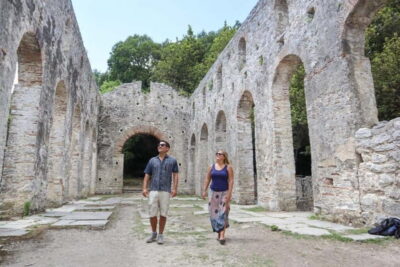
Butrint, Blue Eye, Ksamil and Lekuresi Castle Tour
Read our review →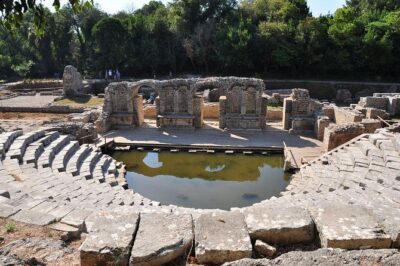
Butrint, Ksamil, Blue Eye, Lekuresi Castle. All-in-one daytrip.
Read our review →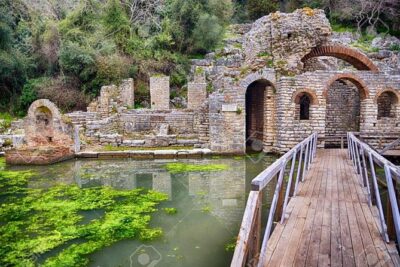
Butrint, Blue Eye, Ksamil and Lekuresi Castle Tour From Saranda
Read our review →
Butrint, Ksamil, Blue Eye and Lekuresi Castle Tour
Read our review →
Tour to Butrint Antic City/Blue Eye Spring/Lekursi Castle
Read our review →
Private Day Tour of Saranda Gjirokaster and Butrint from Tirana
Read our review →Browse the lists this tour appears in