
Reviewed · SELF-GUIDED TOURS
Tirana Self-Guided Audio Tour
Ten stops, zero crowds, your pace. This Tirana self-guided audio tour lets you move through Albania’s capital on a loose plan, with audio at each major sight so you can pause, skip, and revisit without dealing with a group schedule.
I like that the route is built for real wandering, not checklists. You get one playlist covering 10 attractions, plus a map where every point links to its own audio, so the city feels navigable even if you are doing this solo.
One thing to consider: it is self-guided, so you need working headphones/earphones and internet on your phone, and some entries may cost extra since not everything is included.
In This Review
- Quick hits before you go
- Skanderbeg Square: where Tirana’s timeline starts
- Skanderbeg Statue: the hero story behind the pose
- The Clock Tower: 1822 to today, in one skyline marker
- Muzeu Historik Kombetar: plan for time inside
- Orthodox Autocephalous Church of Albania: faith, then renewal
- Reja, The Cloud: modern Albania in glass and grids
- Rinia Park: politics, play, and people
- Enver Hoxha Pyramid: a controversial symbol with a story
- Tanners’ Bridge: the old market heart in stone
- Grand Park, Parku i Madh: nature and control in one place
- How to run the tour smoothly on your phone
- Value for money: $9 and what you actually get
- Who this tour fits best
- Small on-site strategy for each kind of stop
- FAQ
- FAQ
- How long does the Tirana self-guided audio tour take?
- What is included in the $9 price?
- Are admission tickets included for all stops?
- Where do I start the tour?
- How do I access the audio guides?
- Do I need headphones?
- Do I need internet on my phone?
- Can I change the audio language after booking?
- Is transportation included in the tour?
- Is this tour refundable if I cancel?
- Should you book it?
Quick hits before you go
- 10 attraction stops built around Tirana’s Ottoman-era layers, communist-era power sites, and newer architecture
- Two access links by email, one for SoundCloud audio and one for a Google My Maps route
- Free entry at several stops, while a few key museums or modern sites may require tickets you buy on the spot
- Language choice when booking, with a backup option if your language is not listed (48+ hours before)
- Validity up to 6 days, so you can stretch it over a half-day or take a second pass
A few more self-guided walks in Tirana:



Skanderbeg Square: where Tirana’s timeline starts
You begin at the heart of modern Tirana: Skanderbeg Square. The audio focuses on a big theme, how the same open space has shifted roles over time, from an Ottoman marketplace to the epicenter of communist power. Standing in a wide pedestrian square, this kind of story makes the space feel less generic.
What I like here is how the narration sets up the rest of your walk. It gives you the idea that Tirana is not one era on top of another, it is multiple eras competing for the same ground. That helps when you later hit monuments and museums, because you will know what to look for, not just what to see.
Practical tip: because the square is a main gathering spot, expect it to feel busy at times. The good part is your audio gives you a reason to slow down for about 20 minutes, and then move on when you want.
Skanderbeg Statue: the hero story behind the pose
Next is the Skanderbeg Statue, the horseback figure that instantly anchors the area. The audio zeroes in on the story behind Albania’s hero, including the detail that he resisted the Ottoman Empire for 25 years.
This is a stop where listening changes the photo. Without context, you might just see a statue. With the audio, you start noticing how public monuments are meant to teach, even when you are standing still for only about 20 minutes.
If you are in a hurry, you can keep this short. If you like political history, you can linger and replay parts of the audio while you look at the monument from different angles.
The Clock Tower: 1822 to today, in one skyline marker
The Clock Tower rises about 35 meters above the rooftops, and the narration spans its long life. You get the key dates and the survival story, including that it was built in 1822 and made it through wars and earthquakes.
This stop is useful for your navigation too. Once you have the tower in your mind, many parts of central Tirana become easier to orient around, because you have a fixed vertical reference.
Timing note: the tower’s audio is designed for roughly 20 minutes. If you want to cut costs on entry fees, this one may still be a cheaper stop since your audio plan is the main “ticket” for the experience. Just confirm anything on-site, since entry is listed as not included.
Muzeu Historik Kombetar: plan for time inside
At the Muzeu Historik Kombetar, the audio turns your visit into a guided walk, starting from the mosaic facade that depicts Albanian history. The narration frames the museum as a broad treasure trove, reaching back through Illyrian and Roma eras, plus more periods beyond that.
This is one of the few stops that can seriously change how long your whole day feels. Because the audio time is only about 20 minutes, you might finish the guided portion and then keep wandering on your own, or you might stop after the audio and save your energy for the street.
Price/value check: entry here is not included, so you may pay extra. I still think it is worth it, because Tirana can feel like a city of outdoor symbols unless you go indoors and see artifacts or displays. If you prefer outdoor history only, you can listen to this stop from the outside and skip the interior if needed, but the audio is built for a museum visit.
Not sold yet? More of Tirana to sift through:
- From Tirana: Bovilla Lake & Gamti Mountain Hiking Day Trip
★ 4.9 · 4,397 reviews - From Tirana: Bovilla Lake & Gamti Mountain Hiking Tour
★ 4.9 · 3,003 reviews - From Tirana: Bovilla Lake & Gamti Mountain Viewpoint Hike
★ 4.8 · 2,053 reviews - Tirana/Durres/Golem: Saranda, Ksamil, Blue Eye Day Trip
★ 4.8 · 1,584 reviews
Orthodox Autocephalous Church of Albania: faith, then renewal
The Orthodox Autocephalous Church of Albania adds a different kind of story to your route. The audio explains the journey of Albanian Orthodoxy from near extinction to renewal, including persecution and the eventual spiritual comeback.
I like this stop because it avoids making Tirana feel like only politics and concrete. Even if you are not a religious traveler, the story helps you understand why buildings and rituals matter, and why a community rebuilds itself over generations.
It is listed with free admission, so this is one of the stops where you can treat the audio as the main cost. Still, allow the full 20 minutes, because listening is the point here, not just passing by.
Reja, The Cloud: modern Albania in glass and grids
Then you hit Reja, The Cloud, a modern architectural landmark that juts into Tirana’s skyline. The audio frames it as a symbol of Albania’s movement out of isolation and toward a modern European future.
This stop helps your mental picture because it forces you to connect the past you just heard with the present you are standing in. It is easy to treat modern buildings as just background. Here, the narration tells you to look at the architecture as a public message.
Admission is not included, so check what you can access without paying extra. The good news is that this is still a short audio stop, about 20 minutes, so you are not stuck committing half a day if entry costs are higher than you expected.
Rinia Park: politics, play, and people
Next comes Rinia Park, where the audio shifts from monuments to everyday urban life. The narration covers how the park has served multiple roles, including political symbolism, social gathering, and urban transformation.
This is the kind of stop that makes a self-guided tour feel real. You are not just consuming history, you are watching how people use a space. Even if you only listen briefly, the audio gives you a lens for what you are seeing right now.
Also, parks are your break time. If you are doing the whole route in one go, this is a good place to sit for a few minutes and reset before the last big monument stops.
Enver Hoxha Pyramid: a controversial symbol with a story
The Enver Hoxha Pyramid is one of Tirana’s most striking, and most loaded, sights. The audio is built around the complex political legacy of Albania’s leader, and it flags this as a Europe-wide curiosity.
I appreciate that the audio acknowledges controversy through topic choice. It is not just a photo opportunity, it is a prompt to ask why a monument like this gets built, how it gets treated over time, and what it says about power.
Admission is listed as free, so at least the audio and basic access do not require an extra entry fee. Still, treat the audio carefully and give yourself time to listen fully, because this one is about meaning, not just form.
Tanners’ Bridge: the old market heart in stone
Crossing Tanners’ Bridge is where the tour turns from big monuments to older street-level commerce. The audio describes it as an Ottoman-era stone bridge tied to medieval Tirana’s commercial heart, including leather craftsmen and market life.
The best part of this stop is how it anchors history in ordinary work. Political leaders may get statues, but daily trades build cities. When the narration connects the bridge to that kind of labor, your walk starts to feel more grounded.
Admission is free here, which is great value. If you are tired of museums and monuments, this bridge stop can feel like the most “human” moment of the route.
Grand Park, Parku i Madh: nature and control in one place
Finally, the route reaches Grand Park (Parku i Madh), stretching across 289 hectares of natural beauty. The audio frames the park as more than a place to relax, it also connects nature, recreation, and political control through time.
This is a strong closing stop because it lets you end with breathing space. You have spent the day moving between symbols of power, faith, and identity. A big park helps you come out of that mental mode.
Admission is listed as not included, so if you expect it to be purely open grounds, you might still find areas where you pay. The audio time is short, about 20 minutes, but you can always take longer if you want a more satisfying finish.
How to run the tour smoothly on your phone
This is a self-guided audio experience, so your success depends on basic tech habits. Here is how I would set it up so it feels effortless instead of fussy.
First, when you book, you receive confirmation and then, on your selected date, an email arrives before your starting time. That email gives you two links: one SoundCloud-style secure link for the audio guides and one Google My Maps link for your route.
Second, bring headphones or earphones and make sure your phone is charged. The tour plan assumes internet access, and you do not want to get stuck with silent stops while you are in the middle of Skanderbeg Square.
Finally, use the map to get oriented. Each stop on the map corresponds to that attraction’s audio. That means you are not hunting for the right track name in a playlist. You click the stop point, listen, then move.
Value for money: $9 and what you actually get
At $9 per person, this tour is priced like a budget-friendly museum ticket, but it includes far more than one building. You get an audio experience designed for 10 attractions, with enough structure to keep you moving but enough flexibility to adapt.
Why that matters: Tirana is small enough that you can walk between many central sights, and a self-guided approach suits that. A guided group tour can waste time on waiting or on listening to stories you already know. Here, you control what gets your full attention.
A balanced reality check: entry costs are not included for some stops, including the museum and a few other key locations. So your final cost depends on what you choose to enter. But even if you pay for one or two sites, you are still likely doing better than paying for a full paid guided tour across multiple attractions.
If you are traveling with friends, this can be a fun shared day because each person can listen at their own pace. Your group stays together, but you are not forced into the same speed.
Who this tour fits best
This works especially well if you:
- Like history explained while you walk, not just read
- Want a structured route without a rigid schedule
- Prefer skipping or shortening stops that do not interest you
- Travel solo or with a small group and want privacy
It may be less ideal if you:
- Hate audio tours or find them distracting
- Do not plan to use internet on your phone
- Want a live guide to answer questions on the spot
Also note that this is listed as a private activity, meaning only your group participates. That is a nice bonus for couples or small groups who want space without sharing your day with strangers.
Small on-site strategy for each kind of stop
A self-guided tour is like cooking, you still need a little technique. Here are a few simple tactics based on what this route includes.
For squares and statues (Skanderbeg Square, Skanderbeg Statue), I recommend you start the audio as soon as you arrive and take a slow lap around the main viewpoint before you finish listening. You will catch details you miss when you stand still the whole time.
For the museum stop (Muzeu Historik Kombetar), I suggest you decide your goal before you enter: do you want to cover the audio and leave, or do you want to treat the museum as a longer visit? The audio is only one part of what you could do, but it is designed to guide your attention.
For modern and controversial sites (Reja, Enver Hoxha Pyramid), I like listening first and then taking photos. That way, your picture has a story behind it, not just a shape.
For park time (Rinia Park, Grand Park), keep the audio as the frame, but let the space control the pace. Stop for a drink, sit for a few minutes, and then press play again if you want the last part of the story.
FAQ
FAQ
How long does the Tirana self-guided audio tour take?
The duration is listed as about 3 to 9 hours, depending on how long you spend at each stop.
What is included in the $9 price?
You get private access links to the audio guide playlist for 10 attractions and an itinerary map with audio linked to each stop. Access is valid up to 6 days.
Are admission tickets included for all stops?
No. Some stops are listed as free, while others show admission tickets as not included. You should expect to pay entry fees where required.
Where do I start the tour?
Because it is self-guided, you can choose your starting point and ending point in Tirana based on your convenience.
How do I access the audio guides?
On your selected date of travel, before your starting time, you receive an email with access links. The audio uses a secure SoundCloud web link and the map uses a secure Google My Maps link.
Do I need headphones?
Yes. The tour notes that you should bring headphones or earphones for listening.
Do I need internet on my phone?
Yes. The tour instructions say you need internet access to use the audio and map links.
Can I change the audio language after booking?
Language selection cannot be changed after confirmation. If your language is not available, you can contact 48+ hours in advance so they can prepare it specially.
Is transportation included in the tour?
No. Transportations, including pick-up and drop-off, are not included.
Is this tour refundable if I cancel?
No. It is listed as non-refundable and cannot be changed for any reason.
Should you book it?
I would book this if you want a flexible way to connect Tirana’s main landmarks into one story, without paying for a live guide or getting stuck in a group tempo. The best part is the structure: 10 stops, short audio segments, and a map that keeps you oriented.
Book it with a few realistic expectations. You are doing the city legwork yourself, and some sites may charge entry. If you are comfortable using a phone for audio and navigation, this is a strong value way to explore the capital, from Skanderbeg Square to Parku i Madh.
Added to Tirana lately
- Kosovo, Prizren Day Trip from Tirana★ 3.0 · 1 review
- Semi-Private Hiking Tour; Theth,Valbona&Koman Lake in 3 Days★ 5.0 · 1 review
- Private 1 Day Berat Tour from Tirana★ 5.0 · 1 review
- Private 3 Days Adventure in Albania and Gjirokaster County★ 5.0 · 1 review
- From Tirana: Ksamil Islands, Saranda, & Blue Eye Day Trip★ 5.0 · 1 review
- Tirana Airport Private Transfer To City★ 5.0 · 1 review
- Architectural Walking Tour Discovering Tirana’s Modern Identity★ 5.0 · 1 review
- From Shkoder: 3-Day Valbona to Theth Hike Tour All Inclusive★ 5.0 · 1 review
Self-Guided Tours, compared.
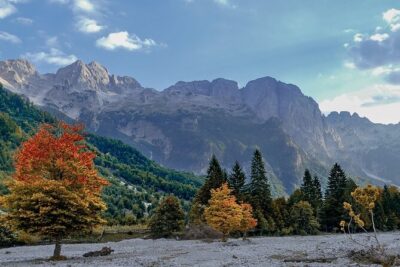
Self-Guided Hiking Tour: Theth, Valbona & Koman Lake in 3 Days
Read our review →
Self-Guided Hiking Tour: Theth, Valbona & Koman Lake in 5 days
Read our review →
Bike or E-Bike rental Tirana a Self Guided Bike Tour
Read our review →
Valbona to Theth Hike (Self-Guided) Transport & Map
Read our review →
Self-Guided Tour: Theth, Valbona, Koman Lake in 4 Days
Read our review →Self-Guided Tour: Theth, Valbona & Koman Lake in 4 Days
Read our review →
Bike or E -Bike Self Guided Tour & Rental from Old Bazar
Read our review →
Browse the lists this tour appears in