Reviewed · TIRANA TOURS & EXCURSIONS
Full Balkan Experiece: A 10 Day Tour
One trip, five countries, and a lot of awe. This full Balkan route stitches together castles, churches, and waterfront towns, starting in Tirana and ending in Sarajevo. I like the comfortable daily pace with professional English guidance, and I also like the “big sights” plan that still leaves breathing room for wandering in key old towns. The one thing to consider is how fast the days move between stops, so comfortable shoes and patience for long drives will matter.
You also get real value from the structure. Nine nights in 3-4 star hotels near the center, breakfast most days, and fully guided touring each day keeps logistics simple. With a maximum group size of 15, you avoid the huge-bus feeling and your guide can actually explain what you are seeing, not just point and move on.
In This Review
- Key highlights worth your attention
- What makes this 10-day Balkan route feel so good
- Day 1 in Berat: castle hill, Mangalemi, and wine tasting
- Day 2 to Ohrid: Saint Naum, lake views, and fresco time
- Day 3 to Skopje: Matka Canyon boat tour and Macedonia Square
- Day 4 through Prizren in Kosovo: Gazimestan and fortress views
- Day 5 to Shkodra: Rozafa Castle and Lake Shkodra lunch views
- Day 6 by boat on the Shala River: the Albania Fjords day
- Day 7 to Montenegro: Budva old town, Sveti Stefan, and Kotor fortress
- Day 8 in Dubrovnik: Trebinje stop, Old Town circuit, and Mount Srdj cable car
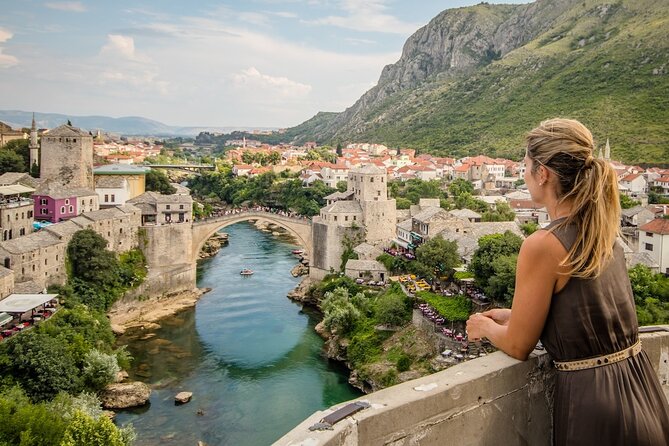
- Day 9 to Mostar: Kravica waterfall, Old Bridge, and Ottoman streets
- Day 10 Sarajevo: Gazi Husrev-beg, Latin Bridge, and World War I context
- Touring pace, group size, and how not to feel rushed
- Hotels, breakfast, and what the lunch stops mean for your budget
- Transport, pickup, and how easy the logistics feel
- Price and value: what you are really paying for
- Who should book this (and who might not love it)
- Should you book Full Balkan Experience: A 10 Day Tour?
- FAQ
- Is pickup included, and when does the tour leader arrive?
- What time does the tour start each day?
- How many travelers are on the tour?
- What is included in the price?
- Are meals like lunch included?
- Is cancellation possible for a refund?
Key highlights worth your attention
- Guided storytelling from Anest: the tour’s 5-star review praised the friendly guide and the way local context brings sites to life.
- Castle and fortress views almost every day: Berat’s castle hill, Ohrid’s fortress area, and Kotor’s fortress are all built for looking out over the bay or lake.
- Water-based scenery on multiple days: the Shala River boat trip and Matka Canyon boat ride give you a break from walking tours.
- Ohrid and Dubrovnik for the “wow” factor: St. Sophia’s frescoes in Ohrid and the Dubrovnik Old Town circuit are the kind of stops that feel worth the whole trip.
- A finishing combo in Bosnia: Mostar’s Old Bridge and Sarajevo’s Latin Bridge make the last days hit hard, historically and visually.
A few more Tirana tours and excursions:
What makes this 10-day Balkan route feel so good
This tour works because it balances variety with organization. You see different layers of the region, from Ottoman-era old towns to fortress ruins and lakeside monasteries, without needing to plan day-to-day. The route is also built around classic geography: lakes first, then Adriatic coast towns, then inland Bosnia.
I like that the schedule includes both guided time and free time. Guided walks help you understand what you are standing in front of, and the free hours let you slow down, snack, and pick your own side streets. That is where these places start to feel personal instead of like a checklist.
The small-group limit helps too. With up to 15 travelers, you tend to move together, but you are not stuck waiting forever in a giant crowd. Add in an English-speaking professional guide each day and the experience stays coherent, even when you are hopping countries.
Day 1 in Berat: castle hill, Mangalemi, and wine tasting
Berat is one of those towns that looks artistic even before you climb anywhere. The day starts in Tirana, then you stop in Belsh to grab coffee by one of its 84 lakes. It is a small moment, but it sets the tone, the region is never only about buildings.
Once you reach Berat, you walk up to the castle hill for a guided look at the ancient city’s story. Then you head for lunch with views over the old town, which is exactly what you want after the morning drive. After eating, you tour the Mangalemi neighborhood, including the city gate, Pasha’s residence, Sultan’s Mosque, and Gorica Bridge.
The day ends with something practical and fun: a local wine tasting. It is a calm closer to a full first day, and it helps you connect what you saw on the ground with how people live nearby.
Day 2 to Ohrid: Saint Naum, lake views, and fresco time
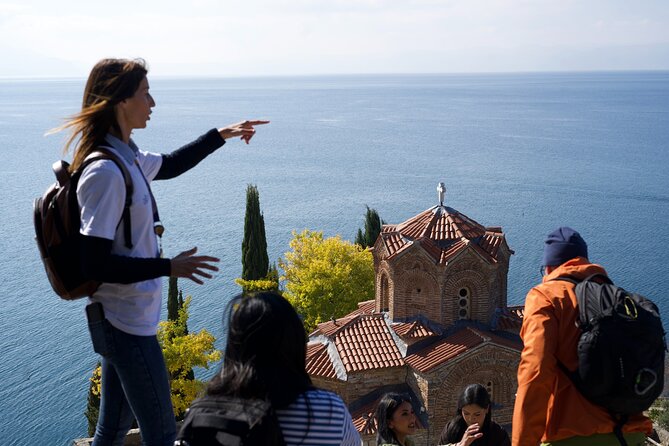
Getting from Berat to Ohrid takes a chunk of the day, but the route follows the lake much of the way. That means the long drive does not feel like pure sitting. When you arrive, you start with Saint Naum, a monastery site described as about 1000 years old, with views over the water.
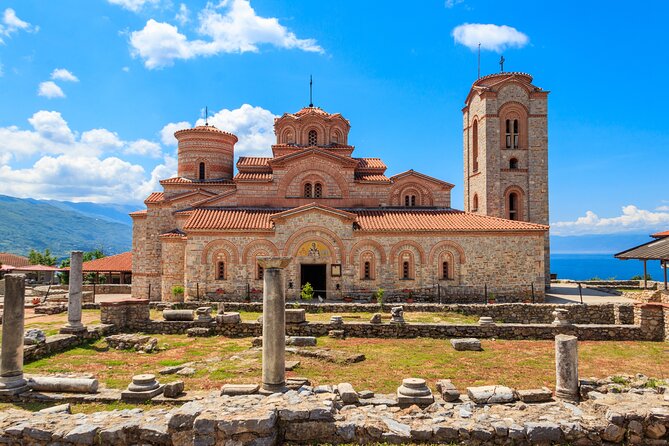
Ohrid is where the tour leans into “major sights.” You see Tsar Samuel’s Fortress area, the Ancient Theatre, and the Church of St. Sophia. The frescoes inside are the standout detail on the plan, and they are the kind of interior sight that rewards having someone explain what you are looking at.
Later you spend time in the Old Bazaar for souvenirs and local shopping, including mosques as you move through the area. Then you settle in for the night, which helps Ohrid feel less like a dash-through stop and more like a real place you visited.
Day 3 to Skopje: Matka Canyon boat tour and Macedonia Square
This day is a classic combination: nature first, city second. Before Skopje, you detour to Matka Canyons, about 16 km before the city. The featured activity is a boat tour through the canyon to see caves and a hidden lake, so you get water views and geology without feeling like another “walk until you drop” day.
After the canyon, you head into Skopje for a walking circuit. You cover Macedonia Square, the Art Bridge, and the Old Bazaar across the Vardar River. Skopje is known for its mix of architectural styles, and this plan gives you a way to spot the neoclassical look while still getting that bazaar energy.
If you like cities that have both monuments and street-level life, Skopje fits. If you prefer fewer urban stops and more remote time, you might wish this day had a little more slow wandering, but the overall balance of the tour keeps it from feeling lopsided.
Not sold yet? More of Tirana to sift through:
- Tirana: 2 Hour Guided Hidden Treasures Sightseeing Tour
★ 4.8 · 948 reviews - Berat city UNESCO tour, the Castle & Belshi lake- From Tirana
★ 5.0 · 804 reviews - Walking Tour of Tirana
★ 5.0 · 646 reviews - Kruja castle, the old Bazaar & Sarisalltik- Departure from Tirana
★ 5.0 · 592 reviews
Day 4 through Prizren in Kosovo: Gazimestan and fortress views
Day 4 takes you into Kosovo with a walking tour through Prishtina’s city center. A major anchor is the Gazimestan monument, tied to the Battle of Kosovo in 1389. Even if you are not a history nerd, this is the kind of place where a guide’s framing helps you understand why the site matters beyond dates on a plaque.
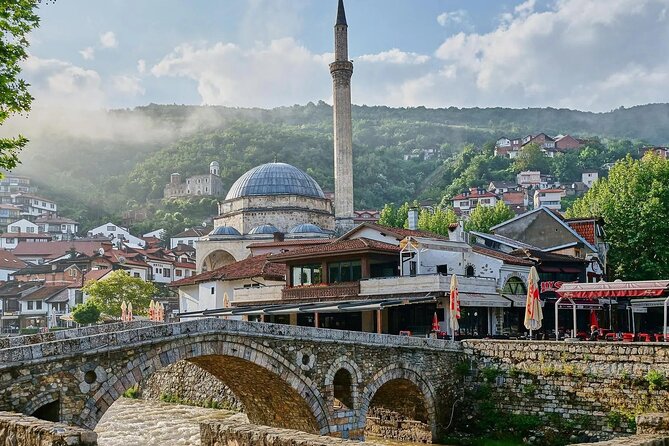
From there you continue to Prizren. The plan is packed with stops that mix fortifications and religious architecture, including Kalaja Fortress, the Albanian League of Prizren House, Carshia e Vjeter, Sinan Hoxha Mosque, and St. George’s Orthodox Cathedral.
Prizren is also where the day becomes calmer. The evening is described as relaxed in this quieter city, and that is useful because you are approaching the midpoint of the trip. After so much walking and site time earlier, having a slower end helps your body and your brain.
Day 5 to Shkodra: Rozafa Castle and Lake Shkodra lunch views
Crossing back into Albania, the tour heads toward Shkodra, with a stop in Kukes to see older communist-era structures. It is a quick but meaningful reminder that the Balkans are not only Ottoman postcards and medieval stonework.
The big set-piece is Rozafa Castle, where the walls hold about 2000 years of local history. You walk through a layered viewpoint here: castle on a hill, city below, and a sense of why people built defense positions where they could see everything coming.
Lunch happens in the Shiroka neighborhood overlooking Lake Shkodra. That view stop matters because it breaks up the day and gives you a real sensory reset. After lunch, you have afternoon free time to walk along the boulevard before overnight in Shkodra.
Day 6 by boat on the Shala River: the Albania Fjords day
This is one of the most different-feeling days on the whole tour. You spend about 90 minutes on a boat heading through the Albanian fjords area via the Shala River. The plan even gives the nickname Thailand of Albania, which is basically pointing you to wild nature and dramatic rock formations.
You get about five hours to explore Zgiboze and the surrounding wilderness, then you head back to Shkodra. This day is great if you want a physical change from city walking and fortress climbing. It is also a good chance to take photos without feeling like you are racing between monuments.
The only caution is timing. With limited hours on land, you still need to move efficiently. Still, if you love water trips and natural views, this day is the kind that makes the whole itinerary feel “worth it.”
Day 7 to Montenegro: Budva old town, Sveti Stefan, and Kotor fortress
You start down the Adriatic coast, with a short detour to see Sveti Stefan island. Even from a distance, this is a recognizable stop that signals you are shifting into Montenegro’s coast style.
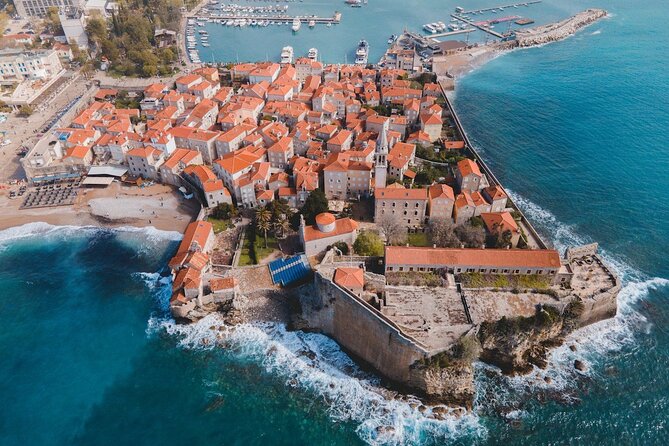
Then you reach Budva to explore the old town and check out the Budva Citadel, Church of Sveti Ivan, Roman Villa remains, and Santa Maria’s church. You also get stops that sound scattered on paper but make sense in person as you walk: viewpoints, ruins, and churches that show different eras of the coast.
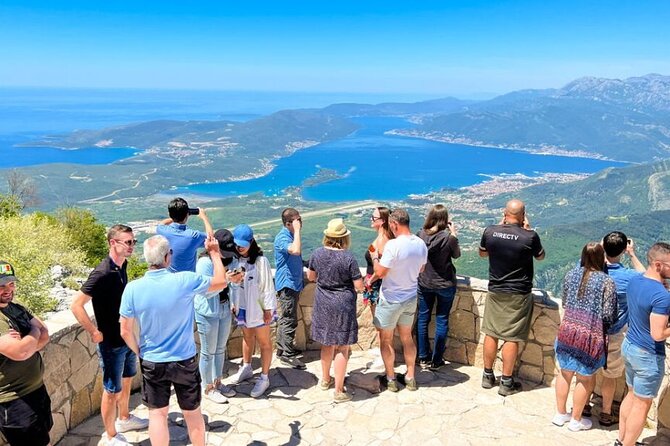
After lunch with city and water views, you drive about 30 minutes to Kotor. The day’s walking tour covers the old town, then you climb up to Kotor Fortress for views across the bay. Kotor is one of those places where the streets feel like a filter between sea and mountains, and the fortress climb is the payoff.
Day 8 in Dubrovnik: Trebinje stop, Old Town circuit, and Mount Srdj cable car
This day transitions from Montenegro to Croatia, with a brief stop in historic Trebinje. You walk around landmarks, including the unique public pool in the city center, then keep moving toward Dubrovnik.
In Dubrovnik, you start at St. Lawrence Fortress. From there, the plan is a structured walk through the Old Town, including Rector’s Palace, Spozna Palace, Onofrio’s fountain, the Old Port, the Cathedral, Orlando’s Column, Church of St. Blaise, the Old Pharmacy, and Luza Square.
The finale is practical and fun: you take the cable car up Mount Srdj for views over the entire city. After a full walking day, a high viewpoint without endless steps is a smart way to end. You get that aerial sense of the red-roofed streets and the coastline shape.
If you have ever worried that Dubrovnik will feel too tourist-heavy, the best defense is this kind of guided plan plus time to wander at your own pace. It helps you notice details that you might otherwise miss.
Day 9 to Mostar: Kravica waterfall, Old Bridge, and Ottoman streets
Mostar arrives after a scenic detour at Kravica Waterfall, about 40 km before the city. There is a pool at the base, and the plan notes swimming if you want to. That turns your day into something more active than museums and monuments.
Once in Mostar, you walk through the Old Town to see Ottoman architecture. You visit Mostar Old Bridge, the Old Bazaar, Koski Mehmed Pasha Mosque, and you wander through cobblestone streets. This is a stop built for sensory travel: texture underfoot, small storefront energy, and the way buildings frame the river area.
The plan leaves the afternoon and evening free. That is ideal in Mostar because you can linger where you feel like it, grab a slow meal, and still have enough time to enjoy the atmosphere without being herded.
Day 10 Sarajevo: Gazi Husrev-beg, Latin Bridge, and World War I context
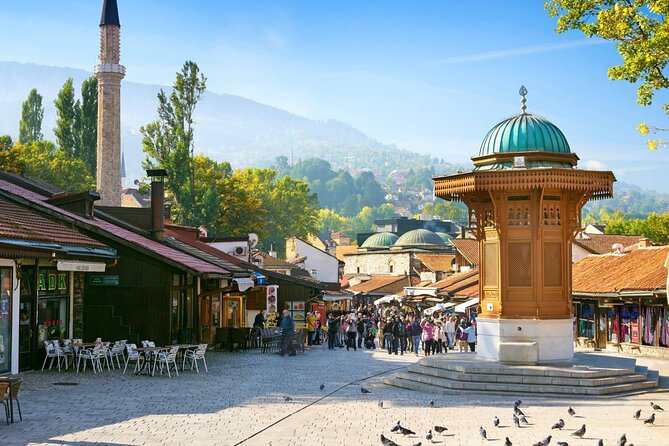
The final day is Sarajevo, a city with deep cultural and political significance. The tour hits a long list of core landmarks, starting with Gazi Husrev-beg Mosque and Morica Han. You also see Sebilj Brunnen fountain, Kazandziluk, Sarajevo City Hall, Emperor’s Mosque, Katedrala Sarajevo, and the Serbian Orthodox Cathedral.
The plan also includes key market-era architecture, like Gazi-Husrev Beg’s Bezistan. This kind of stop matters because it shows Sarajevo as a living city, not just a set of monuments.
Then comes the World War I anchor: you visit the Latin Bridge, where Archduke Franz Ferdinand was killed on June 28, 1914. A guide’s explanation here can change the way you see the river and streets, because suddenly the city stops being just scenic and becomes historic in a very direct way.
After that, your rest of the day and evening are yours to do as you like. By this point, you have already walked a lot, so this free time is a nice way to end without feeling like the tour is squeezing you for one last stop.
Touring pace, group size, and how not to feel rushed
The tour’s daily structure is built for a comfortable pace, and that is echoed by the lone 5-star review you have. The itinerary is full, but it is not only “walk, walk, walk.” You get boat time, viewpoints, and scheduled meal breaks.
Group size helps your day feel manageable. Maximum 15 travelers means fewer bottlenecks at entrances, easier movement for your guide, and generally less waiting. If you do not love tight group choreography, this setup is one reason it works.
Still, you should be honest about your limits. This is a 10-day route with multiple countries and long drives. If you need slow, one-city travel, you may find it too packed. If you like seeing a lot without managing the details, it is a strong fit.
Hotels, breakfast, and what the lunch stops mean for your budget
Accommodation is provided for 9 nights in 3-4 star hotels close to the center, with breakfast included for 9 days. That is a solid foundation because you start most mornings ready to go without extra research.
Lunch is not included. Instead, you will have scheduled restaurant stops. That can be convenient because you do not have to track where everyone eats, but it does mean your total spending depends on what you choose for lunch and drinks.
The good news is that having lunch planned keeps the day from becoming a scavenger hunt. The tour can also help you find places that are easy to reach and worth the stop, which is a big deal when you are moving daily.
Transport, pickup, and how easy the logistics feel
The plan includes comfortable transport with all necessary amenities, and pickup is offered. Your tour leader arrives at your hotel about 10 minutes before departure, so you are not guessing where to meet.
The tour also uses a mobile ticket, which typically means fewer paper hassles. It is a small detail, but it matters when you are crossing borders and switching cities. If you like travel that feels organized without feeling sterile, the logistics here are a selling point.
One practical takeaway: plan to keep essentials ready. When you move quickly between towns, it is smart to have your wallet, water, and a simple layer accessible. You will thank yourself on the days with boat tours and fortress climbs.
Price and value: what you are really paying for
At $2,782.63 per person, this is not a cheap getaway. But it does bundle a lot: 9 nights of accommodation in central 3-4 star hotels, breakfast included for 9 mornings, daily professional English-guided tours, and comfortable transport.
You are also paying for the “glue” that makes multi-country travel less stressful. With a smaller group and a full guide program, you spend less time figuring out routes, meeting points, and site context. For many people, that time savings is worth real money.
Where your cost can shift is lunch and anything you choose to add on top of the plan. The schedule marks many admission tickets as free, which can help keep spending under control, but you should still budget for meals and personal purchases like souvenirs.
Who should book this (and who might not love it)
This tour suits you if you want a focused, guided introduction to the Balkans, with a strong mix of cities and nature. You will likely enjoy it if you like castle and fortress viewpoints, religious architecture, and waterfront scenery, and you want someone to explain what you are looking at.
You may want to reconsider if you prefer slow travel and long stays in one place. A 10-day, multi-country route means you will spend plenty of time moving. If you hate packing and unpacking, this may feel tiring.
Also, it is a good match for people who enjoy variety. One day you are on the Shala River, the next you are in Dubrovnik’s Old Town circuit, then you finish with Sarajevo’s World War I context.
Should you book Full Balkan Experience: A 10 Day Tour?
I would book this if you want a well-structured way to see a lot of the region without managing the details yourself. The best part is the combination of guided storytelling and varied experiences, from lake monasteries to Adriatic viewpoints to Bosnia’s historic streets.
I would hold off if you need a calmer pace, because the days are full and travel time adds up. If you are comfortable with long days and you pack smart, this route is a strong value for what it includes, especially given the central hotels and daily guidance.
If you do book, do yourself a favor: bring good walking shoes, expect at least one big viewpoint climb most days, and plan to enjoy the free-time blocks as actual downtime, not just a break between photos.
FAQ
Is pickup included, and when does the tour leader arrive?
Pickup is offered. The tour leader arrives at your hotel about 10 minutes before the scheduled departure time.
What time does the tour start each day?
The meeting start time is 9:00 am.
How many travelers are on the tour?
The tour has a maximum group size of 15 travelers.
What is included in the price?
Accommodation and breakfast are provided for 9 nights in 3-4 star hotels close to the center, and breakfast is included for 9 days. Fully guided tours run each day with a professional English-speaking tour leader, and comfortable transport is included.
Are meals like lunch included?
Lunch is not included. There are scheduled restaurant stops during the day.
Is cancellation possible for a refund?
Yes, free cancellation is available. You can cancel up to 24 hours in advance for a full refund. If you cancel less than 24 hours before the experience’s start time, the amount paid is not refunded.
Added to Tirana lately
- Semi-Private Hiking Tour; Theth,Valbona&Koman Lake in 3 Days★ 5.0 · 1 review
- Kosovo, Prizren Day Trip from Tirana★ 3.0 · 1 review
- Private 3 Days Adventure in Albania and Gjirokaster County★ 5.0 · 1 review
- Private 1 Day Berat Tour from Tirana★ 5.0 · 1 review
- From Tirana: Ksamil Islands, Saranda, & Blue Eye Day Trip★ 5.0 · 1 review
- Tirana Airport Private Transfer To City★ 5.0 · 1 review
- Architectural Walking Tour Discovering Tirana’s Modern Identity★ 5.0 · 1 review
- From Shkoder: 3-Day Valbona to Theth Hike Tour All Inclusive★ 5.0 · 1 review
Tirana Tours & Excursions, compared.
Bovilla Lake & Gamti Mountain Hiking Day Trip
Read our review →
2 Hour Guided Hidden Treasures Sightseeing Tour
Read our review →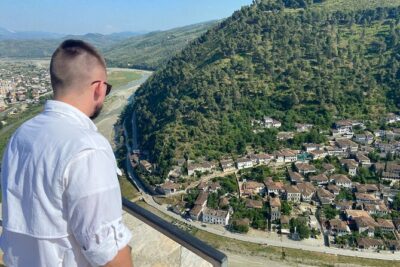
Berat city UNESCO tour, the Castle & Belshi lake- From Tirana
Read our review →
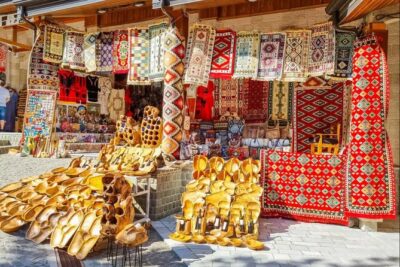
Kruja castle, the old Bazaar & Sarisalltik- Departure from Tirana
Read our review →