
Reviewed · GUIDED
8 Days Private Tour in Albania with Professional Guide
Eight days can make Albania click. This private trip strings together Tirana, mountain towns, and big coastal ruins with a professional guide who keeps the story clear. The main thing to consider is that it is a lot of driving and scheduled stops, so you will want comfy shoes and patience for road time.
I like that the route balances museums, heritage sites, and real local culture, including tea breaks and market-area wandering. If you prefer to see Albania at a human pace rather than as a checklist, this setup fits.
In This Review
- Key highlights to know before you go
- A private Albania plan that actually makes sense
- Day 1 in Tirana: Skanderbeg Square views and the big-picture museum start
- Day 2: Kruje and Shkoder, with museums and tea breaks
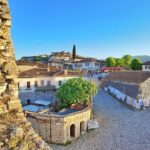
- Day 3: Durres port history, then Berat’s dramatic layers
- Day 4: Apollonia, Vlora old town, and Saranda’s coastal switch
- Day 5: Butrint UNESCO and the journey toward Permet and Gjirokaster
- Day 6: Korca Old Bazaar and the Vjose road views
- Day 7: Pogradec by Lake Ohrid, plus the Egnatia road connection
- Day 8: Tirana airport transfer to close the loop
- Price and value: what $1,446.06 buys you here
- What’s included, what’s not, and how to plan your days
- Who this tour is best for (and who might want a different style)
- Should you book this 8-day Albania private tour with Akeron Tours?
- FAQ
- Where does the tour start and what time?
- Is this a private tour?
- Is airport pickup included?
- What is included in the tour price?
- Are meals fully included?
- Are admission tickets included?
- What is the cancellation policy?
Key highlights to know before you go
- Airport pickup and private transportation so you are not wrestling with schedules or transfers.
- Meals included (breakfast most mornings, dinner most evenings), with lunch not included.
- A UNESCO stop at Butrint, plus major archaeological sights and Roman-era remnants.
- Coast plus mountains: Tirana to the Adriatic side, then inland toward Gjirokaster and Korca.
- Guide names like Halit Allkushi come up often, a sign the tour emphasizes experienced local storytelling.
More Private Tours in Tirana
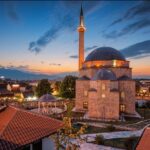
A private Albania plan that actually makes sense
Albania can feel like a puzzle at first. A private guide helps you connect the dots: who built what, why a town looks the way it does, and what you are seeing that you might miss on your own.
This tour is also built for practicality. You are not guessing about timing, and you are not paying separate costs at every stop, because many entrances are listed as free or included. The result is less mental load and more time to look closely.
One note before you fall in love with the idea: this is a packed 8-day route. You will cover a lot of ground. If you hate long car days, plan your expectations and treat each leg as part of the experience.
Day 1 in Tirana: Skanderbeg Square views and the big-picture museum start
You start in Tirana with an airport meet-and-transfer setup. That matters more than it sounds, because arriving on your own after a flight can turn day one into chaos.
In Tirana, the first cultural anchor is the National Museum, overlooking Skanderbeg Square. Even if you are only arriving fresh, that view gives you instant context for where Albania’s modern story sits. You also pass by the Grand Palais de la Culture area, which helps you orient quickly to the city’s layout and architecture themes.
Practical vibe check for day one: this is a strong “get your bearings” start. You are not rushed into 4 castles and 3 beaches. You ease in with a museum and central city sights.
Day 2: Kruje and Shkoder, with museums and tea breaks
Day two takes you to Kruje, tied to national hero George Castriot Scanderbeg. You visit the museum there, plus an ethnographic museum. The included rhythm is simple: a tour block, then tea and free time, then lunch.
That pattern is one of my favorite parts of the tour. You get the guided part, then time to wander and absorb at your own speed. It is a good way to avoid the classic problem of being talked at for hours.
Later you move toward Shkoder. The day again centers on a museum visit and an ethnographic museum, with tea and free time before lunch. Even with limited details, you can tell the emphasis is on how people lived, not just what big monuments exist.
If you enjoy culture that feels lived-in, this day is a win. If you want more beach time, you will be thinking about it at lunch.
Day 3: Durres port history, then Berat’s dramatic layers
The third day swings you toward Durres, described as Albania’s largest port town. You head to the archaeological museum and then to the amphitheater in the city. The amphitheater is described as the largest in the Balkans and dating from the time of antiquity, which gives you that instant Roman-scale feeling.
After that, the route continues to Berat. The goal here is to keep building your mental map: coast to big trade history, then inland to a town shaped by centuries of religious and cultural coexistence.
A practical tip for days like this: when you are visiting museums and major ruins, try to pick one theme for your notes. Mine would be architecture and everyday life, because Albania’s “why does this town look like this?” question has a lot of answers once you start seeing patterns.
A few more Tirana tours and excursions:
- From Tirana: Bovilla Lake & Gamti Mountain Hiking Day Trip
★ 4.9 · 4,397 reviews - From Tirana: Bovilla Lake & Gamti Mountain Hiking Tour
★ 4.9 · 3,003 reviews - From Tirana: Bovilla Lake & Gamti Mountain Viewpoint Hike
★ 4.8 · 2,053 reviews - Tirana/Durres/Golem: Saranda, Ksamil, Blue Eye Day Trip
★ 4.8 · 1,584 reviews
Day 4: Apollonia, Vlora old town, and Saranda’s coastal switch
This is a day for archaeology and coast energy. You start with Apollonia Archaeological Park, founded by Greeks in the 6th century BC. That alone is a big anchor, but the visit also includes an Armenian-style church, a monastery, a Roman villa, and the broader archaeological areas.
What I like here is that you are not only seeing one era. You are seeing layers. Greek foundations, religious structures, and Roman remnants in one physical area helps you understand how places evolve rather than stay frozen.
After Apollonia, you continue to Vlora Old Town and then onward to Saranda. You can expect time in the old-town setting and a coastal shift that changes the feel of the trip. Saranda, specifically, is included as a stop, suggesting you get to experience the southern coastal atmosphere rather than just seeing it from the highway.
Drawback to watch for: days with archaeological parks can include lots of walking on uneven ground. Bring shoes you can trust. If you are the type who hates standing in hot sun, you will want to plan your water habits.
Day 5: Butrint UNESCO and the journey toward Permet and Gjirokaster
This is a high-value day because it includes a UNESCO-listed stop at Butrint. You also see it described as a peaceful place that still feels essential. That combination is exactly why UNESCO sites matter: they are not just famous, they often reward slow looking.
The day’s structure also includes a reference to L’Oeil Bleu, described as peaceful, which signals a nature-and-scenery element rather than a purely architectural day.
From there, the route continues toward Permet and Gjirokaster. Gjirokaster is often the kind of town that makes you pause because of its appearance and architecture, and the fact that it is paired with the UNESCO stop means you get both “big world heritage” and local town character.
If you do not like back-to-back highlight moments, you may feel this day is emotionally full. In that case, keep your expectations simple: enjoy the scenery, then enjoy the town, no need to turn it into a competition.
Day 6: Korca Old Bazaar and the Vjose road views
Day six moves into the east side of Albania. The drive is described as winding between mountains and hills, following the mythological river Vjose. Even without exact distances, that tells you the day is set up for scenic road time, not just transportation.
Once in Korca, you visit the Old Bazaar and a museum connected with a first, early topic (the text is cut off, so you will see more specific details on the day). The key idea is clear: you are connecting trade and culture with a more focused museum stop.
This is a good day for anyone who wants Albania to feel like more than coastal ruins. You get craft-market energy, then a reality check through museum context.
Practical advice: road days are when your phone battery disappears faster than you expect. Keep a power bank, and save photos for the moments you really want, because the scenery will keep offering them.
Day 7: Pogradec by Lake Ohrid, plus the Egnatia road connection
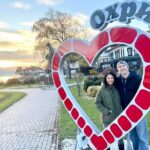
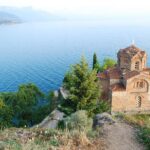
Day seven heads to Pogradec, described as overlooking the turquoise waters of Lake Ohrid. You start at a fishing village, and you also travel along the ancient Egnatia Road, which historically connected Rome and Constantinople.
That historical thread is a big part of why this day works. It links geography to empire-scale routes, and then brings you back to real daily life by the water.
The tour text truncates before explaining the final stop in full, but the overall setup is still useful for your planning: expect a mix of water views, village atmosphere, and historical context rather than another museum marathon.
If you want a breather day near the end, this is the one. It has a lighter feel than the days packed with major archaeological entries.
Day 8: Tirana airport transfer to close the loop
Your final day is a transfer back to Tirana International Airport. The tour includes the airport transfer as part of the package, so you are not trying to figure out last-day transport.
The meeting point is Tirana International Airport, Ruga Nene Tereza, Rinas 1504, Albania, and the start time is 9:00 am. Knowing that early helps you plan your hotel night and wake-up call.
Price and value: what $1,446.06 buys you here
At $1,446.06 per person for around 8 days, you are paying for a private guide experience plus private transportation and included fees. The value sits in three places.
First, private transport reduces friction. Albania’s distances and varied terrain make group logistics hard. Paying for private movement means you spend time seeing, not waiting.
Second, the package includes breakfast (listed as 9) and dinner (8). That is a real budget saver, especially in places where you might want meals but do not want to spend your limited time hunting.
Third, many admissions are marked as free or included. You will still have stops where entrances are not explicitly listed as paid, but overall it suggests fewer add-on bills.
What is not included is lunch. That is the main budgeting item you should plan for. If you are traveling with a snack habit, bring what you like, but also expect lunch to be part of your daily rhythm.
What’s included, what’s not, and how to plan your days
The package includes:
- Private transportation
- All fees and taxes
- Breakfast (9)
- Dinner (8)
The package does not include:
- Lunch
Other helpful details:
- Pickup is offered.
- Tickets are mobile.
- Confirmation is received at booking.
- This is a private tour, only your group participates.
- Most travelers can participate, but the route is active and includes walking at archaeological sites.
My practical take: pack for a mix of city walking and site walking. Bring layers, because weather can change between coastal and inland areas. Also, if you dislike filling out forms, make sure everyone has their passport details ready for your guide or organizer, since tour confirmations often rely on it.
Who this tour is best for (and who might want a different style)
This is a strong fit if you want:
- A guided story that connects Tirana, archaeology, and regional culture.
- A private setup with scheduled days and fewer logistics headaches.
- A balance of museums, towns, and the natural feel of coastal and lake areas.
It might feel too intense if:
- You prefer slow travel with long free afternoons every day.
- You want a mostly beach-based itinerary with minimal inland driving.
- You hate the idea of walking around archaeological parks and museums on multiple days.
Should you book this 8-day Albania private tour with Akeron Tours?
If you want Albania to feel coherent rather than random, I would book it. The route hits the key anchors: Tirana’s context, Kruje and Shkoder’s cultural grounding, major archaeological stops like Apollonia and amphitheater-era Durres, the UNESCO weight of Butrint, and then scenic water time near Pogradec.
I would especially consider it if you value the human factor, because the tour is associated with experienced local guidance, including names like Halit Allkushi. Having that kind of storytelling usually makes a country feel more personal, and it helps you spot what matters when you are standing in front of something ancient.
The only real “don’t” is if you want a low-movement vacation. This tour gives you a full Albania picture, and it does it by keeping you on the move.
FAQ
Where does the tour start and what time?
It starts at Tirana International Airport (Ruga Nene Tereza, Rinas 1504, Albania) with a start time of 9:00 am.
Is this a private tour?
Yes. This is a private tour/activity, and only your group will participate.
Is airport pickup included?
Yes. Pickup is offered, and the tour includes transfers such as the final transfer from Tirana to the airport.
What is included in the tour price?
The price includes private transportation, all fees and taxes, breakfast (9), and dinner (8).
Are meals fully included?
Breakfast and dinner are included. Lunch is not included.
Are admission tickets included?
Many stops list admission tickets as free, and some stops are marked as included (for example, Apollonia Archaeological Park, Vlora Old Town, Korca Old Bazaar, and the airport transfer).
What is the cancellation policy?
There is free cancellation. You can cancel up to 24 hours in advance for a full refund, and refunds depend on canceling at least 24 hours before the experience’s start time.
Added to Tirana lately
- Semi-Private Hiking Tour; Theth,Valbona&Koman Lake in 3 Days★ 5.0 · 1 review
- Kosovo, Prizren Day Trip from Tirana★ 3.0 · 1 review
- Private 1 Day Berat Tour from Tirana★ 5.0 · 1 review
- Private 3 Days Adventure in Albania and Gjirokaster County★ 5.0 · 1 review
- From Tirana: Ksamil Islands, Saranda, & Blue Eye Day Trip★ 5.0 · 1 review
- Tirana Airport Private Transfer To City★ 5.0 · 1 review
- Architectural Walking Tour Discovering Tirana’s Modern Identity★ 5.0 · 1 review
- From Shkoder: 3-Day Valbona to Theth Hike Tour All Inclusive★ 5.0 · 1 review
Guided, compared.
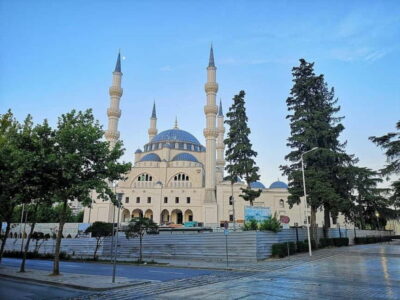
2 Hour Guided Hidden Treasures Sightseeing Tour
Read our review →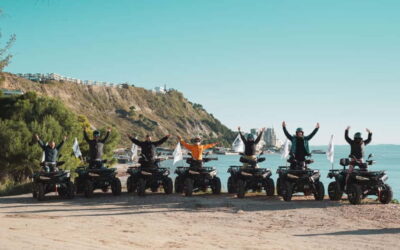
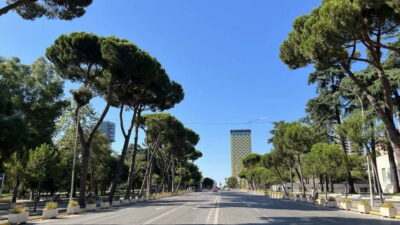
Bike or E-Bike Tour Tirana : Highlights & Grand Park Guided
Read our review →

Guided tour in Tirana – discoveries, history, culture (in FRENCH)
Read our review →Browse the lists this tour appears in